Mao Warns of Bias Over Planned Induction Of 12th Parliament
Home Trending News Current Affairs Mao Warns of Bias Over Planned Induction Of 12th Parliament
Current Affairs - Trending News - 2 hours ago

Mao Warns of Bias Over Planned Induction Of 12th Parliament

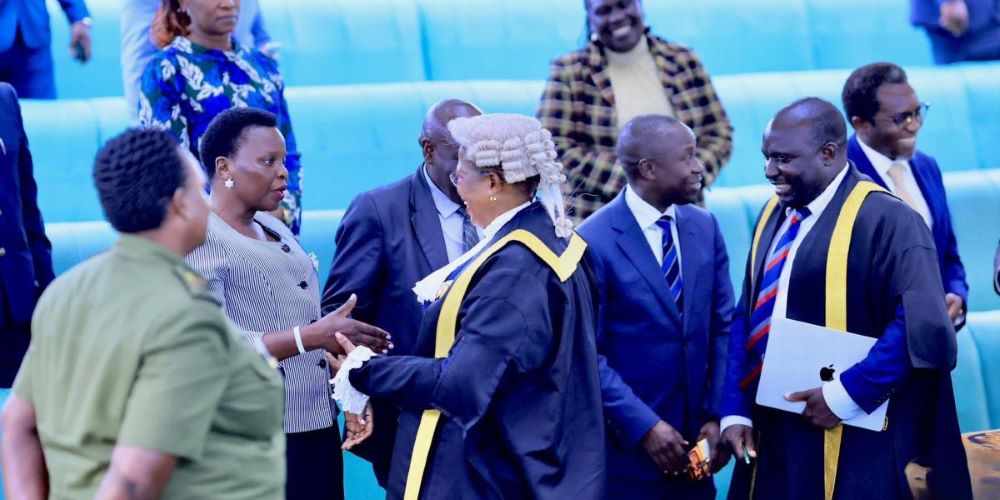
A dispute has emerged at Parliament over the timing of the inductions for members to the 12th Parliament. 

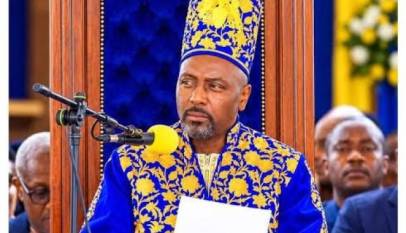
The Laroo-Pece Division MP-elect, Nobert Mao, who is also aspiring for the post of Speaker of Parliament, has sparked the controversy, warning against holding the programme before the election of the Speaker and Deputy Speaker, citing risks of political bias. 

In a letter dated April 27, 2026, Mao urged the Clerk to Parliament to schedule the induction of Members of Parliament (MPs) after the election of the Speaker and Deputy Speaker, warning that premature orientation risks being overshadowed by leadership contests and partisan maneuvering.

However, the Clerk to Parliament, Adolf Mwesige Kasaija, clarified that no official programme had yet been released and reaffirmed that established parliamentary practice already provides for induction after the House is fully constituted.

Mao’s intervention was based on procedural and political grounds. He argued that with nearly two-thirds of MPs entering Parliament for the first time, a trend consistent with Uganda’s historically high turnover rates, induction must be shielded from distractions that could dilute its purpose.

“The 12th Parliament will only be considered fully constituted after the Speaker and Deputy Speaker have been elected,” Mao wrote, adding that conducting induction earlier would be “akin to taking a sports team to training camp before determining who will captain the team.”

Mao, also the Democratic Party (DP) president, fears that individuals aligned with the outgoing Speaker had been lined up as key presenters, warning that such influence could turn a technical orientation into a political platform.

In his response, Mwesige Kasaija distanced the institution from the controversy while underscoring procedural consistency. 

“As a matter of practice and procedure, the induction of Members of a new Parliament has always been held after the new Parliament is fully constituted,” he wrote, effectively aligning with Mao’s core recommendation while rejecting the premise that the process had already been compromised.

The Clerk also emphasized that consultations on both timing and facilitators were ongoing, suggesting that concerns about bias may be premature.

Uganda’s parliamentary procedures are anchored in the Constitution of the Republic of Uganda and the Rules of Procedure of Parliament, which collectively define when a Parliament is deemed fully constituted, typically after the election of its presiding officers at the first sitting.

Jonathan Odur, a constitutional scholar, argues that this sequencing is not merely ceremonial. 

“The Speaker plays a central role in guiding legislative business, enforcing rules, and safeguarding institutional independence. As such, orientation conducted before leadership is in place risks lacking authority and coherence.”

Odur pointed out that globally, parliamentary strengthening programmes, often supported by bodies such as the Inter-Parliamentary Union, stress the importance of non-partisan, professionally managed induction frameworks to build legislative capacity, particularly for first-time MPs.

Mao’s letter also reflects broader political undercurrents. He cited experiences at the National Leadership Institute, Kyankwanzi retreat, where debates over the Speakership reportedly disrupted substantive discussions, as evidence that leadership contests can overshadow institutional processes.

He further criticized what he described as an “unwarranted outburst” from the  Speaker Anita Among and alleged exclusion of dissenting voices from previous platforms, claims that point to lingering tensions within Uganda’s political establishment.

Mao called for the revival of an independent Institute of Parliamentary Studies, previously conceptualized as the Rebecca Alitwala Kadaga Institute of Parliamentary Studies (RAKIPS), to professionalize and depoliticize capacity building.

Check Also

Two Kenyan Nationals Suspected of Aggravated Robbery Arrested in Jinja City

Two Kenyan nationals suspected of participating in an aggravated robbery network targeting…