Current Affairs -
Trending News -
2 hours ago
NO Community Court Trial Of Gongodyo Killers -ULS
The Uganda Law Society (ULS) has rejected calls for a public mob trial of suspects arrested in connection with the killing of Uganda Cranes rugby player Sydney Gongodyo, insisting that justice must be administered through established legal processes.
Speaking during a Radical New Bar (RNB) discussion reflecting on Gongodyo’s killing, RNB spokesperson Goretti Nakamya described the death as a tragic loss of a young, talented, and promising Ugandan.
However, she noted that the Law Society had received reports of plans to hold a public trial of the suspects in a so-called “community court,” with tickets allegedly being sold to attend proceedings at rugby grounds.
Nakamya said the proposal was unacceptable and contrary to the principles of justice
. “We respectfully object to that. A constitutional public trial does not mean we abandon the courtroom for stadiums. A trial is not content for TikTok. It is a solemn and sober proceeding that must protect the law and the rights of the accused. When you sell tickets to a murder trial, you’re not delivering justice, you’re offering a sacrifice to the mob,” she said.
Nakamya added that while court proceedings are generally public, they must remain within the framework of the judicial system and due process.
Edwin Buluma Wabwire, a senior associate at KATS Advocates and a close friend of Gongodyo, acknowledged that there had been public calls for an open trial but stressed that decisions regarding court proceedings rest solely with the Judiciary.
Wabwire condemned mob justice and warned that lawlessness can affect anyone regardless of status or profession.
He cited the 2019 mob killing of lawyer Peter Kibirango, who was attacked after mistakenly picking up a soldier’s phone and leaving his own at a mobile money outlet.
“Peter was killed without a chance to explain that he had mistakenly taken a phone that wasn’t his. They pounced on him and beat him. The police swung into action and fired bullets in the air. Peter was taken to Mulago, but he succumbed to his injuries. This is the reality of mob justice; it can meet anyone, anywhere,” Wabwire said.
Stanbic Black Pirates chairman Daniel Kanowira also condemned members of the public who witnessed the attack on Gongodyo but failed to intervene.
Mob justice remains a significant contributor to violent crime in Uganda, largely driven by public mistrust of the justice system and a tendency to take the law into private hands.
According to the Police Annual Crime Report 2025, at least 950 people were killed through mob action. Most victims were accused of crimes such as theft, robbery, murder, witchcraft, or burglary.
Kampala Metropolitan Police spokesperson Donald Muhwezi described mob justice as a form of violence driven by hearsay, suspicion, jealousy, fear, or threats, where groups bypass legal procedures and mete out punishment themselves. He condemned the practice as unlawful and dangerous.
Muhwezi noted that although overall crime decreased by 10.4 percent according to the latest crime report, violent killings have continued to rise.
He cited several high-profile cases of mob violence, including the killings of lawyer Peter Kibirango, United Nations employee Azizi, and Kyambogo University lecturer Jacob Akankwasa.
According to Muhwezi, mob justice undermines constitutional rights, destroys evidence, and hinders the lawful arrest and prosecution of suspects.
He acknowledged that police cannot eliminate mob violence alone and called for a collective effort involving communities, leaders, and other stakeholders.
Muhwezi said the police have introduced several measures to combat violent crime and mob justice, including community policing initiatives, the sub-county policing model, forensic investigations, CCTV surveillance, K9 units, and the use of community policing volunteers known as “multipliers.”
“We need people to stand up and condemn these inhuman acts that deny us the opportunity to conduct proper investigations,” Muhwezi said.
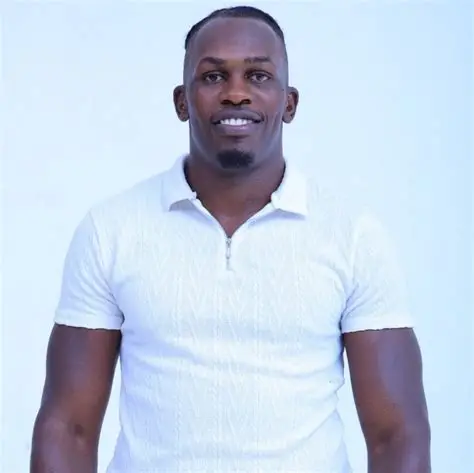
Gongodyo, 27, who also played for Stanbic Pirates Rugby Club, died following a mob attack in Upper Naguru, a Kampala suburb, last Friday.
He had been accused of snatching a bag, an allegation that has not been proven. Videos circulating on social media show Gongodyo being violently assaulted by a group of people, including boda boda riders.
In one clip, he is struck on the head with a log as several others continue to beat him. He was later pronounced dead at Mulago National Referral Hospital.
His death has sparked widespread grief within Uganda’s rugby community and generated public outrage, with many demanding swift action against those responsible.
Using CCTV footage from the scene, police have arrested at least 11 suspects, including Noordin Ssebagala, Rode Ayebazibwe, Juliet Namukose, Herbert Twinomujuni, Katsigazi Perigrino, Darlious Tayebwa, Hannington Tugume, Elly Mondoni, and Henery Kabugo. The suspects are being held at Kira Road and Jinja Road police stations as investigations continue.
The Uganda Law Society and other stakeholders have urged the public to allow the courts to handle the case and ensure that justice is delivered through lawful and constitutional means rather than public spectacle or mob action.

Speaking during a Radical New Bar (RNB) discussion reflecting on Gongodyo’s killing, RNB spokesperson Goretti Nakamya described the death as a tragic loss of a young, talented, and promising Ugandan.
However, she noted that the Law Society had received reports of plans to hold a public trial of the suspects in a so-called “community court,” with tickets allegedly being sold to attend proceedings at rugby grounds.
Nakamya said the proposal was unacceptable and contrary to the principles of justice
. “We respectfully object to that. A constitutional public trial does not mean we abandon the courtroom for stadiums. A trial is not content for TikTok. It is a solemn and sober proceeding that must protect the law and the rights of the accused. When you sell tickets to a murder trial, you’re not delivering justice, you’re offering a sacrifice to the mob,” she said.
Nakamya added that while court proceedings are generally public, they must remain within the framework of the judicial system and due process.
Edwin Buluma Wabwire, a senior associate at KATS Advocates and a close friend of Gongodyo, acknowledged that there had been public calls for an open trial but stressed that decisions regarding court proceedings rest solely with the Judiciary.
Wabwire condemned mob justice and warned that lawlessness can affect anyone regardless of status or profession.
He cited the 2019 mob killing of lawyer Peter Kibirango, who was attacked after mistakenly picking up a soldier’s phone and leaving his own at a mobile money outlet.
“Peter was killed without a chance to explain that he had mistakenly taken a phone that wasn’t his. They pounced on him and beat him. The police swung into action and fired bullets in the air. Peter was taken to Mulago, but he succumbed to his injuries. This is the reality of mob justice; it can meet anyone, anywhere,” Wabwire said.
Stanbic Black Pirates chairman Daniel Kanowira also condemned members of the public who witnessed the attack on Gongodyo but failed to intervene.
Mob justice remains a significant contributor to violent crime in Uganda, largely driven by public mistrust of the justice system and a tendency to take the law into private hands.
According to the Police Annual Crime Report 2025, at least 950 people were killed through mob action. Most victims were accused of crimes such as theft, robbery, murder, witchcraft, or burglary.
Kampala Metropolitan Police spokesperson Donald Muhwezi described mob justice as a form of violence driven by hearsay, suspicion, jealousy, fear, or threats, where groups bypass legal procedures and mete out punishment themselves. He condemned the practice as unlawful and dangerous.
Muhwezi noted that although overall crime decreased by 10.4 percent according to the latest crime report, violent killings have continued to rise.
He cited several high-profile cases of mob violence, including the killings of lawyer Peter Kibirango, United Nations employee Azizi, and Kyambogo University lecturer Jacob Akankwasa.
According to Muhwezi, mob justice undermines constitutional rights, destroys evidence, and hinders the lawful arrest and prosecution of suspects.
He acknowledged that police cannot eliminate mob violence alone and called for a collective effort involving communities, leaders, and other stakeholders.
Muhwezi said the police have introduced several measures to combat violent crime and mob justice, including community policing initiatives, the sub-county policing model, forensic investigations, CCTV surveillance, K9 units, and the use of community policing volunteers known as “multipliers.”
“We need people to stand up and condemn these inhuman acts that deny us the opportunity to conduct proper investigations,” Muhwezi said.
Gongodyo, 27, who also played for Stanbic Pirates Rugby Club, died following a mob attack in Upper Naguru, a Kampala suburb, last Friday.
He had been accused of snatching a bag, an allegation that has not been proven. Videos circulating on social media show Gongodyo being violently assaulted by a group of people, including boda boda riders.
In one clip, he is struck on the head with a log as several others continue to beat him. He was later pronounced dead at Mulago National Referral Hospital.
His death has sparked widespread grief within Uganda’s rugby community and generated public outrage, with many demanding swift action against those responsible.
Using CCTV footage from the scene, police have arrested at least 11 suspects, including Noordin Ssebagala, Rode Ayebazibwe, Juliet Namukose, Herbert Twinomujuni, Katsigazi Perigrino, Darlious Tayebwa, Hannington Tugume, Elly Mondoni, and Henery Kabugo. The suspects are being held at Kira Road and Jinja Road police stations as investigations continue.
The Uganda Law Society and other stakeholders have urged the public to allow the courts to handle the case and ensure that justice is delivered through lawful and constitutional means rather than public spectacle or mob action.
2 hours ago
0 47,260
Gen Muhoozi Ordered to File Defense Over Threats to Hang Besigye
2 hours ago
0 47,271
NO Community Court Trial Of Gongodyo Killers -ULS
2 hours ago
0 47,243
Uganda Returns to Double Digit Economic Growth
4 hours ago
0 47,201
Mbale High Student Found Dead
2 hours ago
0 47,260
Gen Muhoozi Ordered to File Defense Over Threats to Hang Besigye
2 hours ago
0 47,271
NO Community Court Trial Of Gongodyo Killers -ULS
2 hours ago
0 47,243
Uganda Returns to Double Digit Economic Growth
4 hours ago
0 47,201
Mbale High Student Found Dead
Gen Muhoozi Ordered to File Defense Over Threats to Hang Besigye
The High Court in Kampala has given the Chief of Defense Forces, General Muhoozi Kainerug…
Now On Air – 88.2 Sanyu Fm
Get Hooked Right Here
DON'T MISS!!!
Gen Muhoozi Ordered to File Defense Over Threats to Hang Besigye
The High Court in Kampala has given the Chief of Defense Forces, General Muhoozi Kainerugaba, seven days to file his defense to an application filed by jailed opposition leader Dr Kizza Besigye.