Health -
Trending News -
59 minutes ago
MOH Blames Rising Pollution as 20% of Schoolchildren Battle Asthma
The Ministry of Health has revealed that between 10 and 20 percent of school-going children have asthma, with urban areas bearing the biggest burden of the disease.
Dr. Daniel Kyabayinze, the Director of Public Health in the ministry, told URN on Tuesday that while the rates of asthma are high, especially in the urban areas, many sufferers are unscreened, leaving children to suffer complications without accessing necessary care.
Like asthma, Kyabayinze says up to 16 percent of rural women have also been found to have a disease similar to asthma, technically referred to as Chronic Obstructive Pulmonary Disease (COPD), which equally causes sufferers to struggle to breathe since the airways get blocked.
For both, he says the main cause is worsening air pollution, whereby for rural women it’s mainly attributed to smoke, and yet for children it is due to environmental exposure as they move to school or even within the school environment. This revelation by the Ministry comes after both researchers at the London School of Hygiene and Tropical Medicine (LSHTM) Uganda Research Unit and Makerere University Lung Institute found that asthma among school-going children is highly undiagnosed and many times mismanaged.
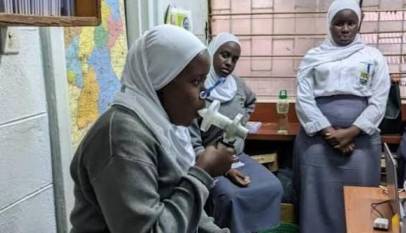
Dr Harriet Mpairwe, who is a Principal Investigator on an ongoing study in Uganda called Causes And Mechanisms for non-atopic Asthma in children (CAMERA), said when learners with asthma experience attacks at school, staff often lack clear guidance on how to respond promptly, resulting in potentially critical life-threatening delays. She said policies requiring inhalers to be stored exclusively in sick bays frequently prevent timely access during emergencies.
Like Mpairwe’s team, at the Makerere University Lung Institute, Dr Rebecca Nantanda, a pediatrician and lung expert, said their research shows that asthma is more prevalent in schools than the estimates show, and yet those who are confirmed to have the disease still struggle as their asthma is largely uncontrolled.
The Makerere team conducted the study among 263 adolescents aged between 12 and 19 in seventeen secondary schools in Kampala, where they found 82 percent of them to be living with uncontrolled disease. Earlier in 2018, the same team headed by Nantanda had conducted another asthma study where they found that two in every ten of the 895 students screened in Kampala, Mukono and Wakiso had symptoms associated with asthma such as breathing difficulties, wheezing and cough but had never sought care for it.
Only 33.9 per cent of those who screened positive knew they were living with asthma, and the majority were unaware despite having symptoms. Worse, 64 of the students had severe symptoms but had never been accurately diagnosed, and some were being treated for something different. Now, with such concerning figures, experts worry that the problem could be even bigger as the country has not yet done a countrywide survey to determine how exactly the situation is.
Data estimates shared by the ministry only tell part of the story as this information is picked from what is collected routinely in clinical care and small-scale studies conducted by researchers in selected places.

Dr. Daniel Kyabayinze, the Director of Public Health in the ministry, told URN on Tuesday that while the rates of asthma are high, especially in the urban areas, many sufferers are unscreened, leaving children to suffer complications without accessing necessary care.
Like asthma, Kyabayinze says up to 16 percent of rural women have also been found to have a disease similar to asthma, technically referred to as Chronic Obstructive Pulmonary Disease (COPD), which equally causes sufferers to struggle to breathe since the airways get blocked.
For both, he says the main cause is worsening air pollution, whereby for rural women it’s mainly attributed to smoke, and yet for children it is due to environmental exposure as they move to school or even within the school environment. This revelation by the Ministry comes after both researchers at the London School of Hygiene and Tropical Medicine (LSHTM) Uganda Research Unit and Makerere University Lung Institute found that asthma among school-going children is highly undiagnosed and many times mismanaged.
Dr Harriet Mpairwe, who is a Principal Investigator on an ongoing study in Uganda called Causes And Mechanisms for non-atopic Asthma in children (CAMERA), said when learners with asthma experience attacks at school, staff often lack clear guidance on how to respond promptly, resulting in potentially critical life-threatening delays. She said policies requiring inhalers to be stored exclusively in sick bays frequently prevent timely access during emergencies.
Like Mpairwe’s team, at the Makerere University Lung Institute, Dr Rebecca Nantanda, a pediatrician and lung expert, said their research shows that asthma is more prevalent in schools than the estimates show, and yet those who are confirmed to have the disease still struggle as their asthma is largely uncontrolled.
The Makerere team conducted the study among 263 adolescents aged between 12 and 19 in seventeen secondary schools in Kampala, where they found 82 percent of them to be living with uncontrolled disease. Earlier in 2018, the same team headed by Nantanda had conducted another asthma study where they found that two in every ten of the 895 students screened in Kampala, Mukono and Wakiso had symptoms associated with asthma such as breathing difficulties, wheezing and cough but had never sought care for it.
Only 33.9 per cent of those who screened positive knew they were living with asthma, and the majority were unaware despite having symptoms. Worse, 64 of the students had severe symptoms but had never been accurately diagnosed, and some were being treated for something different. Now, with such concerning figures, experts worry that the problem could be even bigger as the country has not yet done a countrywide survey to determine how exactly the situation is.
Data estimates shared by the ministry only tell part of the story as this information is picked from what is collected routinely in clinical care and small-scale studies conducted by researchers in selected places.

59 minutes ago
0 7,318
MOH Blames Rising Pollution as 20% of Schoolchildren Battle Asthma
20 hours ago
0 7,254
Uganda Railways Aims to Dominate Import/Export Cargo, Fund Self in 5 Years
22 hours ago
0 7,210
FDC Condemns Medical Interns’ August 14 Ultimatum
59 minutes ago
0 7,318
MOH Blames Rising Pollution as 20% of Schoolchildren Battle Asthma
20 hours ago
0 7,254
Uganda Railways Aims to Dominate Import/Export Cargo, Fund Self in 5 Years
Ministry of Works and Partners Call for Stronger Road Discipline to Protect Children.
In response to growing concerns over road crashes involving school-going children, the Min…
Now On Air – 88.2 Sanyu Fm
Get Hooked Right Here
DON'T MISS!!!
MOH Blames Rising Pollution as 20% of Schoolchildren Battle Asthma
The Ministry of Health has revealed that between 10 and 20 percent of school-going children have asthma, with urban areas bearing the biggest burden of the disease.