Musasizi Challenges Banks to Lower Lending Rates as Profits Hit Shs 2.17 Trillion
Home Trending News Current Affairs Musasizi Challenges Banks to Lower Lending Rates as Profits Hit Shs 2.17 Trillion

Musasizi Challenges Banks to Lower Lending Rates as Profits Hit Shs 2.17 Trillion

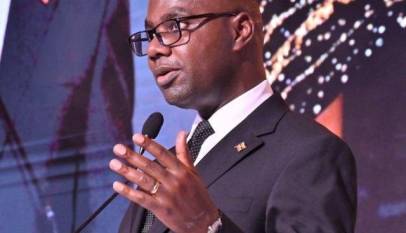
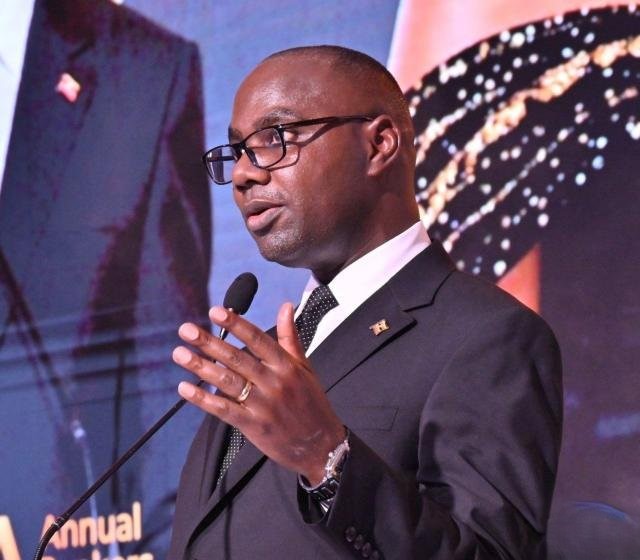
Finance Minister Henry Musasizi has challenged commercial banks to lower lending rates and ease access to credit for businesses, saying the sector’s improved financial performance should translate into increased financing for productive sectors of the economy. Musasizi said Uganda’s ambition of building a US$500 billion economy would remain difficult to achieve unless financial institutions expanded private sector lending and made commercial credit more affordable.

He was speaking on Friday evening as the chief guest at the second Annual Bankers’ Awards held at Mestil Hotel in Kampala under the theme, “Together Towards Greatness.”Musasizi commended the banking industry for strengthening its financial position, with total assets increasing to Shs 61.7 trillion and net profits reaching Shs 2.17 trillion. He particularly applauded banks for improving the quality of their loan portfolios, with non-performing loans declining to 2.67 percent by mid-2026, reportedly the lowest level recorded since 2011.

However, he questioned why businesses and individuals continued to face stringent borrowing requirements despite the industry’s improved financial performance. Musasizi noted that private sector credit currently accounts for approximately 14 percent of Uganda’s Gross Domestic Product (GDP), below the government’s target of 25 percent by 2030. “We cannot build a US$500 billion economy if private sector credit remains at 14 percent of GDP. We need to move towards our target of 25 percent by 2030,” he said.

He urged banks to reconsider their lending practices and channel more resources towards manufacturers, commercial farmers and technology innovators instead of concentrating on investments in government securities. The minister also challenged financial institutions to reduce lending rates, which he said hover around 18 percent, through digital innovation and shared infrastructure that could lower operational costs.

“When lending rates hover around 18 percent, businesses spend half their energy working to settle the bank instead of growing their enterprise,” he said. Representing Bank of Uganda Governor Michael Atingi-Ego, the central bank’s Director, Bosco Bainamazima, said the banking sector had recorded significant growth in the year ending June 2026. He reported that total industry assets increased by Shs 9.25 trillion, representing 16.7 percent growth. 

Lending expanded by Shs 3.2 trillion, equivalent to 14 percent, while deposits grew by Shs 6.35 trillion, representing 15.6 percent. Bainamazima said the industry’s profitability had also improved, but challenged financial institutions to ensure that their expanding balance sheets translated into tangible economic benefits. “The real measure of success is the extent to which financial services contribute to productive investment, job creation, household resilience and sustainable economic growth,” he said. 

The call for more affordable credit comes amid concerns about the cost of financial intermediation in Uganda.  The International Monetary Fund, in its 2026 assessment of the Ugandan economy, identified high interest-rate spreads and elevated operational costs as some of the constraints affecting private sector financing. The IMF also observed that commercial banks held a significant proportion of their assets in government debt, highlighting the need to deepen financial markets and strengthen lending to private businesses.

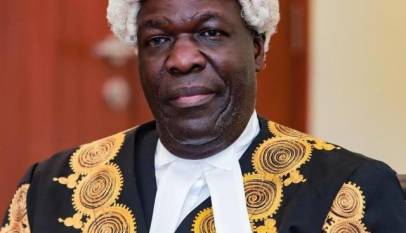
Meanwhile, Uganda Institute of Banking and Financial Services (UIBFS) Board Chairperson Godfrey Sebaana reaffirmed the industry’s commitment to supporting the government’s Tenfold Growth Strategy. Sebaana revealed that financial institutions had submitted proposals to the Bank of Uganda outlining their contribution towards achieving the country’s US$500 billion economy ambition. He said the regulator had responded with several interventions, including policy proposals and guidelines that require further engagement with government.

At the awards ceremony, Stanbic Bank emerged Bank of the Year in the Tier One category, while Pride Bank won the Tier Two award. Julius Kakeeto, the Managing Director of Pearl Bank, was named Banker of the Year. NCBA Bank also secured three awards, including Best Customer Service in Tier One, Best Bank in Corporate Banking and the Financial Crime Prevention Award. The awards, organised by UIBFS in partnership with the Uganda Bankers Association, recognise outstanding performance, innovation, customer service and leadership across the country’s banking and financial services industry.  

Check Also

Kigezi HomeBoyz’ Al Madinah Stadium to Become Uganda’s First Shariah-Compliant Stadium

Kigezi HomeBoyz’ home ground in Kabale is set to become Uganda’s first Shariah-compliant s…