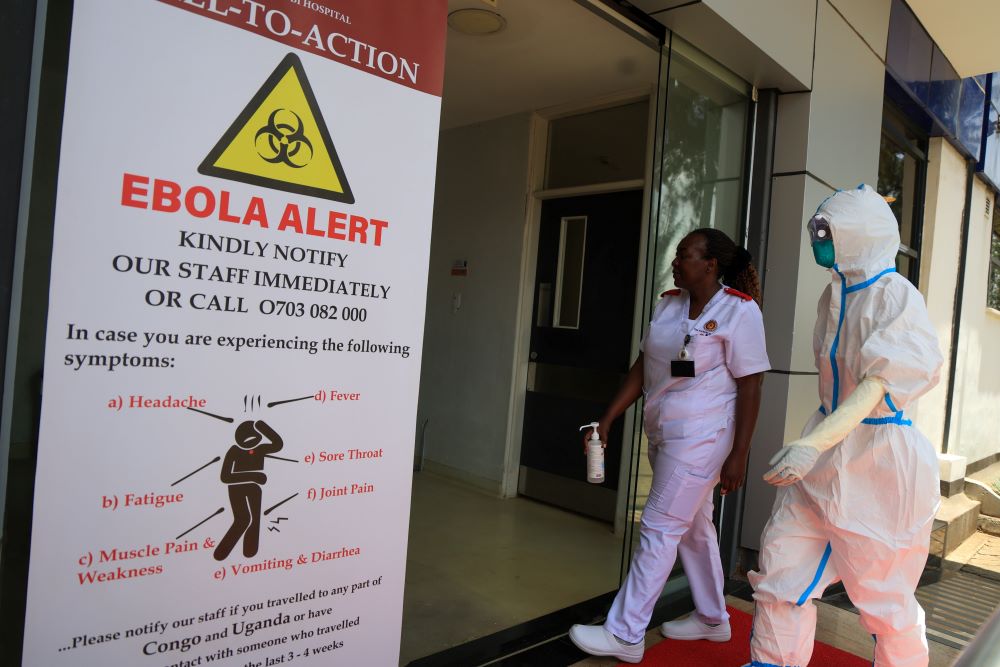
A vaccine trial targeting the Ebola Bundibugyo virus in the Democratic Republic of the Congo (DRC) is expected to begin shortly, raising hopes for new tools to combat an outbreak that has killed thousands of people and spread across multiple provinces.
The trial, named Tumaini, meaning “hope” in Swahili, is awaiting final regulatory and ethical clearances, with the first doses expected to be administered this week.
Researchers will initially test Ervebo, a vaccine developed to protect against Ebola virus disease caused by the Zaire Ebola virus, while two other vaccine candidates designed specifically for the Bundibugyo strain could be added to the study in November.
Ervebo is a single-dose, live-attenuated recombinant vaccine manufactured by Merck for people aged 12 months and older. However, its effectiveness against the Bundibugyo virus remains uncertain because it was developed for a different Ebola virus species. The World Health Organisation (WHO) says research is ongoing to establish whether Ervebo can provide sufficient cross-protection against the Bundibugyo strain.
“We still do not have preliminary data yet as to whether there is…sufficient cross-protection between the Ervebo vaccine, which is for the Zaire species, and the Bundibugyo species. As soon as we get it, we’ll be able to share that information,” said Dr Patrick Otim of WHO’s Emergency Response programme.
The Tumaini trial comes amid an outbreak that has recorded more than 9,500 reported cases and over 4,600 deaths in the DRC.
Although the virus has spread to an eighth province, Nord Ubangi, which borders the Central African Republic, there are signs that transmission may be slowing in Ituri province, the outbreak’s epicentre.
Jean-Jacques Muyembe-Tamfum, head of the DRC’s National Institute of Biomedical Research, said both newly reported cases and the proportion of tests returning positive results were declining in Ituri.
“It is not optimal, but it has improved,” he said. Despite the signs of progress, the outbreak continues to pose a significant public health threat, with many deaths occurring outside health facilities, presenting a serious challenge for containing community transmission. The outbreak has also raised concerns about international spread, following reports of infections in other countries, including Uganda, Kenya and Nigeria.
Nigeria confirmed an infection in an individual who had travelled from Uganda, prompting investigations to establish where the patient contracted the virus and whether local transmission had occurred. The patient reportedly developed symptoms on October 7 and sought treatment at a clinic before being hospitalised 48 hours later.
More than 40 close contacts had been identified, according to WHO, while genetic sequencing was underway to determine whether the infection was linked to the virus circulating in the DRC. Kenya has also reported nine cases, including one death, involving a national who had been working in the DRC before travelling to Nairobi through Entebbe, Uganda.
Kenya’s Ministry of Health Director General, Dr Patrick Amoth, said 135 contacts of the deceased patient had been traced and accounted for. Uganda, which recorded 20 confirmed cases and two deaths, declared its outbreak over at the end of August. Alongside vaccine research, scientists are investigating potential treatments for people infected with the Bundibugyo virus.
A clinical trial testing two experimental treatments, an antibody cocktail known as MBP134 and the antiviral drug remdesivir, has enrolled more than 600 patients. Placide Mbala of the Africa Centres for Disease Control and Prevention, who is the trial’s principal investigator, said researchers could soon have sufficient data to assess whether the treatments are effective.
An effective treatment would strengthen the response to the outbreak, said Chikwe Ihekweazu, head of WHO’s Health Emergencies Programme.
Meanwhile, WHO continues to support surveillance, contact tracing and infection prevention measures in affected areas, where insecurity and community resistance have complicated efforts to reach vulnerable populations.
Dr Mohamed Janabi, WHO Africa Regional Director, said the outbreak had become a regional concern requiring stronger surveillance, faster access to safe healthcare and greater community trust.