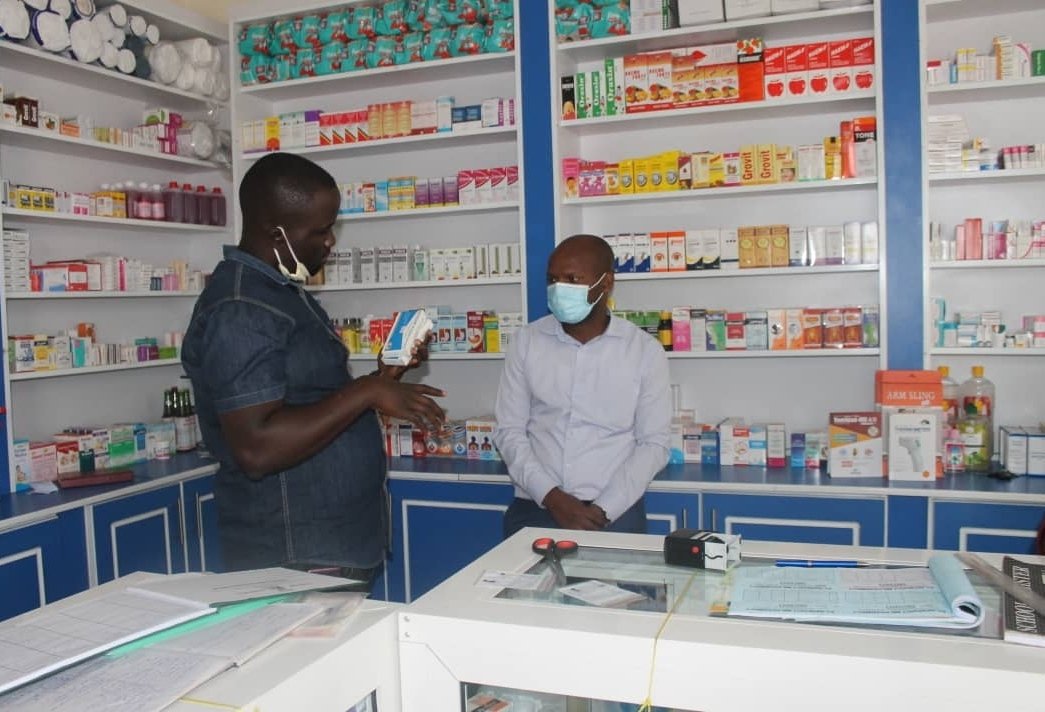
The Ministry of Health is expanding access to family planning services beyond hospitals and health centres by rolling out contraceptive services through pharmacies, accredited drug shops and community health extension workers.
The move is aimed at making family planning services more convenient and accessible to Ugandans by bringing services closer to communities and reducing the time clients spend seeking care at public health facilities.
The remarks were made during a Science Café organised to discuss challenges affecting access to family planning services and reporting on contraceptive availability.
The first Sexual and Reproductive Health and Rights (SRHR) Media Community of Practice (CoP) Science Café was held at the Health Journalists Network in Uganda (HEJNU) offices in Kampala on Friday under the theme “Reporting Contraceptive Stockouts in Public Health Facilities: Investigating What Works.”
The event was organised by the WISH Policy and Systems Programme, BBC Media Action, HEJNU and the Media Challenge Initiative (MCI), bringing together health experts and journalists to discuss family planning commodity availability, access and the role of the media in improving public awareness.
Speaking during the Science Café, Dr Chris Ebong, Principal Medical Officer at the Ministry of Health, said the government is increasing family planning service delivery points because people seeking these services are generally healthy and should not face the same challenges as patients seeking treatment.
“We appreciate the fact that people who get family planning are not sick. They are healthy and do not have any pain. They do not need to line up with those who are sick in our crowded health facilities,” Dr Ebong said.
He said the ministry is working with community health extension workers, pharmacies and accredited drug shops to ensure people can access approved family planning methods at convenient locations.
“The idea is that we do not need to inconvenience anyone in getting family planning. It must be very convenient and accessible to everyone,” he said.
Dr Ebong said government will continue providing family planning commodities free of charge through public health facilities for those who cannot afford them, while people who are able to pay can access services through private providers.
“We are intentionally introducing some of the commodities in pharmacies so that if you have the money, you can buy them and use them,” he said.
Daniel Aguma, Senior Pharmacist at the Ministry of Health, said partnerships between government and private providers are critical in ensuring family planning commodities and services reach more people.
He said pharmacies, clinics, medical centres and drug shops are working alongside government to deliver family planning services under a broader approach that brings together public and private providers.
“Government does not work in isolation to ensure these commodities are available. The pharmacies you see out there, medical centres, clinics and drug shops have all partnered with the government to deliver these services,” Aguma said.
Aguma explained that family planning commodities include both medicines and devices, such as intrauterine devices (IUDs), and stressed the importance of providing clients with accurate information to help them choose methods that suit their needs.
“There is not just one family planning method. There are multiple options available, and people should work with trained health workers to choose the method that best suits their needs,” he said.
He said Village Health Teams (VHTs) and Community Health Extension Workers have been trained to provide information and guide communities on available family planning options.
Aguma added that the ministry is also using digital innovations, including an artificial intelligence-powered family planning chatbot, to provide information on contraceptive methods, possible side effects and nearby service delivery points.
He said digital health platforms have also improved access to family planning products, especially following the growth of online services during the COVID-19 pandemic.