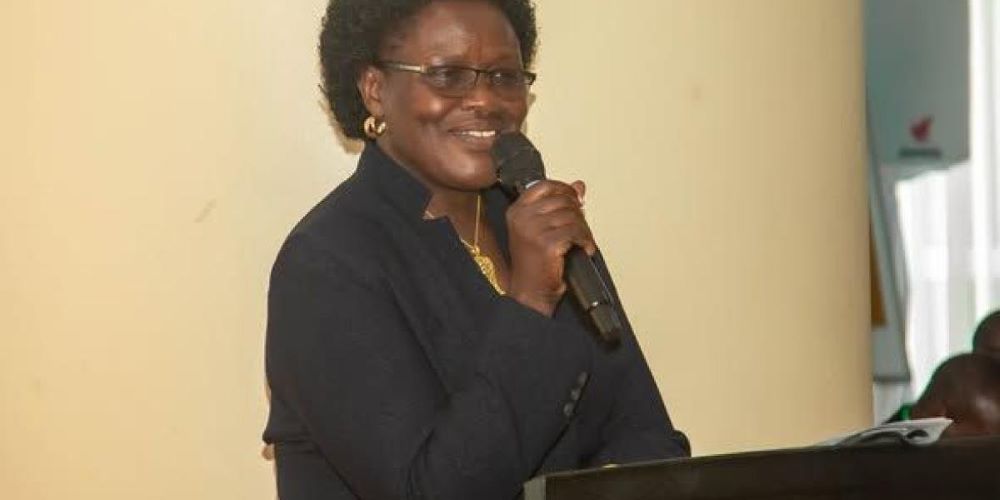
The State Minister for Education in charge of Primary Education, Phyllis Chemutai, has urged parents to continue making reasonable and voluntary contributions to government schools.
She warned that the withdrawal of community support could worsen teacher shortages and disrupt learning.
Chemutai says the government is facing financial constraints that have made it difficult to recruit and remunerate enough teachers to meet staffing needs in public schools.
She says communities should therefore continue supporting schools to maintain teaching and other essential services that government funding may not adequately cover.
Her remarks come amid growing complaints in the Sebei sub-region, where some schools have reportedly lost teachers previously recruited and paid through Parent-Teacher Association (PTA) contributions following the anti-corruption campaign led by the Minister Of Local Government, Balaam Barugahara Ateenyi.
The campaign, which seeks to expose corruption and illegal charges in government institutions, has generated controversy over parental contributions, with some school administrators and parents arguing that restrictions on the collections have affected the ability of schools to provide basic services.
Chemutai says she has received complaints from communities, particularly in rural areas, where some learners are reportedly abandoning classes because of inadequate teaching staff.
She acknowledges that some schools had relied on teachers employed using PTA funds, but says the disruption of those arrangements has left institutions struggling to maintain effective teaching.
“Please cooperate with the schools and support each other, for government cannot afford everything,” Chemutai said.
However, she cautioned school administrators against using PTA contributions to impose excessive charges on parents, many of whom are already struggling with the prevailing economic conditions.
Chemutai urged headteachers and school management committees to consult parents before introducing contributions and ensure that the amounts requested are affordable.
“Headteachers and school boards shouldn’t also use PTA fees to milk parents. Kindly ask for what is manageable,” she said.
The debate over PTA contributions has grown beyond Sebei, with parents, district leaders and legislators questioning the implications of the anti-corruption campaign for the day-to-day running of government-aided schools.
On November 5, 2026, the matter was raised in Parliament, where Kilak South MP Gilbert Olanya asked Barugahira to clarify whether his campaign had stopped parents from contributing towards school feeding and other school requirements.
Olanya said the uncertainty surrounding parental contributions had disrupted feeding programmes in some schools. He described the resulting confusion as the “Balaam effect” and asked the minister to clarify his position to enable schools to continue operating.
Barugahara told Parliament that voluntary contributions were permitted under the law but opposed excessive charges and compulsory payments, particularly where parents could not afford them.
He also said such contributions could support privately recruited teachers and school meals.
The controversy has also drawn resistance from parents and education leaders in other parts of the country.
In July, parents at Mbale High School resolved to maintain a voluntary contribution of 80,000 shillings per learner despite the restrictions, arguing that the money was necessary to keep the school operational.
In Agago District, local leaders sought government approval to continue collecting agreed parental contributions, saying public schools depended on the money to recruit additional teachers and meet operational costs.
The Education (Pre-Primary, Primary and Post-Primary) Act, 2008, prohibits schools implementing Universal Primary Education and Universal Secondary Education from charging fees for education. However, the law provides for voluntary contributions from parents and well-wishers towards emergencies and urgent school requirements, without denying any learner access to education for failure to contribute.
In Sebei, the effects of the dispute are increasingly being felt by learners. Maxwell Siwa, a student at Kapchorwa Senior Secondary School, says students are struggling to receive adequate lessons following the implementation of the restrictions that affected teachers employed through PTA arrangements.
Siwa also attributes the increasing number of students seen roaming around town to restrictions on arrangements that previously allowed learners to leave school premises for lunch.
He argues that parents should be allowed to continue supporting schools in meeting basic needs that government does not adequately provide for.”Actually, our parents were used to paying for food and other necessities government doesn’t provide, so let it just continue for the betterment of our education,” Siwa said.
Amiri David, the LCIII Chairperson of Central Division in Kapchorwa Municipality, says local leaders are concerned about the increasing number of students seen roaming around town during learning hours.
He warns that inadequate supervision could expose learners to drug abuse, sexual exploitation and other harmful social behaviours.
“We received some reports that students are now roaming at nearby cliffs, and you don’t know what they do there. This exposes them to drug abuse and other dangerous social behaviours that affect their learning process,” Amiri said.
He is calling for urgent intervention by education authorities, parents and school administrators to ensure that learners remain in school and receive proper guidance and supervision.
Meanwhile, Alfred Bosco Chericha, an opinion leader in the Sebei sub-region, says cultural institutions should also intervene by strengthening the transfer of traditional values and positive social behaviour to young people.
Chericha argues that the challenges facing schools require collective responsibility, particularly from parents, cultural leaders and communities.
He cautions that leaving learners without adequate guidance and supervision could expose them to negative influences, including criminal activities.
“Parents should understand what is good for their children; otherwise, we shall have future terrorists who are used to stealing to survive,” Chericha warned.
He adds that schools and parents should not leave the responsibility of shaping children’s behaviour entirely to government, especially at a time when public schools are experiencing staffing challenges.
The dispute has exposed a longstanding funding challenge in Uganda’s public education system.
Although the government is responsible for providing free education under UPE and USE, many schools have relied on parental contributions to supplement government funding, including paying additional teachers, providing meals, maintaining facilities and meeting other operational expenses.
The anti-corruption campaign has brought renewed scrutiny to these arrangements, particularly allegations that some school administrators impose compulsory and excessive charges on parents, sometimes without adequate accountability for the money collected.
However, the disruption of parental contributions has raised questions about how schools should meet essential costs where government funding and staffing allocations remain inadequate.