The government is developing a new national Ebola Virus Disease preparedness and response work plan to strengthen the country’s capacity to detect and respond to future outbreaks amid renewed transmission of the Bundibugyo Ebola virus in the region.
The initiative, themed Turning Preparedness into Action: Strengthening Uganda’s Ebola Readiness, is supported by the Intergovernmental Authority on Development (IGAD) under its Regional Pandemic Preparedness and Response (PREPARE) programme.
Consultations on the proposed work plan have been held over the past three days, bringing together local and regional experts to identify gaps and priority interventions in disease surveillance, laboratory systems, health workforce capacity and cross-border coordination.
The work plan will be aligned with the regional preparedness framework and guided by the One Health approach, which recognises the links between human, animal and environmental health.
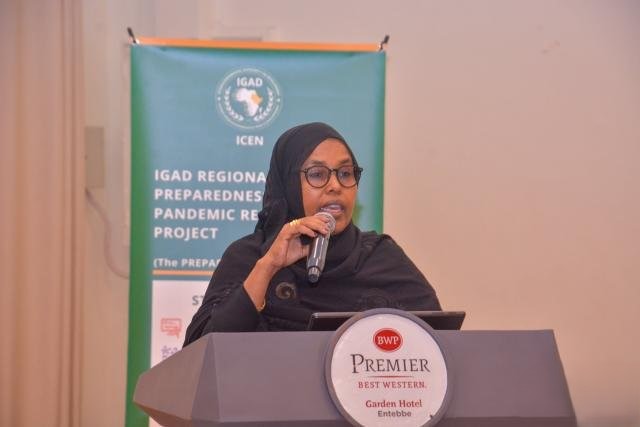
Speaking at the opening of the consultations, IGAD PREPARE Lead Ambassador Dr Fatuma Adan commended Uganda for containing its 2026 Ebola outbreak but warned that being declared Ebola-free does not eliminate the risk of future infections.
She called for sustained investment in preparedness to strengthen the country’s ability to detect and respond to emerging health threats.
The meeting was officiated by the Director General of Health Services, Dr Charles Olaro, with contributions from the World Health Organisation (WHO) Uganda and the International Federation of Red Cross and Red Crescent Societies (IFRC).
Uganda was declared Ebola-free on July 28, 2026, following an outbreak that began in May and was linked to infections imported from the Democratic Republic of Congo (DRC).
The WHO confirmed the end of the outbreak on August 27, after the country completed the required 42-day monitoring period without detecting further transmission.
Uganda recorded 20 confirmed cases, including two deaths. Fifteen cases were linked to infections imported from the DRC, while five were locally acquired among contacts and health workers.
However, the regional threat has persisted, with Kenya also reporting infections after a traveller arrived from the DRC through Uganda.
Kenya confirmed its first imported case on October 6, 2026. The infection subsequently spread to eight other people, including four family members and four health workers who attended to the initial patient. The country recorded nine confirmed cases and two deaths.
On November 11, Kenya discharged its last Ebola patient, with all seven survivors having recovered. The remaining contacts also completed their monitoring, allowing the country to begin the mandatory 42-day countdown on November 12. If no new infections are detected, Kenya is expected to be declared Ebola-free on December 23, 2026.
The WHO says there has been no evidence of transmission outside the identified cluster in Kenya. However, the outbreak remains active in the DRC, where more than 10,600 confirmed cases and 5,100 deaths had been reported by November 3, according to the organisation.
The preparedness initiative brings together seven IGAD member states: Uganda, Kenya, Ethiopia, Djibouti, Somalia, South Sudan and Sudan. It is supported by the Pandemic Fund, with a budget of 31.9 million US dollars.
Under the programme, WHO serves as the implementing entity and fiduciary agent, while IFRC is the delivery partner and IGAD provides regional coordination.
The programme focuses on strengthening cross-border disease surveillance and early warning systems, laboratory capacity, health workforce development, community engagement and coordination among member states.
In response to the Ebola threat, IGAD health ministers endorsed the allocation of seven million US dollars under the PREPARE programme at an extraordinary meeting on May 29, 2026. The funding is intended to support urgent Ebola preparedness and response activities across the seven member states.
The initiative seeks to strengthen national health systems and improve cooperation among neighbouring countries, recognising that infectious disease outbreaks can spread across borders and require coordinated regional responses.