Uganda could lose a substantial share of the value of its petroleum resources through cost overruns and weaknesses in the design of its oil revenue-sharing arrangements, the Natural Resource Governance Institute (NRGI) has warned.
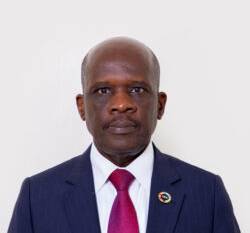
Dr Paul Bagabo, NRGI’s Uganda Country Director, says the government bears a disproportionate share of the financial risks associated with oil production, including increases in project costs, while the current fiscal regime does not consistently guarantee that government revenue rises in line with oil companies’ profitability.
He says the country needs to strengthen its petroleum revenue management framework, review the design of its windfall tax and improve oversight of recoverable costs to protect public revenue when commercial oil production begins.
Bagabo was presenting NRGI’s research on Uganda’s petroleum revenue management framework during a Petroleum Authority of Uganda (PAU)-Civil Society Organisations symposium on November 11, 2026.
The research estimates that at a long-term oil price of 70 US dollars per barrel, government revenue from the Tilenga and Kingfisher projects would average approximately 1.8 billion dollars annually between 2027 and 2050. However, if the long-term price falls to 50 dollars per barrel, the average annual government revenue would decline to approximately 1.08 billion dollars.
Bagabo said the difference demonstrates why Uganda needs to plan its oil-dependent expenditure cautiously rather than assume that projected petroleum earnings will remain stable throughout the production period. “Overall, the regime is progressive.
However, at some point, the progressivity starts slowing. At a lower price, and we used 70 conservatively. But because government relies a lot on royalties and profit oil sharing, which responds to production volumes rather than profitability, there is a challenge with the progressivity of the system. “So for next negotiations, or if we ever decide to renegotiate, it is important to think about these things,” Bagabo told the Conference.
The study argues that although Uganda’s petroleum fiscal terms can deliver a relatively high government take, the system does not consistently increase the government’s share when oil companies become more profitable.
This is partly because royalties and profit-oil sharing are linked to production volumes rather than directly to the profitability of the projects.
The research also raises concerns about the design of the windfall tax, which is intended to enable government to capture additional revenue when international oil prices rise beyond a specified threshold.
According to the modelling, the current arrangement creates a sharp financial difference around the 75-dollar-per-barrel threshold. A one-cent increase in the oil price from 74.99 dollars to 75 dollars would transfer approximately 870 million dollars of Tilenga’s project value from the investor to government.
The modelling indicates that this arrangement could leave the investor worse off at 75 dollars per barrel than at 70 dollars, potentially creating an undesirable incentive around the tax threshold.
Bagabo said the country should review the arrangement to ensure that government benefits from high oil prices without creating abrupt changes in the distribution of project value.
“There’s a provision for windfall tax, and we modelled that, and we realised that when there’s a windfall, some money will move away from the companies to UNOC and to government,” he said.
The study recommends applying the tax to the additional profit above the trigger price or phasing it in across a price range instead of maintaining a sharp threshold. It also recommends that Uganda consider more profit-based fiscal instruments in future petroleum licensing arrangements so that the government’s share increases more consistently with the profitability of oil projects.
Beyond fluctuations in international oil prices, the research identifies project cost overruns as another major threat to government revenue. Under the existing arrangements, oil companies can recover eligible project costs from petroleum revenue before profits are shared.
This means that when development costs increase, the amount of revenue available for distribution between government and investors is reduced. The study estimates that the government would absorb approximately three-quarters of the value lost when Tilenga’s project costs increase by between 23 and 33 percent. It further identifies approximately 4.7 billion dollars in pre-production capital expenditure that will enter the cost recovery system, making effective monitoring and auditing particularly important.
Bagabo warned that government must treat cost control as part of its revenue protection strategy rather than simply an operational matter for the oil companies. “Because of recoverable costs, the government will bear the bigger brunt of cost overruns, and so we need to try as much as possible to remain within certain costs,” he said.
He added that the risks could extend beyond the initial oil production projects as government and its partners pursue additional investments in gas and other infrastructure.
“Treat cost control as a core revenue-protection function. Why? Because when the costs go up, government bears a higher cost of the overrun. Now, the overrun might come in terms of investment in gas, the refinery project, and any other investments that come after the oil starts flowing.”
The study also highlights the financial exposure of the Kingfisher project if international oil prices decline. At 50 dollars per barrel, the investor’s net present value (NPV), which measures the present value of expected future cash flows, becomes negative.
The modelling also indicates that government’s NPV would exceed the total value of the project. At that price, Uganda National Oil Company (UNOC), which holds a carried interest in Kingfisher, would also be unable to recover its investment within the 25-year period under all the price scenarios examined.
Bagabo said government needs to consider how the existing cost recovery arrangements would perform under lower oil prices, particularly whether all eligible costs could be recovered within the production period. He observed that the current 60 percent cost recovery provision could become a challenge if oil prices fall substantially.
The findings come as Uganda prepares to begin commercial oil production, with the country’s petroleum revenue expected to support infrastructure development and the government’s tenfold economic growth strategy. However, the study cautions against using peak-period oil earnings as a basis for permanent government expenditure.
Its modelling indicates that government revenue could peak at approximately four billion dollars in the 2033/34 financial year before declining to an average of about 700 million dollars annually during the final five years of production.
NRGI recommends that government use a revenue-smoothing mechanism based on a reference oil price or a multi-year average rather than transferring petroleum earnings to the budget according to actual annual receipts.
The difference between actual receipts and the amount allowed for spending would be saved in the Petroleum Revenue Investment Reserve (PRIR), helping government manage periods of high and low oil revenue. This, the study argues, would reduce the risk of government establishing recurrent expenditure programmes that become difficult to sustain when production declines.
Bagabo also called for stronger parliamentary oversight of petroleum revenue management and the operations of UNOC.
He noted that Parliament had approved the 2026-2031 Charter of Fiscal Responsibility, which contains provisions governing petroleum revenue expenditure, but said the policy framework requires further attention to ensure that the fiscal rules are properly implemented.
“Parliament approved the charter, but there is need for oversight because both the spending entities, UNOC and the Parliament, and the minister of finance, need some oversight,” he said.
The study recommends strengthening Parliament’s oversight role and ensuring that the implementation of fiscal rules is consistent with the country’s development ambitions.
It also calls for adequate resources for the petroleum regulator and revenue authorities to audit recoverable costs and monitor project expenditure.
Bagabo said Uganda should begin addressing these weaknesses before oil revenue starts flowing, rather than waiting until the country is already dependent on petroleum earnings
. The research forms part of NRGI’s wider work on natural resource governance, including how oil-producing countries can use petroleum revenue to finance economic development while preparing for the eventual decline of oil production.