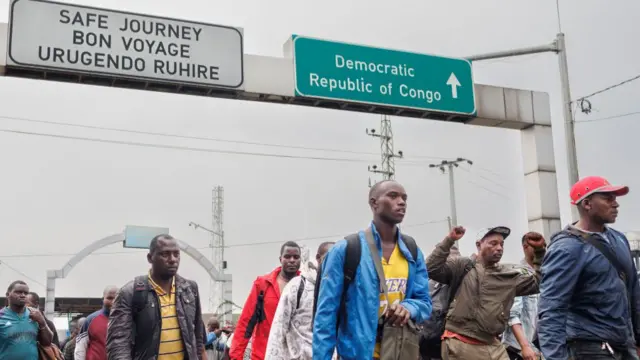
Congolese Citizens Return Home Amidst Cross-Border Challenges in Kasese
Home Trending News Current Affairs Karamoja Men Suffer Domestic Abuse in Silence, Cite Bias in GBV Response
Current Affairs - Trending News - 4 hours ago

Karamoja Men Suffer Domestic Abuse in Silence, Cite Bias in GBV Response

Men in the Karamoja sub-region have said they are increasingly experiencing domestic violence but remain silent, arguing that existing support systems are largely designed to protect women and children, leaving male victims with limited avenues for justice.

The concerns were raised during police barazas held in Moroto, Nakapiripirit, and Amudat districts, with support from the International Justice Mission and funding from the Government of Ireland. Residents said while domestic violence campaigns have helped protect vulnerable groups, they believe the same systems have created gaps in addressing abuse against men. 

Peter Loduk, a resident of Namalu trading centre, said some men suffer violence at home, but their complaints are rarely taken seriously by authorities. “All authorities point fingers at men. A woman can connive with the children to torture the husband and even chase the man out of the home,” Loduk said. “Unless government listens to both men and women fairly, family violence will increase.”

David Awas said intervention programs tend to favour women, leaving men without support structures for family conflict resolution. “There are so many programs targeted for women, and men are left in a miserable situation. Such projects have made women proud and disrespectful,” Awas said. “A man is head of the family and needs more support, but focus is put on women who later turn against husbands.”

Some men called for the establishment of community mediation desks to handle domestic disputes before they escalate to police cases. Paul Alimo accused police of worsening family conflicts, saying men are often arrested and forced to pay money for release when disputes are reported. 

“This hurts a man when he returns home, and there will be no peace at all,” he said. Albert Lokol said domestic violence against men is underreported and suggested that some women misuse police systems to their advantage. He claimed some women engage in late-night drinking and later report their husbands when confronted, leading to arrests.

“When women beat men, the women run to the police and the law favours them without understanding the root cause,” Lokol said. Elder Apamus Nangiro said cultural and economic responsibilities placed on men in Karamoja expose them to frustration when family relationships break down. “You give a woman land, build a house, and food, but she will still abandon you even after producing children,” he said. 

He called for stronger mediation systems to address household disputes. Rebecca Iruk, a female councillor at Nawojaboro Parish in Tapac Sub-county, acknowledged breakdowns in family cohesion, saying some women abandon homes and children. Officials, however, said domestic violence affects both genders. Grace Atai, Officer in Charge of the Child, Family, and Protection Unit, said women are also involved in domestic violence cases, though men often hesitate to report.

Simon Opolot, Amudat Grade One Magistrate, said cases involving women assaulting men are emerging but remain underreported, urging male victims to report abuse instead of suffering in silence.

Check Also

Makerere University Again Loses Bid to Reclaim Katanga Land

After over a century of Building For The Future, the future now seems to be overtaking Mak…