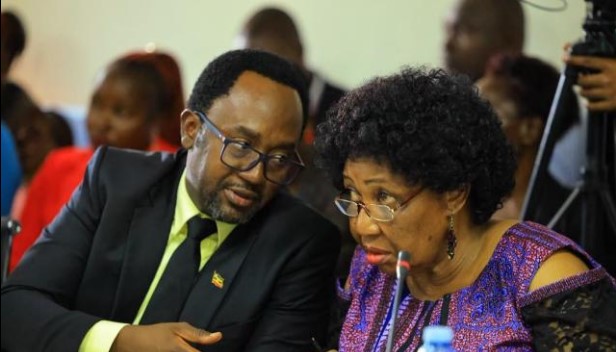
The Uganda Human Rights Commission (UHRC) Chairperson, Mariam Fauzat Wangadya, broke down in tears on Thursday while appearing before the Committee on Commissions, Statutory Authorities and State Enterprises (COSASE), saying she had been pushed “to the edge” by months of what she described as a coordinated smear campaign against her. Wangadya had appeared to explain her failure to appear before the committee on Wednesday, during a meeting intended to discuss the 2025 Auditor’s report on her commission.
The committee, chaired by Muwada Nkunyingi, also sought explanations over allegations that more than 200 human rights files had been closed without due process, the commission had not held meetings since March 2026, and there were persistent governance and maladministration concerns within the institution. Opening her submission, Wangadya apologized for recent public remarks she acknowledged were “beneath my character,” saying they were made under immense pressure.
//Cue in “I begin with…
Cue out…beneath my character.”//
She dismissed reports that she had gone into hiding, was under investigation, or had fled the country, saying she had spent the last five months responding to what she termed false accusations instead of leading the commission’s work. “Today I should be supervising investigations, talking to refugees, interacting with stakeholders, constituting tribunal panels and addressing major human rights issues. Instead, I have spent the past five months defending myself before every media house in Uganda,” she said.
Wangadya added that she had been summoned by three parliamentary committees within two days, yet none of the invitations related to Uganda’s prevailing human rights concerns. “All the invitations are about responding to false and petty accusations. This is really sad,” she said. She accused at least three commissioners of abandoning their constitutional responsibilities in favour of a sustained campaign to undermine her leadership.
“The work of at least three members of the Commission is to conspire against the chairperson, orchestrate a smear campaign, place defamatory material in the media, and lodge baseless complaints against me with every investigative agency in the land,” Wangadya alleged. She further claimed that commission meetings had become platforms to “humiliate, harass and taunt” her rather than discuss institutional work.
As she reflected on the toll the conflict had taken on her family and the decision to write a resignation letter, Wangadya became emotional and broke down in tears. “By the time a woman in my situation picks a pen, places it on paper, and writes a letter resigning her job, she must be in unimaginable agony,” she said before pausing to compose herself.
She then apologized on behalf of the commission. “On behalf of the Uganda Human Rights Commission as currently constituted, I apologize to His Excellency the President, to this Parliament and to all the people of Uganda. We have let you down,” she said.
Responding to allegations that she had sidelined commissioners from commission activities, Wangadya denied the claims, accusing Commissioners Stephen Basaliza, Simeon Nsubuga and Jacqueline Atuhaire of repeatedly missing tribunal sessions despite collecting allowances. “These commissioners occasionally pick allowances and do not show up, causing us to fail to realize quorum, which may lead to our decisions being challenged in a higher court,” she said.
She further alleged that Commissioner Jacqueline Atuhaire had on at least two occasions cancelled tribunal sessions after receiving allowances for herself, her driver and bodyguard. Wangadya also said she regularly circulated draft rulings to all commissioners but claimed the three never submitted comments before signing the final decisions.
Addressing allegations that she had unilaterally closed more than 200 human rights complaints, Wangadya argued that the decision to dismiss files lacking sufficient legal or evidential merit was taken collectively by the commission sitting as a tribunal, not by herself. She said complaints could lawfully be dismissed if they were filed outside the statutory five-year limitation period, failed to disclose a cause of action, or did not constitute human rights violations.
“Dismissal of cases is not unique to the Uganda Human Rights Commission,” she said, noting that courts routinely reject cases that do not meet legal thresholds. She added that the commission remains constitutionally mandated to perform numerous functions beyond tribunal hearings, including investigations, inspections of detention facilities, public education and advising government on human rights matters.
Her appearance came a day after Commissioners Stephen Basaliza, Simeon Nsubuga and Jacqueline Atuhaire told COSASE that the commission had not held a meeting since March 9, 2026, creating what they described as a leadership vacuum. They alleged Wangadya had been absent for months, leaving the institution without effective leadership after the acting chairperson also travelled abroad. They also questioned reports that she had communicated her intention to resign through social media instead of following official government procedures.
After hearing both sides, COSASE directed Wangadya and the entire commission to reappear before the committee on Friday, July 24, as Parliament continues its investigation into governance, accountability and operational challenges at the constitutionally established human rights body.