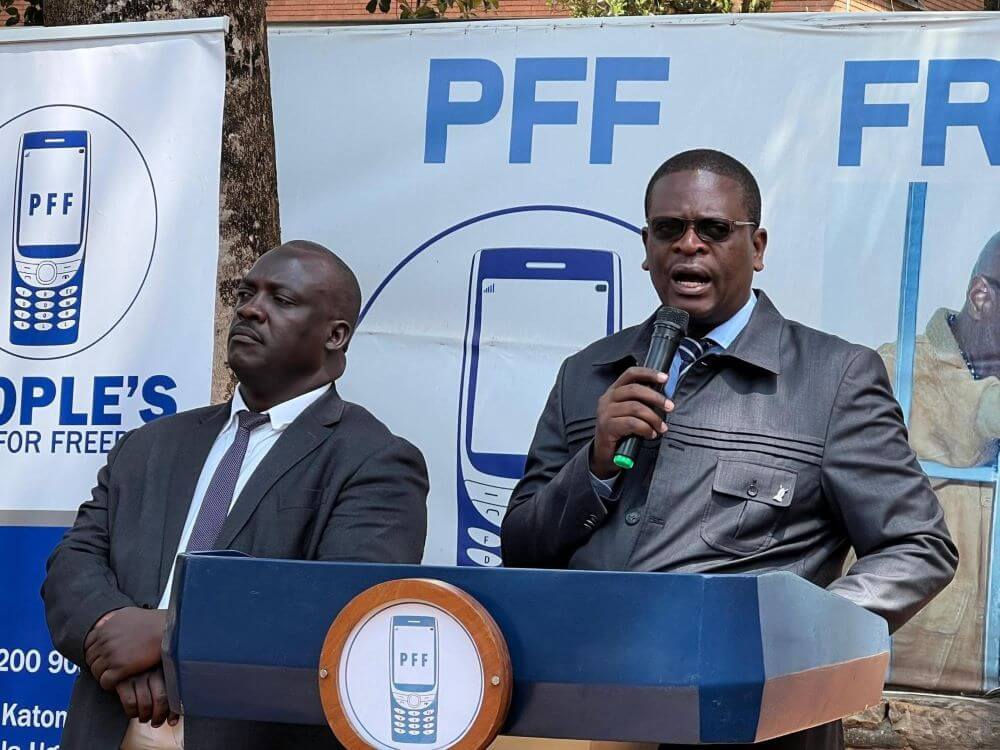
The People’s Front for Freedom (PFF) has set four conditions it wants fulfilled before participating in any national dialogue, insisting that negotiations with President Yoweri Museveni’s government must be independently organised, inclusive and backed by guarantees to ensure implementation of agreed resolutions.
The party wants a neutral convener jointly selected by government and opposition parties, a jointly developed agenda, representation of different sections of Ugandan society and an independent guarantor to oversee the implementation of any agreement reached.
PFF has also rejected the proposed Consociational Democracy Agreement, describing it as a possible return to the Movement political system and questioning whether it offers genuine political reforms or merely creates opportunities for selected opposition figures to access government positions.
The position comes amid renewed attention to efforts by Gen Salim Saleh, President Museveni’s brother and a senior figure in Uganda’s political and military establishment, to engage veteran opposition leader Dr Kizza Besigye.
However, speaking during the party’s weekly press conference at its headquarters, Acting PFF President Dr Michael Lulume Bayiga said the party was not opposed to dialogue but would not participate in negotiations whose objectives, leadership and agenda had already been determined by one side.
Bayiga questioned why opposition parties should be expected to endorse a political arrangement they had not participated in developing. He argued that genuine dialogue must begin with an agreement on its purpose, who should organise it, who should participate, and what mechanisms would guarantee implementation of the final resolutions.
PFF’s first condition is the appointment of a neutral convener jointly agreed upon by government and opposition political parties. Bayiga argued that government cannot independently select the person or institution responsible for organising negotiations and expect opposition parties to consider the process impartial.
He said the convener must be an independent and respected individual or institution capable of managing negotiations, enforcing agreed procedures and ensuring that all participating parties are treated fairly. Allowing one side to control the process, he argued, could turn national dialogue into a monologue rather than genuine negotiations.
The second condition is a jointly developed dialogue agenda.
PFF argues that neither government nor individuals promoting the Consociational Democracy Agreement should independently determine the issues to be discussed. Bayiga said opposition parties must have an opportunity to present their concerns and proposals before a common agenda is adopted.
He identified constitutional reform, political freedoms, governance, national reconciliation and political exclusion as some of the issues that should be considered. The party maintains that negotiations should focus on identifying Uganda’s political challenges and agreeing on solutions rather than presenting opposition leaders with an already prepared agreement.
The third condition is broad representation beyond government and opposition political parties. Bayiga identified cultural institutions, religious leaders, civil society organisations, the business community and representatives of Uganda’s historical communities as important participants.
He argued that Uganda’s political challenges cannot be resolved through negotiations involving only a handful of political leaders. He also referred to Uganda’s historical composition of 15 plus one nations, saying communities that contributed to the country’s formation should have an opportunity to participate in determining its future governance arrangements.
Bayiga further warned against allowing selected opposition figures to negotiate on behalf of political parties without obtaining their consent. The fourth condition is the appointment of an independent guarantor to monitor the implementation of any agreement reached.Bayiga questioned what would happen if government and opposition parties signed an agreement, but the government subsequently failed to fulfil its commitments. He said the guarantor could be an individual, institution or government acceptable to all participating parties, with sufficient credibility and authority to monitor implementation and ensure that parties honour their obligations.
PFF argues that without such a mechanism, dialogue could end with the signing of another political document without meaningful changes in the country. Bayiga also challenged the proposed Consociational Democracy Agreement prepared by Gen Salim Saleh, also known as Caleb Akandwanaho, and Professor Ogenga Otunnu.
The proposal seeks to address what its proponents describe as the historical causes and consequences of sectarianism, exclusion, marginalisation and conflict in Uganda. However, PFF questions the circumstances surrounding its development and argues that opposition parties should not be expected to embrace a document they did not help formulate.
Bayiga described the proposed arrangement as a possible reincarnation of the Movement political system, which Uganda abandoned following the return to multiparty politics. He also questioned whether the proposed political cooperation would provide opposition leaders with meaningful decision-making authority or simply create opportunities for them to occupy government positions.
Citing Democratic Party President Norbert Mao’s appointment as Minister of Justice and Constitutional Affairs, Bayiga questioned whether such appointments translate into genuine power-sharing. “Don’t be deceived that under that paper there is any power to share. There are only goodies to share,” Bayiga said. His remarks reflect PFF’s interpretation of the proposed agreement rather than established provisions of the document. Beyond rejecting the proposed agreement, PFF has outlined the broader political changes it wants addressed through national dialogue.
The party is calling for a political transition after President Museveni’s approximately four decades in power, a new constitutional framework, truth and reconciliation to address historical grievances, and independent state institutions free from political interference. It is also advocating for federalism, which Bayiga says would empower Uganda’s historical communities and give them greater control over their resources and development priorities.
The party further wants free and credible elections in which citizens can exercise their democratic rights without intimidation. PFF maintains that these issues should form the foundation of negotiations rather than discussions centred on sharing government positions among selected political actors.