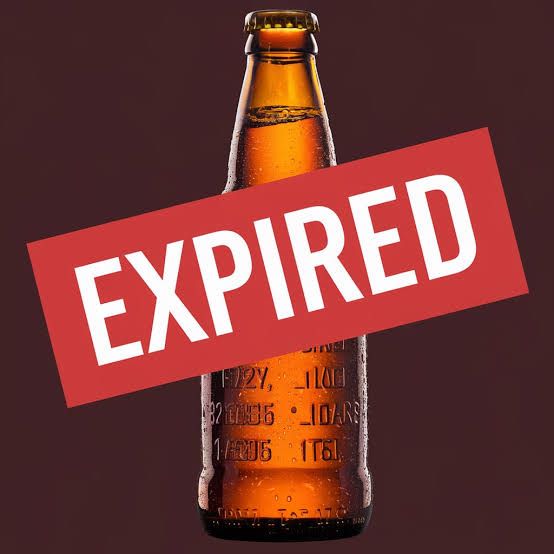
A hotel in Wakiso District has been ordered to pay a customer over ten million shillings in damages after the High Court found it negligent for serving a customer a bottle of Club Pilsner Lager that had expired.
The court found that the beer had been kept for three months after its best-before date. Justice Bonny Isaac Teko ruled that Nican Resort Hotel at Seguku Katale breached its duty of care by serving the beer to Ruth Nazziwa without checking its best-before date.
The court found that Nazziwa suffered a short-lived gastric upset after taking a sip of the beer.
However, the judge dismissed the case against Nile Breweries Limited, the manufacturer of Club Pilsner, ruling that Nazziwa had failed to prove that the beer was defective when it left the company’s factory or that the manufacturer was negligent.
In a judgment delivered on November 16, 2026, in Civil Suit No. 027 of 2019, Justice Teko awarded Nazziwa ten million shillings in general damages and two hundred and forty thousand shillings in special damages, together with interest at eight per cent per annum and costs of the suit against the hotel.
The dispute arose from an incident on February 28, 2018, when Nazziwa was at Nican Resort Hotel with friends.
She told the court that she was served a bottle of Club Pilsner Lager, took a sip, and noticed a foul smell before complaining to the hotel staff.
The hotel’s food and beverage supervisor, Collins Nakabale, confirmed that he was called to attend to the complaint, examined the bottle, and saw particles in the beer.
He also acknowledged that an apology was written following the incident. Justice Teko relied on the supervisor’s testimony, which he considered particularly significant because it came from a witness called by the hotel.
“His evidence on this is against the interest of the party who called him and is not affected by the chain-of-custody problems that undermine the laboratory report. It is independent of that report, and the Court accepts it,” the judge ruled.
The court found that the beer was manufactured on August 7, 2017, with a best-before date in early December 2017.
It was therefore served approximately 12 weeks after that date. Although the judge cautioned that a best-before date does not automatically establish that a product is unsafe, he said the hotel had a responsibility to check the date before serving it.
“A best-before date marks quality, not safety,” Justice Teko observed, adding that the finding that the beer was past its best-before date was relevant to the hotel’s duty of care.
He rejected the hotel’s argument that it was not responsible for hidden defects in sealed bottles, explaining that the case concerned a date printed on the bottle that could easily have been checked. “Reading that date is a basic visual check,” the judge said.
He noted that the hotel’s own evidence showed that its policy required staff to check products before serving them.
However, the waitress who allegedly carried out the check was not called to testify, and the hotel did not provide evidence explaining its stock rotation or monitoring of best-before dates.
“Either the check was not done, or it was done, and the bottle was served anyway,” Justice Teko ruled. He added that the failure to check the date amounted to a breach of the duty of care owed to the customer.
The court’s finding against the hotel did not depend on the disputed laboratory report.
The judge also rejected an argument by Nile Breweries that Nazziwa should have checked the best-before date herself before drinking the beer.
“A customer served by a hotel is entitled to expect that the hotel has checked what it serves, particularly where the hotel has a policy of doing so,” he ruled. While the court established that the bottle was a product of Nile Breweries, it found insufficient evidence to hold the manufacturer responsible for the condition of the beer when it was served.
The manufacturer had argued that its production process was automated and sterile, with bottle sterilisation, batch testing and Uganda National Bureau of Standards certification.
Its quality assurance manager, Nicholas Lubwama, testified that a control sample from the same production batch was found to be normal.
The court also considered problems surrounding the handling and testing of the bottle that Nazziwa had complained about.
The bottle was opened on the day of the incident, left at the hotel counter and subsequently taken into police custody.
It was reportedly kept without refrigeration for more than a month before being submitted for laboratory analysis. The report indicated that the sample was examined in November 2018.
The judge noted that the police diary contained an incorrect submission date and that neither the bottle nor the beer sample was produced in court.
Although the court declined to expunge the Government Analyst’s report, it said the report could not independently establish the condition of the beer when it was served.
“The report is therefore of little help in showing what was in the bottle when it was served, and the Court has not relied on it for that purpose,” Justice Teko ruled.
He further found that the differences between the complained-of sample and the control sample could have resulted from deterioration after the bottle was opened rather than a manufacturing defect.
The judge said Nazziwa had not provided expert evidence demonstrating how the particles could have formed inside a sealed bottle or proving that the defect existed when the beer left the manufacturer’s control.
The court also rejected her claim that Nican Resort Hotel was an agent of Nile Breweries.
Evidence showed that the hotel obtained its beer through Nakuya Enterprises Limited, an authorised distributor, under arrangements in which ownership and risk passed to independent distributors.
Justice Teko found no agency, partnership or employer-employee relationship that could make Nile Breweries vicariously liable for the hotel’s actions.
The court also limited the compensation after finding that Nazziwa had not proved that her subsequent illness and treatment in South Africa were caused by the beer.
She had claimed that she suffered food poisoning, received treatment in Uganda and later travelled to South Africa for further medical attention. However, the judge noted that she admitted during cross-examination that tests at Kampala International Medical Centre had not confirmed food poisoning.
Her medical records instead referred to peptic ulcers, while the treatment was mainly gastric protection. The court further observed that she had consumed other beers that evening, according to her police statement, and that no medical witness linked her subsequent illness to the incident.
“The Court does not find that the later illness was caused by the beer,” Justice Teko ruled. He accepted only the evidence relating to her immediate symptoms and the treatment she received shortly after the incident.
On damages, the judge rejected her claim for one hundred million shillings in general damages, finding that the injury established was limited to a brief gastric upset, distress and the inconvenience of seeking medical attention.
“The Plaintiff proved a brief gastric upset after a single sip, some distress and the inconvenience of seeking treatment, and nothing lasting,” he said before awarding ten million shillings.
The court also rejected her claim for punitive and exemplary damages, finding no evidence that the hotel’s conduct was deliberate, oppressive or high-handed.
The judgment comes amid continuing efforts by the Uganda National Bureau of Standards to remove expired and substandard products from the market. In July 2026, UNBS reported seizing more than 880 tonnes of substandard goods worth approximately three billion shillings during the 2025/2026 financial year. The seized goods included food products, cosmetics and construction materials.
The Food and Drugs Act also defines food to include drinks and provides a legal framework for preventing the adulteration of products intended for human consumption.
The case, which was filed in 2019, demonstrates the responsibility of businesses serving food and drinks to customers to carry out basic checks on products before offering them for consumption.
Under the final orders, Nican Resort Hotel must pay Nazziwa ten million, two hundred and forty thousand shillings, with eight per cent interest per annum.
The interest on the 240,000 shillings special damages runs from the date the suit was filed, while that on the ten million-shilling general damages runs from the date of judgment until full payment.
The hotel was also ordered to pay her costs of the suit. Each party was directed to bear its own costs in the case against Nile Breweries.