
Traders Admit Spraying Tomatoes to Prolong Shelf Life, Demand Crackdown on Fake Chemicals
Home Trending News Current Affairs Traders Admit Spraying Tomatoes to Prolong Shelf Life, Demand Crackdown on Fake Chemicals

Traders Admit Spraying Tomatoes to Prolong Shelf Life, Demand Crackdown on Fake Chemicals

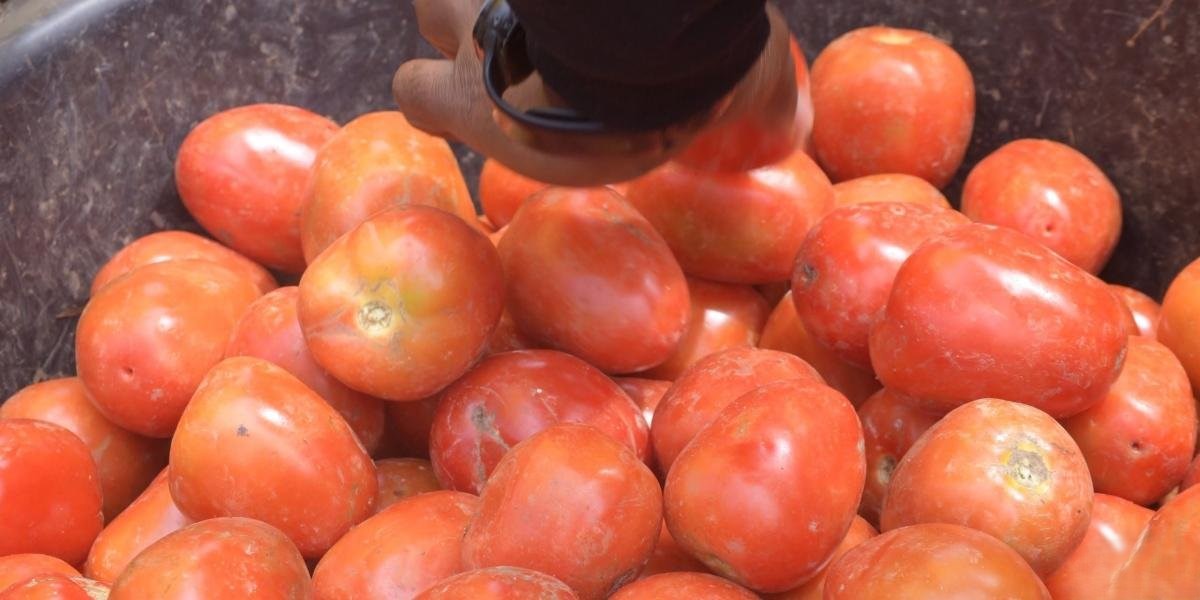
Traders in Nateete Market have admitted applying pesticides to tomatoes and other fresh produce to keep them looking fresh for longer, prompting renewed calls for stronger government enforcement against the misuse and sale of counterfeit agro-chemicals.

The traders made the revelations Tuesday during a food safety sensitisation campaign organised by the Ministry of Agriculture, Animal Industry and Fisheries (MAAIF), in partnership with the Centre for Agriculture and Bioscience International (CABI) and Kampala Capital City Authority (KCCA).

The campaign, dubbed “Yoza Bulungi, Olye Bulungi” (Wash Well, Eat Well), seeks to educate traders and consumers about the dangers of pesticide residues in food and promote safer handling of fresh produce. During the engagement, Dr Alexanda Samula urged traders to stop applying chemicals to tomatoes, watermelons, salads and other produce that has already been harvested and is intended for sale.

He warned that the practice exposes consumers to potentially harmful chemical residues, undermining food safety and public health. Abubaker Mutaawe, a watermelon trader, welcomed the campaign, saying it had helped him understand the dangers associated with practices he had previously considered harmless.

“This engagement has opened our eyes. Today, I have learnt that these chemicals can be dangerous to our health. We have been applying them to tomatoes thinking they help keep them longer on the shelves, without understanding the risks involved,” he said. Hadija Namagembe, another trader dealing in tomatoes, called on the government to strengthen enforcement against unscrupulous agro-chemical dealers who sell counterfeit products.

“We appreciate this campaign, but we need Government to put in place and enforce strict measures against dealers who sell fake agro-chemicals,” she said. The traders’ concerns come amid growing evidence of pesticide contamination in Uganda’s food supply.

A 2022 study published in the journal Pesticide Biochemistry and Physiology examined 160 samples of fruits and vegetables collected from farms, markets, street vendors, restaurants and households in the Kampala Metropolitan Area. The researchers detected multiple pesticide residues in 95.6 percent of the samples, including produce collected at points where food was ready for consumption.

The researchers called for regular monitoring of pesticide residues and greater sensitisation of stakeholders involved in food production and handling. A separate exploratory study conducted by Wageningen University and Research in 2023 analysed 726 pesticide components in vegetables collected from six markets across three regions of Uganda. 

It identified 19 pesticide components, with tomatoes recording the highest occurrence of residues. Some detected chemicals exceeded established international residue limits. The concerns also extend to the agro-input supply chain. A 2021 study examining pesticide dealers in Central and Western Uganda found that 25 percent of the shops observed were selling repackaged products, while 10.5 percent had unmarked or unlabeled products. Only 26.6 percent of mystery shoppers received advice on pesticide use despite 97 percent of dealers considering such advice part of their responsibility.

The findings point to gaps in the regulation of agro-chemical distribution and the guidance available to people using the products. The “Yoza Bulungi, Olye Bulungi” campaign was launched on November 4, 2026, and is initially targeting 10 major markets in Kampala and four markets in Masaka City. The Kampala markets include Wandegeya, Kalerwe, Busega, Nakawa, Owino, Nakasero, Kasubi, Nateete, Usafi and Bugolobi.

The campaign is intended to change attitudes among farmers, traders and consumers by emphasising that applying additional pesticides to harvested food does not necessarily extend its shelf life and can instead expose consumers to chemical residues. MAAIF, CABI and KCCA are using market engagements and public awareness messages to promote responsible pesticide use, proper post-harvest handling and safer food practices. 

The partners say improved awareness and responsible handling of agricultural produce are important for protecting public health, strengthening consumer confidence and supporting Uganda’s agricultural markets.

Check Also

MPs Call for Fast-Tracking of National Health Insurance Scheme

A section of Members of Parliament has called on the government to fast-track the National…