UNICEF has urged Uganda to strengthen child road safety, saying protecting children requires action to reduce speeding, improve pedestrian infrastructure and strengthen emergency response.
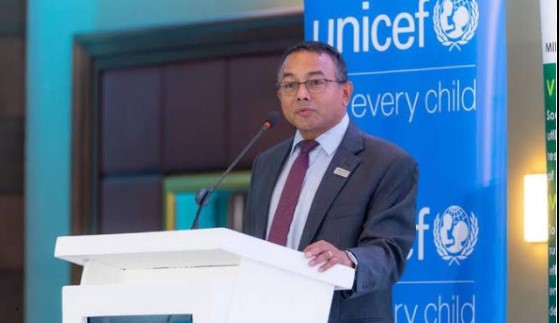
UNICEF Representative to Uganda, Dr. Robin Nandy, in a statement, said the agency was deeply saddened by the recent road accidents that have claimed the lives of school-going children, leaving families, schools and communities in mourning.
He described the deaths as preventable and stressed that every child has the right to travel to school and return home safely.
“These are preventable deaths, and every child lost on Uganda’s roads is one too many.”
The statement follows a series of road crashes involving schoolchildren, including the King David Junior School bus accident in Kapchorwa District, which claimed 24 lives, among them 21 pupils and the school’s founder and director, Tadeo Ssekade.
The victims were returning from an educational tour to Sipi Falls when the bus reportedly lost control following suspected brake failure.
The Kapchorwa tragedy came days after other serious accidents involving school trips, including a bus-train collision in Mukono that killed a student and a teacher, and another crash near Busota that left dozens of learners injured.
The accidents prompted the Ministry of Education and Sports to suspend all school educational trips and tours nationwide.
Acting Minister for Education and Sports Dr. John Chrysostom Muyingo also directed schools already on educational trips to report to the nearest police station for assistance before returning home.
Government has since announced a review of the school tour guidelines issued in May 2025.
An inter-ministerial committee has been tasked with proposing tougher regulations covering vehicle inspections, driver qualifications, supervision and the management of educational trips before they resume.
UNICEF welcomed the government’s response, including efforts to strengthen enforcement of traffic regulations and review school travel guidelines.
The agency noted that schools have already been reminded to use only licensed and roadworthy vehicles driven by qualified and well-rested drivers, conduct proper risk assessments and ensure adequate teacher supervision throughout every journey.
However, Nandy said the response should not end with safer school trips.
“Schools have been reminded to use only roadworthy, licensed vehicles driven by qualified, well-rested drivers, conduct proper risk assessments and maintain adequate teacher supervision throughout every journey. Even so, more urgent action is needed to reduce speeding near schools, provide safe crossings and walking paths, and strengthen emergency care,” he said.
Nandy said every child has the right to travel to school and return home safely, describing road safety as “a child rights issue, linked to survival, education and a safe environment.”
According to UNICEF, road traffic injuries are the leading cause of death among children and adolescents aged between five and 19 years globally, with low- and middle-income countries carrying the greatest burden.
The agency also highlighted the importance of speed management, noting that a child struck by a vehicle travelling at 30 kilometres per hour has a significantly higher chance of survival than one hit at 50 kilometres per hour.
Traffic Police statistics show that at least two schoolchildren are killed on Uganda’s roads every day, translating to about 730 deaths annually and underscoring growing concerns about the safety of learners on the country’s roads.