FDC Raises Concerns Over Uganda’s Power Export Strategies Amid Rural Electrification Shortfalls
Uganda exported electricity worth USD 60.47 million (about Shs 220 billion) in 2025, even as only 11.4 per cent of rural households had access to grid electricity for lighting, raising questions about the government’s priorities in the energy sector.
The figures, cited by the Forum for Democratic Change (FDC) from World Bank trade data and Uganda Bureau of Statistics statistics, have reignited the debate over whether Uganda should prioritise electricity exports to neighbouring countries while millions of its citizens remain without reliable and affordable power.
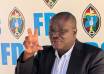
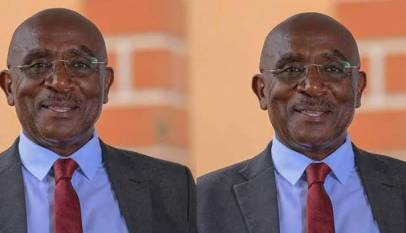
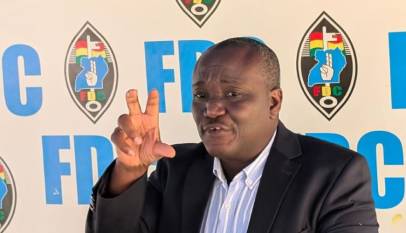
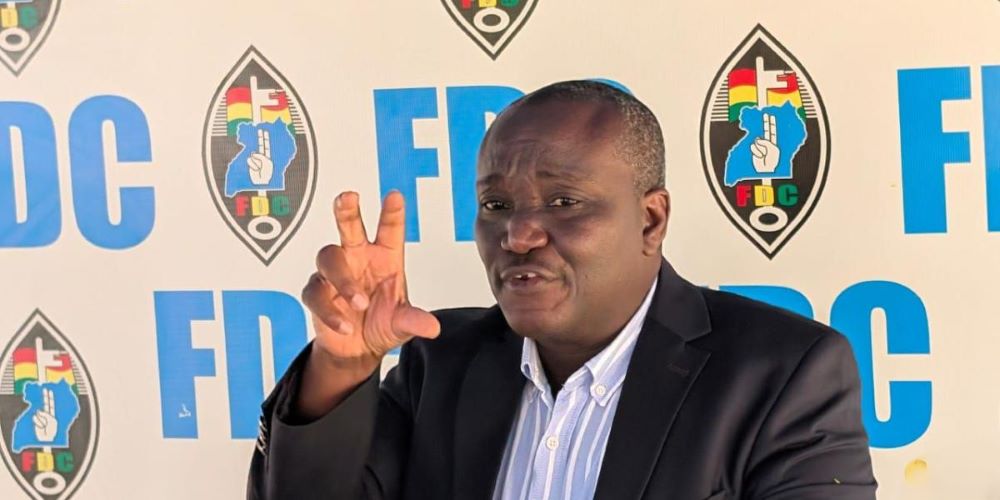
In a media statement, FDC Vice Chairperson Centenary Robert Franco questioned the government’s emphasis on regional electricity trade, arguing that domestic consumers should benefit before the country celebrates supplying power to its neighbours. “What about the Ugandans who live in the very communities through which these electricity transmission projects pass?” the party asks.
According to the World Bank’s World Integrated Trade Solution data cited by the FDC, Uganda exported 618.3 million kilowatt-hours of electricity in 2025. Kenya accounted for exports worth USD 25.10 million, followed by Rwanda at USD 17.82 million and Tanzania at USD 17.21 million. Exports to the Democratic Republic of Congo were valued at USD 342,680.
The FDC acknowledges the importance of regional electricity trade but questions why communities in Uganda continue to lack electricity connections while infrastructure is being developed to supply neighbouring countries. It cited West Nile as an example, arguing that many households in the region remain without electricity despite its proximity to South Sudan, with which Uganda signed a power sales agreement in June 2023.
The agreement prioritised a 308-kilometre, 400-kilovolt transmission line between Olwiyo in Uganda and Juba in South Sudan. Of the planned line, 138 kilometres were to be on the Ugandan side and 170 kilometres in South Sudan. The party also questioned the implementation of electricity access commitments contained in the National Resistance Movement’s 2016–2021 and 2021–2026 manifestos.
Among the promises it cited were the construction of thousands of kilometres of electricity distribution networks, the connection of previously unserved sub-county headquarters and the expansion of household connections. The FDC also wants the government to account for progress on a commitment to mobilise approximately Shs 45 billion to extend electricity to Buvuma and Sigulu islands.
The party argues that the government should publish details of the public funds spent on electricity infrastructure and explain why communities promised connections continue to wait. “Electricity is not a luxury. It is an essential service that directly affects people’s ability to earn a living, access healthcare, educate their children and operate businesses,” the statement reads.
The FDC is demanding a nationwide electricity connection programme targeting underserved villages, parishes, sub-counties and trading centres, as well as an accelerated electrification programme for West Nile, Buvuma, Obongi, Karamoja and other underserved areas. It is also calling for affordable connection charges, lower electricity costs for households and small businesses, and greater transparency regarding the volumes of electricity exported and the revenue generated.
The party maintains that electricity exports should be allowed where Uganda has genuine surplus generation capacity, while domestic consumers receive priority. “We are not asking the government to provide electricity for free. We are demanding that the government gives its own people the opportunity to access and pay for this essential service,” the statement adds.
The FDC says its 2026 manifesto proposes expanding electricity generation capacity to 4,000 megawatts, promoting renewable energy, reducing electricity charges for households and small and medium enterprises, and ensuring minimum electricity access in every village.
UPDF Begins Withdrawal of Troops from Somalia
Ahabwe Takes Legal Action Against High Court Ruling on Kajara MP
UPDF Begins Withdrawal of Troops from Somalia
Ahabwe Takes Legal Action Against High Court Ruling on Kajara MP
UPDF Begins Withdrawal of Troops from Somalia
The Uganda People's Defence Forces (UPDF) has started withdrawing troops from Somalia unde…

Now On Air – 88.2 Sanyu Fm
Get Hooked Right Here
DON'T MISS!!!
UPDF Begins Withdrawal of Troops from Somalia
The Uganda People's Defence Forces (UPDF) has started withdrawing troops from Somalia under a bilateral security arrangement, marking the beginning of a phased exit from