
Ahabwe Takes Legal Action Against High Court Ruling on Kajara MP
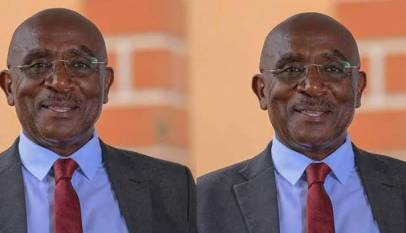
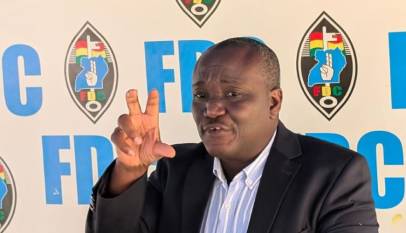
Former Kajara County parliamentary candidate Venansio Ahabwe has appealed to the Court of Appeal seeking to overturn a High Court decision that upheld the election of James Hunter Byenjeru Tukahirwa as Member of Parliament for Kajara County in Ntungamo District.
In his appeal, Ahabwe argues that Justice Tom Chemutai erred in law and fact when he ruled that Tukahirwa was eligible to contest in the January 15, 2026 general elections, despite having been demoted by the Leadership Code Tribunal. Ahabwe wants the Court of Appeal to set aside the judgment delivered on October 12, 2026, declare Tukahirwa ineligible to contest for the parliamentary seat, nullify his election and order the Electoral Commission to organise a fresh election in the constituency.
The appeal arises from consolidated Election Petitions Numbers 03 and 04 of 2026, in which Ahabwe and Muhwezi Deus challenged Tukahirwa’s election. At the centre of the dispute is Section 49(7) of the Leadership Code Act, which bars a leader or public officer dismissed or removed from office following a decision of the Leadership Code Tribunal from holding any public office, whether appointive or elective, for five years from the date of dismissal or removal.
Ahabwe argues that Tukahirwa’s demotion by the tribunal in April 2022 amounted to removal from office, effectively disqualifying him from contesting an elective position within the five-year restriction period. Court records indicate that Tukahirwa previously served as a Senior Assistant Secretary in the Ministry of Health before facing disciplinary proceedings before the tribunal in 2022 over the misuse of two government vehicles.
On April 26, 2022, the tribunal ordered his demotion under Section 12B(4) of the Leadership Code Act. However, a month later, on May 26, Tukahirwa applied for early retirement from the public service, before the expiry of the 30 days communicated by the tribunal’s registrar for implementation of the decision. The Ministry of Public Service subsequently cleared him for early retirement, indicating that implementation of the tribunal’s decision had been overtaken by events.
The petitioners argued that the retirement process was irregular and that Tukahirwa had avoided the consequences of the tribunal’s disciplinary decision by leaving the public service before the demotion could be implemented. They also faulted the Electoral Commission for clearing him to contest despite a pre-nomination complaint challenging his eligibility under the Leadership Code Act.
Tukahirwa, however, maintained that the Electoral Commission had properly handled the complaint and issued its determination on December 15, 2025, after receiving submissions from the parties. His lawyers argued that Ahabwe and his co-petitioner should have challenged the Commission’s decision before the High Court instead of raising the same issue through an election petition. In his October 12 judgment, Justice Chemutai agreed with the respondent’s position, ruling that the petitioners ought to have appealed the Electoral Commission’s determination.
On the substantive question of eligibility, the judge distinguished between demotion and dismissal, finding that the two disciplinary outcomes carried different legal implications. Citing the Eighth Edition of Black’s Law Dictionary, Justice Chemutai explained that demotion involves reducing an employee’s rank, job title, responsibilities or remuneration within an organisation, while dismissal means officially removing someone from employment.
He noted that although the tribunal had ordered Tukahirwa’s demotion, he had not been dismissed from public service. Instead, he remained an employee until he opted for early retirement, which was subsequently approved by the Ministry of Public Service. The judge acknowledged that the Ministry’s decision to clear Tukahirwa for early retirement was tainted with irregularity because it was made despite the tribunal’s disciplinary decision. However, he found that this did not establish that Tukahirwa had been dismissed or removed from office within the meaning of Section 49(7) of the Leadership Code Act.
Justice Chemutai consequently ruled that the five-year restriction did not apply to Tukahirwa, dismissed the consolidated election petitions with costs and upheld his election. Tukahirwa won the January 15 elections with 25,129 votes, against Muhwezi’s 17,037 and Ahabwe’s 2,525. In his memorandum of appeal, Ahabwe raises four grounds, faulting the judge for finding that Section 49(7) did not apply to Tukahirwa’s demotion by the tribunal. He also challenges the finding that the petitioners should have appealed the Electoral Commission’s decision on the pre-election complaint.
Ahabwe further argues that the judge erred in finding that Tukahirwa’s clearance for retirement was irregular but did not amount to dismissal or removal from office. He also contests the award of costs against him. Ahabwe is represented by J. Byamukama & Co. Advocates, while Tukahirwa is represented by Mujurizi & Tumwesigye Advocates. The Electoral Commission is represented by Sam Sserwanga & Co. Advocates. The Court of Appeal is yet to determine the appeal.
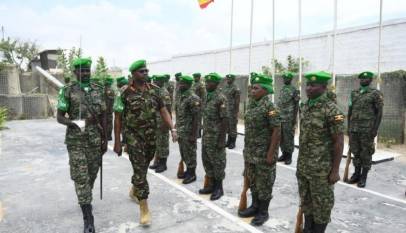
UPDF Begins Withdrawal of Troops from Somalia
Ahabwe Takes Legal Action Against High Court Ruling on Kajara MP
UPDF Begins Withdrawal of Troops from Somalia
Ahabwe Takes Legal Action Against High Court Ruling on Kajara MP

UPDF Begins Withdrawal of Troops from Somalia
The Uganda People's Defence Forces (UPDF) has started withdrawing troops from Somalia unde…

Now On Air – 88.2 Sanyu Fm
Get Hooked Right Here
DON'T MISS!!!
UPDF Begins Withdrawal of Troops from Somalia
The Uganda People's Defence Forces (UPDF) has started withdrawing troops from Somalia under a bilateral security arrangement, marking the beginning of a phased exit from