The government’s plan to extend scholarships and student loans to postgraduate students has stalled, with education officials citing inadequate funding as the biggest obstacle to supporting students seeking master’s and doctoral qualifications.
The development highlights a gap in the higher education financing system, where government sponsorship and the Higher Education Students’ Financing Scheme largely benefit undergraduate students, leaving most postgraduate learners to depend on personal savings, employer sponsorship or development partners.
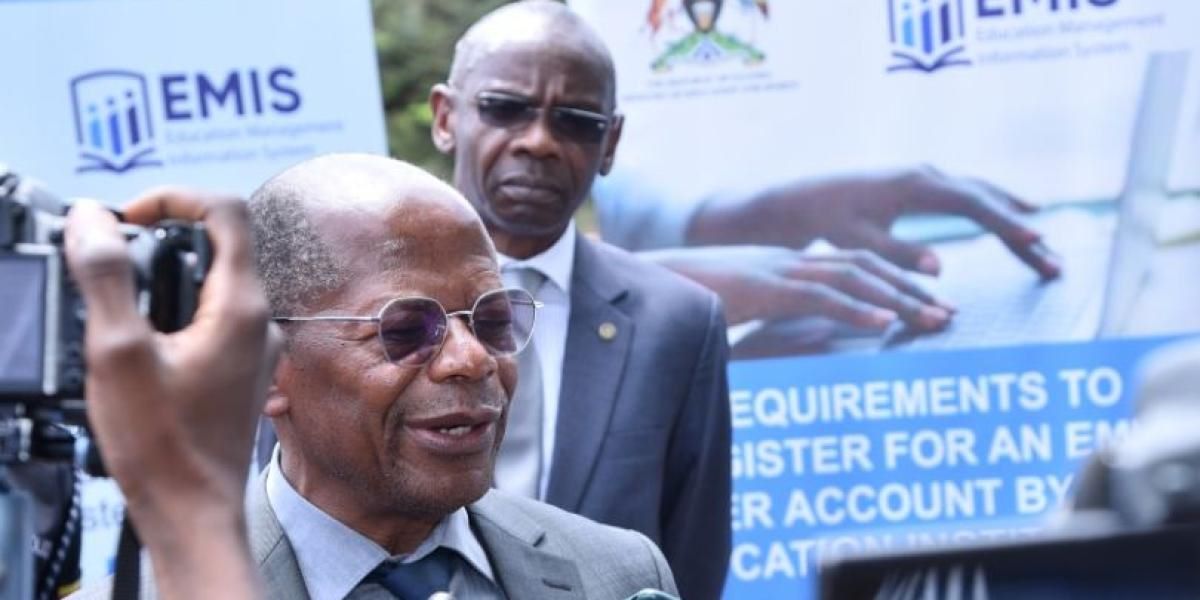
In a recent interview, Prof Eli Katunguka, Vice Chancellor, Kyambogo University, noted that there is growing recognition that the country needs to invest more in graduate education to produce researchers, university lecturers, scientists and other highly skilled professionals needed to drive the country’s development agenda. “The cost of graduate education is high, and many prospective students are at a stage in life where they face competing financial and family responsibilities, making further study an expensive opportunity cost,” he said.
Katunguka added that while scholarships are important, they are unlikely to meet the growing demand for postgraduate education, particularly in high-cost fields such as science, technology, engineering and mathematics (STEM). He urged the government to establish a dedicated graduate scholarship scheme and extend the Higher Education Students’ Loan Scheme to postgraduate students to make advanced studies more accessible.
“Establishing a graduate scholarship and loan programme would not only widen access to postgraduate education but also strengthen the country’s capacity in research, innovation and specialised skills needed to support industrialisation and economic transformation,” Prof. Katunguka said. Simon Matsiko, a master’s student at Makerere University, said the high cost of graduate education has placed advanced studies beyond the reach of many Ugandans, with some students dropping out or delaying graduation because of financial constraints.
“Going back for further studies is a real challenge. Many people look at the cost and do not even apply. Those who do are often pursuing better career opportunities, but many of them end up financially drained before completing their programmes,” Matsiko said. He argued that extending government support through scholarships or a dedicated student loan scheme would ease the burden on postgraduate students.
“A loan scheme is feasible because most people pursuing master’s and PhD programmes are already employed and would be able to repay the money. The challenge is not their ability to pay, but raising the lump sum needed for tuition and meeting the university’s strict payment deadlines while also meeting other personal financial obligations,” he said.
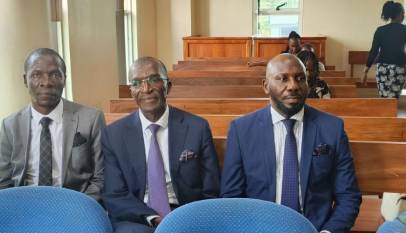
The issue resurfaced on Wednesday during a meeting of the Joint Admissions Board at the Uganda Institute of Information and Communications Technology (UICT) in Nakawa, where members convened to select students who will benefit from government-funded undergraduate loans under the Higher Education Students’ Financing Scheme.
Addressing the matter, the Acting Minister for Education and Sports, Dr. John Chrysostom Muyingo, said the government has already begun discussions on introducing scholarships and student loans for graduate students. However, he cautioned that no commitments can be made at this stage because of funding constraints. “We have already started discussions on supporting graduate studies through scholarships and loans. However, given the current resource envelope, we cannot make any promises until funding improves,” Muyingo said.
Earlier this year, Dr. Denis Mugimba, Ministry of Education spokesperson, said the then Minister of Education and Sports, Janet Museveni, had directed a comprehensive review of the government scholarship programme to address some emerging issues. Dr. Mugimba said the review would also consider expanding the number of beneficiaries and extending government support to graduate students.
To widen access to university education, the government later introduced the Higher Education Students’ Financing Scheme, which provides loans to students who miss out on scholarships but are unable to meet the cost of university education. The scheme supports between 1,500 and 3,000 new students each year. In the current financial year, the government allocated Shs33.48 billion to the Higher Education Students’ Financing Board (HESFB), enough to finance about 3,000 first-year students.
However, while support for undergraduate education has gradually expanded, postgraduate students remain excluded from both the scholarship and loan schemes. As demand for master’s and doctoral programmes continues to rise, students, parents and education experts have increasingly called on the government to extend the loan scheme
Dr. Michael Wanyama, the head of the Higher Education Students’ Financing Board, said the Board has already laid plans to extend the Higher Education Students’ Financing Scheme to postgraduate students, but implementation has been delayed by funding constraints, with the available resources only sufficient to sustain support for undergraduate learners. “If the funding increases, we shall also support graduate programmes,” Dr. Wanyama said.
The funding challenge comes at a time when demand for postgraduate education is rising steadily, fuelled by increasing enrolment in universities and growing labour market requirements that favour master’s and doctoral qualifications for senior academic, research and professional positions. The situation has also placed pressure on universities, which are seeking to expand postgraduate enrolment and strengthen research output but face a limited pool of students able to finance their studies.
While some students secure scholarships through universities, bilateral partnerships and international development agencies, such opportunities remain highly competitive and are available only to a small proportion of applicants.