The private sector has spoken against the proposed tax reforms, warning Parliament that some of the measures risk constraining investment, deepening informality, and undermining post-pandemic economic recovery.
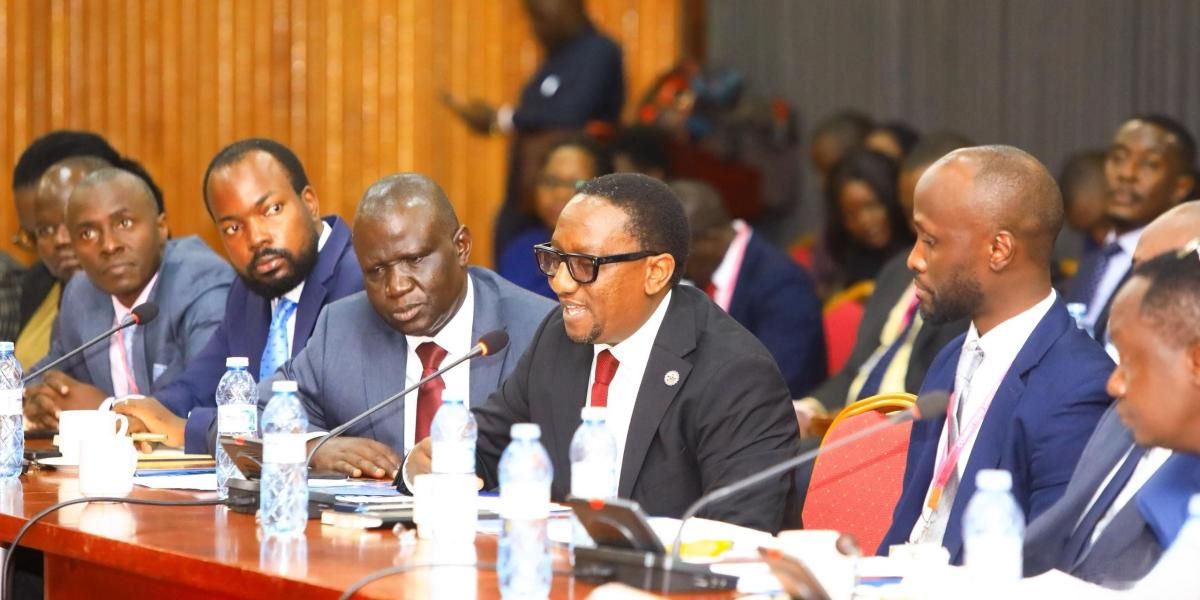
Appearing before Parliament’s Committee on Finance, Planning and Economic Development on Wednesday, the Uganda Manufacturers Association (UMA), led by Chairman Richard Sekalala, urged MPS to amend Section 15(1) of the Tax Appeals Tribunal Act.
The provision requires taxpayers to pay 30 percent of the disputed tax assessment before appealing.
The Association says the requirement, as it stands now, is punitive and exclusionary.
The Tax Appeals Tribunal Act was designed to streamline tax dispute resolution and protect government revenues from frivolous litigation.
However, UMA argues that the 30 percent prepayment requirement effectively locks out many businesses, especially small and medium enterprises, from exercising their right to challenge contested assessments.
“Taxpayers are being denied access to justice,” Sekalala told MPs, noting that liquidity constraints often prevent firms from raising large upfront payments, even when they have legitimate disputes.
Kenya and Rwanda have, in recent years, adjusted similar requirements to lower thresholds or allow flexible arrangements, in a bid to balance revenue protection with taxpayer rights.
Uganda Revenue Authority (URA) data reveal that tax disputes have been rising steadily as compliance enforcement tightens.
While the URA maintains that the prepayment requirement discourages frivolous appeals and ensures revenue flow, critics argue it may also discourage legitimate challenges, potentially eroding trust in the tax system.
Beyond dispute resolution, UMA has also aimed at provisions in the proposed Income Tax Bill, 2026, particularly the suggestion to raise the top corporate income tax rate to 40 percent.
The association is urging Parliament to either scrap the proposal or reduce it to 35 percent.
Manufacturers argue that Uganda risks pricing itself out of the regional investment market.
Within the East African Community (EAC), corporate tax rates generally range between 25 and 30 percent, with countries such as Kenya and Tanzania maintaining relatively stable regimes to attract investors.
“Tax policy must be competitive and predictable,” said Sekalala. “Frequent increases send the wrong signal to both domestic and foreign investors.”
World Bank indicators reveal Uganda’s private sector growth has been uneven in recent years, affected by pandemic shocks, global supply chain disruptions, and rising input costs.
Manufacturing, which contributes about 8–10 percent of GDP, remains particularly sensitive to cost pressures.
Another issue of contention is the Excise Duty (Amendment) Bill, 2026, which proposes a two-hundred-shillings tax increase per litre of fuel.
This would raise diesel duty from 1,230 to 1,430 Shillings, and petrol from 1,550 to 1,750 Shillings.
Uganda Manufacturers’ Association and Kampala City traders warn that such increments could harm the economy, given fuel’s central role in transport and production.
It has been observed that higher fuel costs typically translate into increased prices for goods and services, feeding into inflation.
The Kampala City Traders Association (KACITA), represented by acting chairperson Issa Sekitto, cautioned that the cumulative effect of the proposed tax changes could be severe.
“Over-taxation risks undermining business growth, increasing informality, and reducing compliance,” Sekitto told the committee.
KACITA highlighted additional concerns, including a proposed 10 percent withholding tax on telecom agents and distributors, which could erode already thin margins in Uganda’s mobile money ecosystem, a key driver of financial inclusion.
Micro, Small, and medium enterprises (MSMEs), which account for over 80 percent of Uganda’s private sector, are particularly vulnerable.
It is being noted that continued VAT obligations, coupled with rising operational costs, could strain cash flows and discourage formalization.
Research by the International Monetary Fund (IMF) suggests that excessive tax burdens in developing economies often push businesses into the informal sector, reducing the overall tax base in the long run. Uganda already has a high informality rate, estimated at over 50 percent of economic activity.
KACITA warns that the current proposals could exacerbate this trend, undermining efforts to broaden the tax base, a key objective under Uganda’s Domestic Revenue Mobilization Strategy.
The Ministry of Finance has emphasized the need to increase domestic revenue collection to reduce reliance on external borrowing. Uganda’s tax-to-GDP ratio.
Uganda’s tax-to-GDP ratio is estimated to be around 13–14 percent, far below the sub-Saharan Africa average of about 16–18 percent.
Parliament’s Finance Committee is expected to compile stakeholder views into a report that will guide legislative debate.