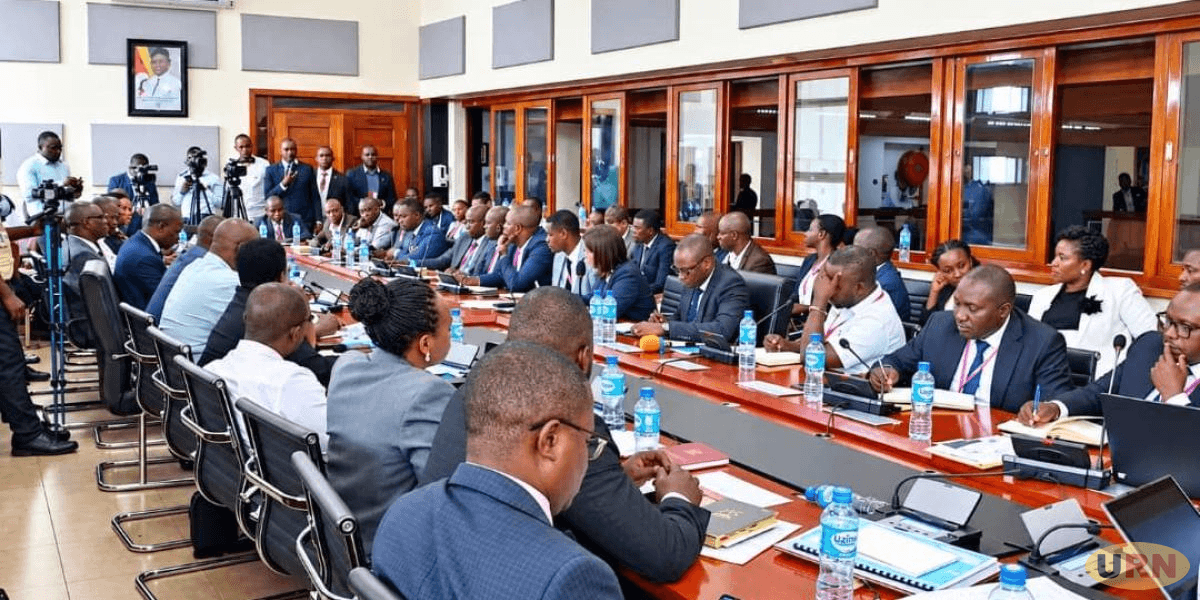
Parliament has opened an inquiry into Uganda’s digital number plate project following claims that the government is losing over 106 billion shillings in tax revenue.
The Infrastructure Committee of Parliament says it has received conflicting figures from the Ministry of Works and Transport and the company implementing the Intelligent Transport Monitoring System (ITMS), raising questions about the project’s actual production capacity, imports, revenues and financial arrangements.
Committee chairperson Mwine Mpaka said a report presented by the Ministry indicated that government was losing about 4 billion shillings in tax revenue every week, while the number of number plates being issued had fallen from about 350 to 100.
The figures sharply contrast with claims by the contractor that it can install about 1,500 digital number plates a day.
Mpaka said the conflicting information had prompted the committee to demand records covering the production, importation and revenue generated by the project.
The committee is also examining claims that the project generates more than one billion shillings a day. Part of the money is allegedly leaving the country.
Mpaka said stakeholders arrived at the figure using a reported cost of about 714,000 shillings per plate and the contractor’s claimed capacity of 1,500 installations a day.
He, however, stressed that Parliament has not yet verified the computation.
The committee has therefore asked for import records to establish how many digital number plates and raw materials are entering Uganda and whether the quantities correspond with the contractor’s reported production and installation figures.
Bwire Kezekia, chairperson of the Clearing and Forwarding Association, challenged the Uganda Revenue Authority to establish whether the reported production capacity is reflected in import declarations.
Kezekia said clearing agents experienced shortages between May and June, with some motorists waiting for up to three months for number plates after paying the required taxes and fees.
The inquiry has also raised concerns about the project’s implications for Uganda’s manufacturing sector, particularly the decision to place the supply arrangement in the hands of a single company.
Allan Ssenyondwa, Director of Policy Research and Advocacy at the Uganda Manufacturers Association, said manufacturers had previously warned Parliament that treating the project exclusively as a security matter could have economic consequences.
He said Uganda should consider allowing other qualified manufacturers to participate while maintaining the security and tracking requirements of the digital system.
“This monopoly in an economic system on the issue of security,” Ssenyondwa said, warning that the arrangement could undermine local manufacturing and create capacity challenges as more vehicles are moved onto digital plates.
Frank Mawejje, chairperson of the Union Transport Alliance, separately asked Parliament to examine the ownership and operations of ITMS. Mawejje said stakeholders have questions about the company’s ownership structure and its role in implementing the project.
“I doubt whether the gentlemen before us are the rightful owners of ITMS,” Mawejje said.
He also questioned the displacement of local companies that were previously involved in number plate production, citing Tumpeco and arguing that local manufacturers should have been allowed to participate.
Mpaka said the committee would not rely solely on submissions made during the hearing.
He said MPs would obtain records from government agencies, conduct field visits and engage other stakeholders to establish the project’s actual production capacity and financial implications.
The inquiry will examine the reported 106 billion shillings tax revenue loss, the alleged Shs4 billion weekly revenue loss, number plate importation and production figures, the contractor’s reported capacity, the impact on local manufacturers and the financial arrangements behind the project.
“We are looking for a solution without entirely affecting the main principle, which is security,” Mpaka said.
He said the committee expects to obtain answers within two weeks before presenting its findings and recommendations to Parliament. Uganda began rolling out digital number plates under the Intelligent Transport Monitoring System in 2023.
The programme was introduced primarily to strengthen vehicle identification, tracking and law enforcement.
The system was also intended to help authorities combat vehicle theft, monitor road users and improve motor-vehicle registration and transport-sector data management.ol