
Only One Operation Conducted in 100-Day Ganyegenya Taxi Crackdown
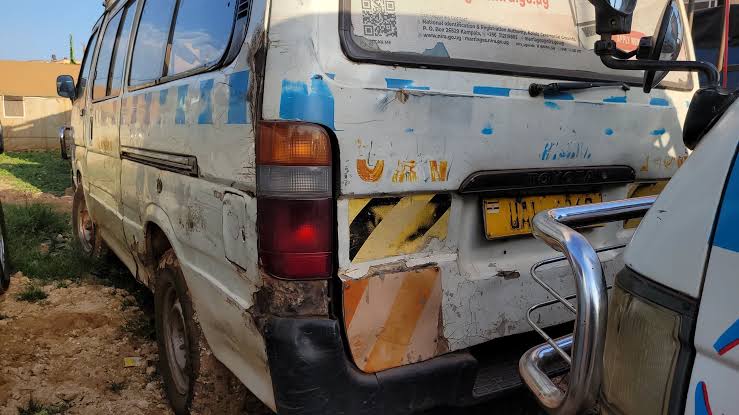
The 100-day Operation Ganyegenya crackdown on dangerous public service vehicles has so far resulted in only one enforcement operation in the Kampala Metropolitan Area, with 178 commuter taxis impounded. The operation began on August 24, four days after the Ministry of Works and Transport ordered the crackdown on public service vehicles operating in dangerous mechanical condition.
Traffic Police spokesperson Michael Kananura said the operation has not been conducted daily because police lack sufficient space to store the large number of vehicles being impounded. “It would have been a challenge to continue impounding vehicles every day when we don’t have space to put them, because there are very many. So we have decided to impound, carry out inspections, release them, and then go back to carry out another enforcement,” Kananura said.
Of the 178 taxis impounded during the operation, 53 were seized in Kampala Metropolitan East, covering the Jinja Road-Mukono stretch, 62 in Kampala Metropolitan South, covering Katwe-Entebbe, and 63 in Kampala Metropolitan North, covering Kawempe. The Ministry of Works and Transport launched the 100-day operation on August 20, directing traffic police to first target dilapidated 14-seater commuter taxis in the Kampala Metropolitan Area before extending the crackdown to other parts of the country.
Minister of State for Works and Transport Fred Byamukama said previous attempts to remove unroadworthy taxis from the roads had failed because operators threatened to strike or vote against the government. He warned that the condition of some taxis had become unacceptable.
“These taxis are beyond repair. You find them loading people, but when you enter, the seats are torn smelling. Some are tied with superglue. The conductor is holding the door with superglue, the doors cannot lock, and the driver is using a steering wheel tied with ropes. When you look at the tyres, the people are moving at the mercy of God,” Byamukama said.
Kananura said the Ministry of Works and Transport, working with police inspection teams, has so far inspected 106 of the impounded taxis at gazetted inspection centres, while 72 remain pending inspection. He said inspections at centres including Naguru, Wankulukuku, Natete and Gayaza cover a range of mechanical and safety requirements.
These include checking for dangerous or illegal bull bars, cracked windscreens, worn-out or expired tyres and defective service brakes. Police also inspect damaged or deformed bodywork, missing or defective seat belts, absence of first-aid kits, fire extinguishers and warning triangles, as well as damaged interior fittings.Other checks include passenger-door locks, rooftop signage, the condition and cleanliness of seats and interiors, headlights and rear lights, and other mechanical and safety defects. Kananura said vehicles found with defects are handed back to their owners for repairs before being subjected to a second inspection.
“We have to inspect them and hand them over to the owners for repairs, clear the space, then we can go back on the road and carry out another round of enforcement. The initial inspection is done through observation, then we hand the vehicle over to the owner to take it for repair, but without a number plate, and bring it back for another inspection using machines. If it passes, the driver is given back the number plate and can go back on the road,” Kananura said.
Kananura said police are also preparing to change their tactics to target operators who attempt to evade the crackdown by driving dangerous taxis at night. “Working at night is going to be dangerous for them, because we don’t want them on the road. We shall now change our tactics; they will not like what will come against them. We are going to start deploying our patrols on various roads, but night operations will also soon start,” Kananura said.
Police have also dismissed allegations that some drivers recover impounded vehicles by paying bribes to traffic officers. Kananura said it was risky for any traffic officer to release a vehicle found in dangerous mechanical condition in exchange for money. He said traffic officers are being monitored through cameras and covert operatives deployed on the roads.
Officers found taking bribes risk being subjected to disciplinary proceedings before the Traffic Disciplinary Court at Natete Police Station, where such conduct is treated as a serious offence. The 100-day operation is expected to run across the country after the initial focus on the Kampala Metropolitan Area.
Only One Operation Conducted in 100-Day Ganyegenya Taxi Crackdown

Health Experts Call for Family Planning Before Mothers Leave Maternity Wards
Police Officers Dismissed Over Gold Fraud
Only One Operation Conducted in 100-Day Ganyegenya Taxi Crackdown

Health Experts Call for Family Planning Before Mothers Leave Maternity Wards
Police Officers Dismissed Over Gold Fraud
Maurice Kirya’s Award-Winning Film Calls East Africa to Move Beyond Down Syndrome Awareness
The 100-day Operation Ganyegenya crackdown on dangerous public service vehicles has so far…
Now On Air – 88.2 Sanyu Fm
Get Hooked Right Here
DON'T MISS!!!
Maurice Kirya’s Award-Winning Film Calls East Africa to Move Beyond Down Syndrome Awareness
The 100-day Operation Ganyegenya crackdown on dangerous public service vehicles has so far resulted in only one enforcement operation in the Kampala Metropolitan Area