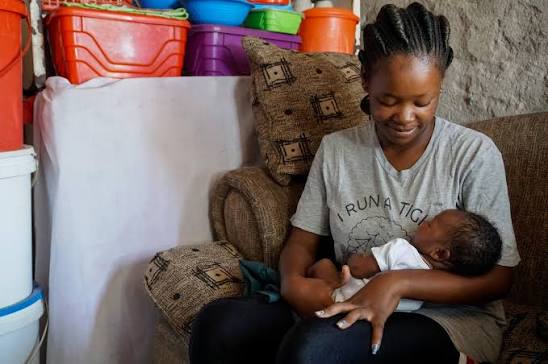
Health experts are calling for family planning services to be provided to women before they leave maternity wards, warning that waiting for the routine six-week postnatal visit could expose new mothers to unintended pregnancies.
Faith Nabushawo, an Obstetrician and Gynaecologist, says family planning discussions should begin during pregnancy so that women can make informed decisions and, where appropriate, start contraception immediately after giving birth.
“The most important message is that six weeks is not the deadline for starting contraception. If a woman wants contraception immediately after delivery, we can provide it before she even leaves the hospital after giving birth,” Nabushawo says.
She says the need for early postpartum contraception is driven by the fact that fertility can return before a woman experiences her first menstrual period after childbirth.
“Some women will resume their fertility earlier, while others may resume their fertility later. Others may remain without periods for a much longer period, particularly when they are breastfeeding,” she says.
Nabushawo explains that ovulation occurs before menstruation, meaning a woman can become pregnant without first seeing her period after delivery.
“You cannot simply say, ‘My periods have not returned, therefore I am safe.’ We actually do not know exactly when that individual woman will ovulate,” she says.
Several contraceptive methods can be initiated immediately after childbirth, depending on a woman’s health and breastfeeding status. These include implants, copper intrauterine devices and progesterone-only pills, while condoms can be used when sexual intercourse resumes.
However, Nabushawo says women who rely on breastfeeding for contraception must meet all the conditions of the Lactational Amenorrhea Method.
The mother must not have resumed her periods, the baby must be exclusively breastfed with frequent feeding during the day and night without supplementation, and the baby must be less than six months old.
Once any of these conditions changes, she says women should no longer rely on breastfeeding alone to prevent pregnancy.
The push for early postpartum family planning comes as Uganda grapples with a high rate of unintended pregnancies, with Ministry of Health figures showing that 42 percent of pregnancies are unintended.
Nabushawo says preventing closely spaced pregnancies is another important benefit of postpartum family planning, as women may not have enough time to recover physically and nutritionally before another pregnancy.
She says pregnancies occurring less than six months apart are associated with increased risks, including preterm birth, low birth weight and babies being small for their gestational age.
Women who have previously delivered by caesarean section may also face a higher risk of complications, including uterine rupture during labour, when pregnancies are closely spaced.
Nabushawo stresses that postpartum family planning should not be about limiting the number of children a woman has, but about giving women the freedom to decide when they want their next pregnancy.
“Postpartum family planning is about reproductive choice and health and timing of pregnancies. We should be asking women what they want for their reproductive lives and then help them achieve that safely,” she says.
She says the decision to use contraception should be voluntary and informed, with women receiving accurate information about available methods and making the final decision based on their individual circumstances.