Only 10% of Ugandans Access Formal Courts: Chief Justice Zeija
Only 10 percent of Ugandans access formal court services to seek justice, Chief Justice Flavian Zeija has revealed.
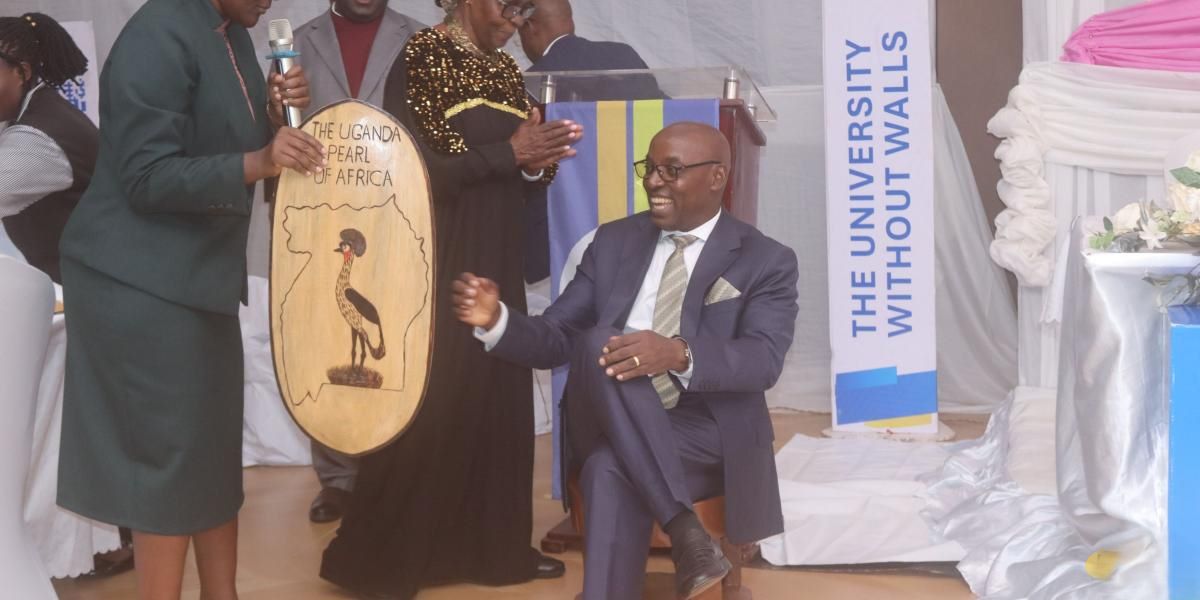
Zeija revealed this on Tuesday night while delivering a lecture to Faculty of Law students at Kabale University during a dinner held at White Horse Inn in Kabale District.
The dinner was organized by the students in collaboration with the university administration under the theme, “The Role of Lawyers Beyond the Courtroom.”
According to Zeija, that was part of findings from a study conducted last year by the Hague Institute for Innovation of Law (HiiL), a Netherlands-based civil society organisation committed to promoting people-centred justice. He noted that the findings indicate that the majority of Ugandans, about 90 percent, resolve their disputes outside the formal court system.
He explains that many Ugandans prefer seeking justice through religious leaders, clan heads, and traditional healers. In regions such as Karamoja and Lango, he says customary leaders handle a wide range of cases, including serious criminal matters.
Zeija says the findings highlight the need for legal professionals to extend their services beyond the courtroom.
He warned that if lawyers, magistrates, and judges confine themselves strictly to court processes, a significant portion of the population will remain underserved.
He emphasises that lawyers should embrace roles as peacemakers through mediation and other forms of alternative dispute resolution to prevent conflicts from escalating to court. Zeija added that courts do not necessarily resolve disputes but rather decide cases, noting that a successful lawyer is one who prevents legal battles rather than merely winning them.
The Chief Justice also urged legal practitioners to uphold integrity by avoiding corruption and theft, while committing to pro bono services to support vulnerable communities.
He further advised law students to steer clear of alcoholism and drug abuse.
Before lecturing the students, Zeija held a meeting with judicial officials and Kabale district leaders at Kabale high court headquarters Kikungiri in kabale municipality where he said that the Judiciary will relocate High Court services from Kabale district unless Kabale district local government gets a land title for the premises where the court is.
Kabale High court shifted from Makanga hill to Kikungiri hill after the District local government offered land where the new premises were constructed.
However, up to now, the new premises are sitting on land that has no title.
Zeija, while in a meeting, says that if the title is not unveiled within a period of one year, the high court services will be relocated somewhere else.
He says the Judiciary cannot continue answering audit queries over operating from a land without a title.
Michael Kyakashari, Kabale Deputy Resident District Commissioner appealed to Zeija not to relocate the court services and promised to engage district leadership to handle the matter.
Magistrate Orders Medical Access To Rwenzori Attack Suspects
30 Children Get Free Corrective Surgery for King Oyo’s 34th Birthday
Government Eyes Geothermal Energy to Power Industrial Growth
Telecom Giants Urge Lower Withdrawal Taxes to Boost Financial Inclusion
Uganda Raises Concerns over Sloppy Execution of World Bank Projects
Elderly Grant Expansion at Risk Over Shortfall
Parliament Flags Mounting Economic Costs of Unpaid Project-Affected Persons
Government's ambitious infrastructure agenda, long positioned as a cornerstone of economic…
Now On Air – 88.2 Sanyu Fm
Get Hooked Right Here
DON'T MISS!!!
Magistrate Orders Medical Access To Rwenzori Attack Suspects
The Kasese Chief Magistrate’s Court has directed prison authorities to grant medical access to suspects of the November 2025 attacks on military installations in the Rwenzori region.