The Ministry of Education and Sports is set to pilot the implementation of its new Early Childhood Care and Education (ECCE) Policy in the Greater Kampala Metropolitan Area, ahead of a planned nationwide rollout.
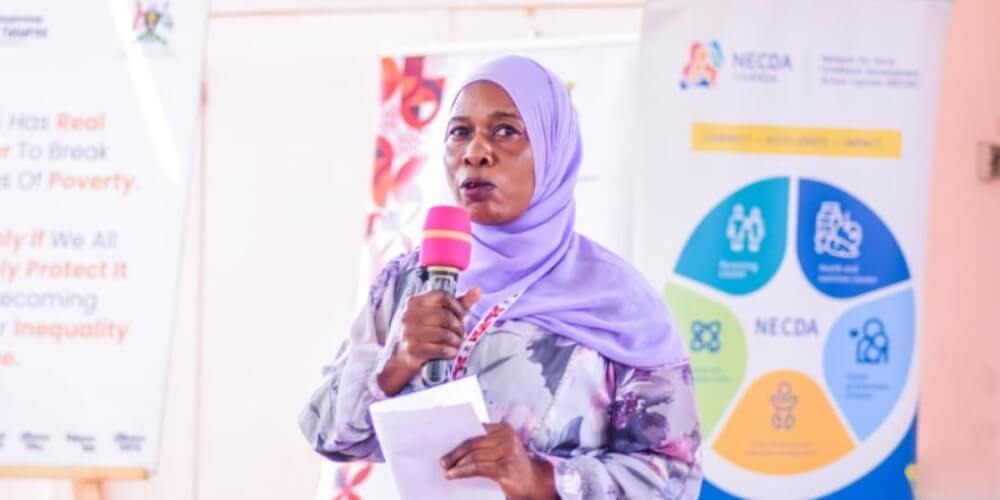
Dr Safina Mutumba, the assistant commissioner in charge of pre-primary education, said the pilot is meant to test how the reforms work in practice, identify challenges, and refine implementation approaches before they are extended countrywide.
“We want to understand what works on the ground before we take this to the rest of the country,” Dr Mutumba told URN on Monday evening. Dr Mutumba added that the exercise will begin at the start of third term, with the ministry working alongside local government education departments to monitor and support pre-primary operators in the pilot areas.
Ahead of the rollout, the ministry has embarked on a round of stakeholder engagements, meeting teachers, school owners and headteachers of pre-primary institutions in Kampala Capital City. The consultations are expected to be extended to Nansana, Entebbe, Kira and Mukono municipalities, as well as Wakiso and Mukono local governments, where officials are unpacking the details of the policy so that operators understand what will be required of them once the third term opens.
The ECCE Policy 2025 was officially launched in April this year at Nakivubo Blue Primary School in Kampala, under the theme “Strong Beginnings, Bright Futures.” It sets out standards, licensing rules and quality guidelines for all providers of early childhood services countrywide. Central to the policy is a two-tier structure that separates care from learning according to a child’s developmental stage: daycare centres for children aged 0 to 3, focused on nurturing care, safety and stimulation; and pre-primary education (nursery and kindergarten) for children aged 3 to 6, built around play-based learning to prepare them for primary school.
The change addresses a long-standing problem in which many nursery schools doubled as daycare facilities for infants under one roof, often without adequate staff, facilities or separate licensing. The push for clearer separation was partly accelerated by safety concerns following the Ggaba tragedy involving young children. Under the new arrangement, daycare services will be required to operate independently, often near workplaces and markets, with their own trained caregivers, entrances and standards, while pre-primary centres focus strictly on age-appropriate learning without mixing in infants.
Beyond this separation, the policy also establishes clear, mandatory regulations on school hours, child transport safety, and age-appropriate teaching methods, aimed at protecting young children from academic overburdening. Dr Kedrace Turyagenda, Permanent Secretary, Ministry of Education, said schools are required to follow the new guidelines, noting that they are designed to protect children and ensure they receive better care and appropriate education.
She added that her concern stems from the fact that many schools are in the habit of overburdening young children by teaching them content beyond what is recommended for their age and exceeding the recommended instructional time, among other practices.
According to Dr Turyagenda, adherence to the recommended practices will give children a stronger foundation, with positive ripple effects across the entire education system, including improved learning outcomes. Jossy Busiku, the Chairperson of the National Private Education Institutions Association (NPEIA) in Kampala, welcomed the ministry’s approach of engaging stakeholders before rolling out the policy nationally, describing it as a positive and thoughtful step that allows for practical testing and adjustment.
Aloysius Walusimbi, a teacher, agreed with the new development, saying it is the model government should follow going forward whenever introducing new policy in the sector by engaging stakeholders and piloting reforms first, rather than imposing changes without groundwork. “Many times they have been bringing new things, and they just throw them to us without engaging us as the implementers, and always they have either failed or struggled,” Walusimbi said.
Uganda has one of the world’s youngest populations, with a large share of children falling in the early childhood bracket. Yet access to quality early learning remains limited and deeply unequal. The pre-primary subsector has historically been dominated by private providers, with parents shouldering the full cost.
Estimates suggest that around 60 percent of children aged three to five miss out on organised early learning altogether, and net enrolment in licensed centres has in the past been as low as single digits in some assessments.
The Baseline Education Census figures showed that there are 2.37 million learners across more than 38,000 pre-primary institutions in Uganda. The distribution is heavily skewed geographically, with Buganda hosting the highest concentration of facilities compared to regions such as Karamoja. Many children still enter primary school with no prior early learning experience, a factor associated with higher repetition and dropout rates later on. The new policy aims to reverse this trend. The government has committed to expanding coverage so that at least two million children access ECCE services by 2030, which is roughly half of all eligible children.
The plan includes greater public investment in underserved rural areas, subsidies or incentives for non-state providers willing to serve hard-to-reach communities, professionalisation of caregivers and teachers, tighter licensing and inspection, regulation of fees to curb excessive charges, recommended teacher-child ratios, and a shift toward play-based, holistic development rather than early formal academics. Over the next five years, about Shs19.74 billion has been earmarked under the Education Strategic Plan for related interventions, covering training, quality assurance, regulation, health and nutrition.