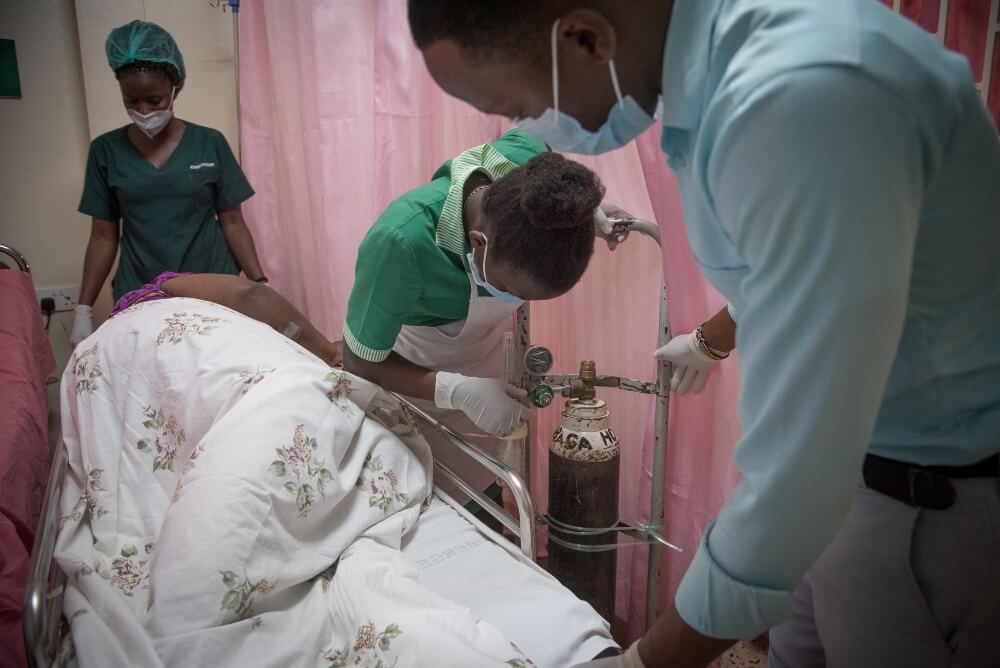
Late referrals and transport delays are complicating efforts to save women suffering from postpartum haemorrhage.
Postpartum haemorrhage, or PPH, is excessive bleeding after childbirth and can quickly become life-threatening if not treated promptly.
Faith Nabushawo, an Obstetrician and Gynaecologist, says PPH requires rapid recognition, referral and treatment.
“PPH is a race against time. It is a very time-sensitive issue. Any delays could result in very serious complications,” Nabushawo said.
She said late referrals can make it difficult for health workers to save women, particularly when they require blood transfusion, surgery or other emergency care.
“Sometimes you receive a referral very late, and late referral really frustrates all efforts,” she said.
Nabushawo added that transport can also affect how quickly a woman reaches a facility capable of providing definitive care.
She said PPH can occur even when a woman had no known pregnancy complications, making preparedness at health facilities critical.
“PPH can happen to a woman who looked completely low-risk. So, we should never say that she had a normal pregnancy and therefore she cannot bleed,” she said.
Nabushawo called for adequate blood supplies, medicines, equipment, trained health workers and an effective referral system to improve the response to PPH.
“When we talk about saving mothers with PPH, we should not only talk about the doctor or the midwife. We need the whole system to work,” she said.
Uganda loses more than 3,000 women to maternal deaths annually, with about one in three deaths attributed to excessive bleeding after childbirth. Recent Ministry of Health figures indicate that PPH accounts for about 35 percent of maternal deaths.
The Ministry has renewed calls for voluntary blood donation and early antenatal care. Ministry Permanent Secretary Dr Diana Atwine says the government also plans to establish regional blood banks in Moroto, Jinja and Kabale to bring blood supplies closer to communities.