Current Affairs -
Trending News -
3 weeks ago
Government Launches Guide Against Processed Food
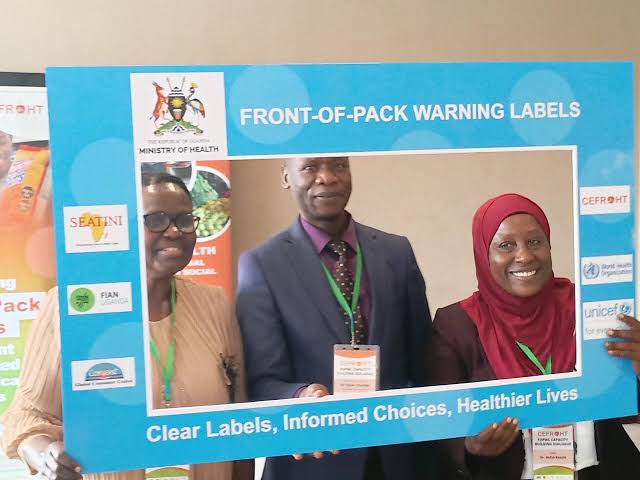
The Ministry of Health has introduced a new nutrition profiling model to identify processed foods high in sugar, salt and unhealthy fats, as the country grapples with diet-related non-communicable diseases.
The Nutrition Profile Model, launched on Tuesday, sets thresholds for five nutrients of concern, sugars, salt, saturated fats, trans fats and total fats.
The model aligned to the Nutrient Profile Model for the WHO African Region is expected to guide efforts to regulate the marketing of foods that exceed the recommended limits and help consumers make healthier choices.
The intervention comes amid growing evidence linking the increasing consumption of processed foods to obesity and other non-communicable diseases.
The Global Burden of Disease Study has identified poor-quality diets as a leading risk factor for disease globally, while the World Health Organisation (WHO) has warned that the increasing availability and consumption of cheap, energy-dense processed foods is contributing to rising levels of overweight, obesity and diet-related NCDs.
The trend is also evident in Africa, where diets are increasingly shifting towards processed foods high in sugar, salt and unhealthy fats.
A WHO study involving populations in Uganda, Tanzania and South Africa found that women with the highest consumption of processed foods were three times more likely to be overweight and more than four times as likely to be obese compared to women with the lowest consumption.
Uganda’s new model is therefore being introduced against a changing food environment in which processed foods are increasingly accessible and aggressively marketed, including to children.
Dr Prospero Grace Ocheng, the Principal Nutritionist in the Ministry of Health, said the government developed the thresholds after conducting a landscape survey of processed foods in 14 districts across the country.
The assessment found that 56 percent of the processed foods examined, including crisps and other snacks, exceeded the recommended sodium limits.
Forty-eight percent contained excessive levels of sugar, while 46 percent exceeded the recommended threshold for saturated fats.
Ocheng said the findings informed the classification of foods according to their nutritional profile.
//Cue in: “We identify them …
Cue out: … diabetes type 2.”//Under the model, processed food with sodium content above one milligram per kilocalorie exceeds the recommended threshold, while free sugars should not exceed five percent of the total energy content in liquid products.
The model also identifies the presence of non-sugar sweeteners in processed foods and drinks as a potential health concern.
The Ministry says the model is particularly important because food marketing has become increasingly sophisticated, with manufacturers using billboards, mainstream media and digital platforms to reach consumers.
Laura Ahumuza, a nutritionist in the Ministry of Health, said social media has expanded the reach of food advertising, while children are increasingly being exposed to marketing for unhealthy products.
She said schools have also become important spaces for food marketing, despite children having limited ability to distinguish between healthy and unhealthy products.
The concerns are consistent with WHO evidence showing that most foods marketed to children are high in fat, free sugars or salt, and that advertising, including digital marketing, influences children’s food preferences, purchase requests and consumption patterns.
WHO has consequently recommended measures including restrictions on the marketing of unhealthy foods to children, front-of-package nutrition labelling, healthier food environments around schools and fiscal measures such as taxes on sugar-sweetened beverages.
However, implementation of such measures has historically been slow, particularly in Africa.
The introduction of Uganda’s nutrition profiling model therefore marks an important step in identifying foods of concern, but it does not yet resolve the question of enforcement.

The Nutrition Profile Model, launched on Tuesday, sets thresholds for five nutrients of concern, sugars, salt, saturated fats, trans fats and total fats.
The model aligned to the Nutrient Profile Model for the WHO African Region is expected to guide efforts to regulate the marketing of foods that exceed the recommended limits and help consumers make healthier choices.
The intervention comes amid growing evidence linking the increasing consumption of processed foods to obesity and other non-communicable diseases.
The Global Burden of Disease Study has identified poor-quality diets as a leading risk factor for disease globally, while the World Health Organisation (WHO) has warned that the increasing availability and consumption of cheap, energy-dense processed foods is contributing to rising levels of overweight, obesity and diet-related NCDs.
The trend is also evident in Africa, where diets are increasingly shifting towards processed foods high in sugar, salt and unhealthy fats.
A WHO study involving populations in Uganda, Tanzania and South Africa found that women with the highest consumption of processed foods were three times more likely to be overweight and more than four times as likely to be obese compared to women with the lowest consumption.
Uganda’s new model is therefore being introduced against a changing food environment in which processed foods are increasingly accessible and aggressively marketed, including to children.
Dr Prospero Grace Ocheng, the Principal Nutritionist in the Ministry of Health, said the government developed the thresholds after conducting a landscape survey of processed foods in 14 districts across the country.
The assessment found that 56 percent of the processed foods examined, including crisps and other snacks, exceeded the recommended sodium limits.
Forty-eight percent contained excessive levels of sugar, while 46 percent exceeded the recommended threshold for saturated fats.
Ocheng said the findings informed the classification of foods according to their nutritional profile.
//Cue in: “We identify them …
Cue out: … diabetes type 2.”//Under the model, processed food with sodium content above one milligram per kilocalorie exceeds the recommended threshold, while free sugars should not exceed five percent of the total energy content in liquid products.
The model also identifies the presence of non-sugar sweeteners in processed foods and drinks as a potential health concern.
The Ministry says the model is particularly important because food marketing has become increasingly sophisticated, with manufacturers using billboards, mainstream media and digital platforms to reach consumers.
Laura Ahumuza, a nutritionist in the Ministry of Health, said social media has expanded the reach of food advertising, while children are increasingly being exposed to marketing for unhealthy products.
She said schools have also become important spaces for food marketing, despite children having limited ability to distinguish between healthy and unhealthy products.
The concerns are consistent with WHO evidence showing that most foods marketed to children are high in fat, free sugars or salt, and that advertising, including digital marketing, influences children’s food preferences, purchase requests and consumption patterns.
WHO has consequently recommended measures including restrictions on the marketing of unhealthy foods to children, front-of-package nutrition labelling, healthier food environments around schools and fiscal measures such as taxes on sugar-sweetened beverages.
However, implementation of such measures has historically been slow, particularly in Africa.
The introduction of Uganda’s nutrition profiling model therefore marks an important step in identifying foods of concern, but it does not yet resolve the question of enforcement.
2 hours ago
0 10,235
Cabinet approves use of NIN for paying taxes
5 hours ago
0 10,202
Police Commits To Stricter Adherence to Professional Standards
5 hours ago
0 10,169
Students Accused of Burning Kyotera School Have Case to Answer
5 hours ago
0 10,161
Security Blocks Tooro Rukurato Sitting
2 hours ago
0 10,235
Cabinet approves use of NIN for paying taxes
5 hours ago
0 10,202
Police Commits To Stricter Adherence to Professional Standards
5 hours ago
0 10,169
Students Accused of Burning Kyotera School Have Case to Answer
5 hours ago
0 10,161
Security Blocks Tooro Rukurato Sitting
Cabinet approves use of NIN for paying taxes
The cabinet has approved the use of the national identification number (NIN) as now the ta…
Now On Air – 88.2 Sanyu Fm
Get Hooked Right Here
DON'T MISS!!!
Cabinet approves use of NIN for paying taxes
The cabinet has approved the use of the national identification number (NIN) as now the tax identification number. By adopting the NIN as the tax identification number, it will establish one consistent identity for every tax payer.