Current Affairs -
Trending News -
Trending Stories -
40 minutes ago
UDB’s Patricia Ojangole On Why Institutions Fail
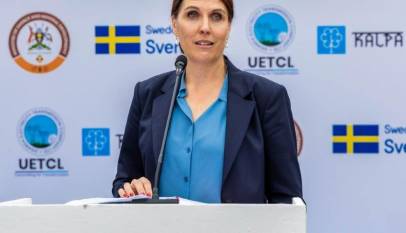
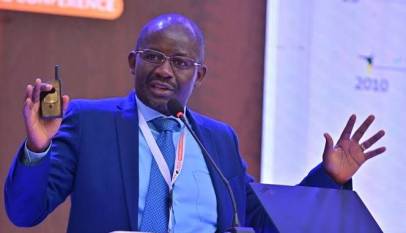
Uganda Development Bank’s Managing Director, Patricia Adongo Ojangole, says institutional collapse rarely happens suddenly, suggesting that institutions weaken gradually, through ignored risks, broken controls, compromised governance, and small ethical decisions that accumulate over time.
She used this analogy to warn and urge newly qualified internal auditors to identify risks, protect integrity and build systems that outlive their leaders.
Dr. Ojangole cited her nearly two decades of experience examining institutions as an internal auditor before eventually becoming responsible for leading one.
Ojangole says she learnt early in her career as an internal auditor, long before she became Managing Director of Uganda Development Bank.
Speaking to 28 newly graduated internal auditors, Ojangole returned to the profession that shaped her understanding of how organisations work, how they fail and what it takes to rebuild them.
“Internal Audit taught me early that institutions do not fail suddenly; they fail gradually. One ignorant risk at a time, one broken control at a time, one broken governance process at a time, one compromise of ethics, one unaccountable decision at a time,” she narrated.
Her career has taken her from examining the systems of large financial institutions to becoming responsible for one of Uganda’s most important development-finance institutions. That journey, she says, changed the questions she had to ask.
“As an auditor, I examined systems. As a leader, I have to build and strengthen systems. As an auditor, I assessed controls. But as a leader, I have to create a culture where controls are respected without suffocating innovation. As an auditor, I identified risks. But as a leader, I have to take responsible risks in pursuit of growth and impact,” she said.
At UDB, she says, change was not achieved through one major intervention but through a succession of policies, controls, and management decisions.
“The transformation that has been talked about did not happen all of a sudden. It was gradual. One thing at a time, one policy at a time, until all those were put in place. One control at a time, until all those are… starting to build a culture,” she added.
Many testify that the scale of Uganda Development Bank today is markedly different from the institution she joined.
She repeatedly shares how starting as an internal auditor sits at the centre of her understanding of leadership, explaining that an auditor is trained to identify weaknesses.
Ojangole says the transition required her to move from diagnosing institutional problems to taking responsibility for solving them.
She used this analogy to warn and urge newly qualified internal auditors to identify risks, protect integrity and build systems that outlive their leaders.
Dr. Ojangole cited her nearly two decades of experience examining institutions as an internal auditor before eventually becoming responsible for leading one.
Ojangole says she learnt early in her career as an internal auditor, long before she became Managing Director of Uganda Development Bank.
Speaking to 28 newly graduated internal auditors, Ojangole returned to the profession that shaped her understanding of how organisations work, how they fail and what it takes to rebuild them.
“Internal Audit taught me early that institutions do not fail suddenly; they fail gradually. One ignorant risk at a time, one broken control at a time, one broken governance process at a time, one compromise of ethics, one unaccountable decision at a time,” she narrated.
Her career has taken her from examining the systems of large financial institutions to becoming responsible for one of Uganda’s most important development-finance institutions. That journey, she says, changed the questions she had to ask.
“As an auditor, I examined systems. As a leader, I have to build and strengthen systems. As an auditor, I assessed controls. But as a leader, I have to create a culture where controls are respected without suffocating innovation. As an auditor, I identified risks. But as a leader, I have to take responsible risks in pursuit of growth and impact,” she said.
At UDB, she says, change was not achieved through one major intervention but through a succession of policies, controls, and management decisions.
“The transformation that has been talked about did not happen all of a sudden. It was gradual. One thing at a time, one policy at a time, until all those were put in place. One control at a time, until all those are… starting to build a culture,” she added.
Many testify that the scale of Uganda Development Bank today is markedly different from the institution she joined.
She repeatedly shares how starting as an internal auditor sits at the centre of her understanding of leadership, explaining that an auditor is trained to identify weaknesses.
Ojangole says the transition required her to move from diagnosing institutional problems to taking responsibility for solving them.
35 minutes ago
0 12,265
Government Rebuked on Supplementary Budgets and Tax Incentives
38 minutes ago
0 12,271
Sino Truck Driver Arrested Over Crash That Killed Two in Nkoowe
40 minutes ago
0 12,266
UDB’s Patricia Ojangole On Why Institutions Fail
35 minutes ago
0 12,265
Government Rebuked on Supplementary Budgets and Tax Incentives
38 minutes ago
0 12,271
Sino Truck Driver Arrested Over Crash That Killed Two in Nkoowe
40 minutes ago
0 12,266
UDB’s Patricia Ojangole On Why Institutions Fail
Government Rebuked on Supplementary Budgets and Tax Incentives
Uganda government's local development partners, also knowns as donors, have condemned the…
Now On Air – 88.2 Sanyu Fm
Get Hooked Right Here
DON'T MISS!!!
Government Rebuked on Supplementary Budgets and Tax Incentives
Uganda government's local development partners, also knowns as donors, have condemned the continued abuse of supplementary budgeting and tax inc