Government has lifted the ban on the importation of electricity transformers amid concerns over the quality and durability of locally manufactured equipment and the ageing power distribution network.
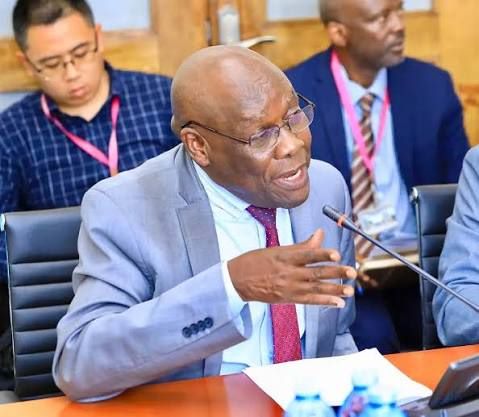
The Minister of State for Energy, Sidronius Okaasai, made the revelation during a plenary sitting of Parliament while responding to concerns raised during debate on the report by the Committee on Environment and Natural Resources into persistent power supply outages in the country.
Kibale County MP Cuthbert Abigaba questioned the quality of recently manufactured transformers, noting that they hardly last as long as older equipment. He cited findings in the committee report indicating that 47 per cent of transformers in Uganda’s electricity network are more than 30 years old.
The debate followed recommendations by the committee for a review of the Buy Uganda, Build Uganda (BUBU) policy as applied to electrical equipment. The committee wants the review to distinguish between local manufacturing, assembly and distribution, while identifying components that can realistically be produced within the country.
It also proposed a phased programme of technical assistance, compliance with standards, skills development, technology transfer, access to financing and predictable procurement demand to strengthen domestic manufacturing.
Meanwhile, Igara West MP Cohen Amanya raised concerns over the poor state of electricity infrastructure, questioning why the country continues to have poorly organised electricity lines and installations.
Amanya argued that the current arrangement of transformer poles and cable lines makes maintenance and repairs difficult, even when minor faults occur.
Ntwetwe County MP Dr Edward Kikabi also raised concerns over overloaded substations around Kampala, particularly Mutundwe, Kajjansi and Busunju, which he said are operating at more than 160 per cent of their recommended capacity of 80 per cent.
Kikabi called for the establishment of additional substations to ease the pressure on the existing infrastructure and improve electricity supply.
In response, Okaasai acknowledged that Uganda’s electricity infrastructure is not only ageing but also overloaded, attributing the situation to inadequate investment. He revealed that Umeme had not invested in the network during the last three years before its exit.
Kole South MP Boniface Okot, who is also a professional electrical engineer, warned that Uganda’s electricity reserve capacity is critically low.
Okot explained that internationally, a power system should maintain a reserve margin of at least 20 percent of peak demand to provide sufficient capacity to respond to emergencies. He said Uganda’s electricity system is currently in a critical state.
He also criticised the country’s limited diversification of electricity sources, describing the energy mix as inadequate because Uganda remains 82 per cent dependent on hydropower.