BY: Umaru Ssenyonjo
Uganda’s education system is facing renewed questions over learner retention and the quality of basic education following reports that more than 1.1 million pupils who enrolled in Primary One a couple of years ago did not sit the just-concluded Primary Leaving Examinations (PLE).
The figures raise concerns beyond examination performance, pointing to a deeper challenge: getting children into school is only part of the responsibility; ensuring they remain in school and acquire meaningful learning throughout the education cycle is equally important.
For the Executive Director of the Education Advocacy Network, Patrick Kaboyo, the situation calls for a closer examination of the conditions under which children learn, how teachers are deployed and whether existing education policies are delivering the intended results.
In an interview, Kaboyo argues that reducing school dropout requires government to address both the physical infrastructure of schools and the policies and systems that determine how teaching and learning are conducted.
The numbers tell a troubling story
A report published by Daily Monitor on November 3, 2026, puts the scale of the problem into perspective. It found that more than 12.4 million children had dropped out of primary school over the past 30 years without registering for PLE.
The latest figures are equally concerning. An analysis of the 2017 Primary One enrolment cohort shows that 2,070,455 pupils started school, but only 920,833 registered for the 2026 PLE. This represents a loss of approximately 1.15 million learners before the end of the primary education cycle.
The figures suggest that Uganda’s challenge is no longer simply increasing school enrolment, but ensuring that children remain in school long enough to complete their education.
Uganda introduced Universal Primary Education (UPE) in 1997 to expand access to education, particularly for children from low-income households. The programme significantly increased enrolment, but the expansion has not been matched by sufficient investment in the conditions necessary to sustain quality learning.
A 2023 study by the Economic Policy Research Centre (EPRC), examining data from 7,824 government and privately owned primary schools between 2008 and 2014, found that only three in every ten pupils who enrolled in Primary One completed Primary Seven. The study identified class size, teacher availability and effective school inspection as important factors associated with learner retention.
The conditions pushing learners out
Kaboyo argues that the problem must be examined from the classroom level, where inadequate infrastructure and teaching resources continue to undermine the learning experience.
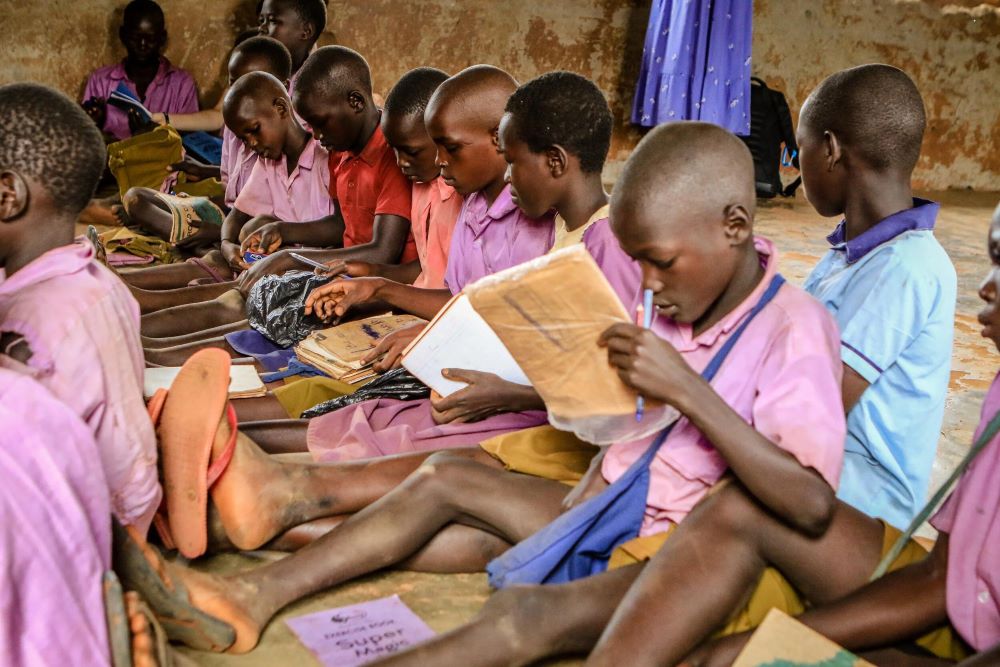
He points to schools where learners still sit on dusty floors because there are not enough desks and chairs, saying such conditions make learning less attractive and undermine effective teaching.
He also raises concerns about the seven-plus-one teacher arrangement, under which one teacher handles all subjects in a primary class. He argues that relying on a single teacher creates challenges when that teacher is overwhelmed, absent or away on maternity leave.
Kaboyo proposes adopting a co-teaching arrangement, in which teachers share instructional responsibilities, to improve continuity and the quality of classroom instruction.
His concerns are consistent with findings highlighted in recent education research. UNESCO’s 2026 Global Education Monitoring Report country analysis notes that Uganda’s public primary schools had an average pupil-to-teacher ratio of 60 to one in 2024, with 37 local government authorities recording ratios of at least 80 to one.
Beyond automatic promotion
Another issue Kaboyo wants addressed is the automatic promotion of learners from one class to another, irrespective of their academic progress. He argues that progression without adequate assessment and remedial support can leave learners struggling to cope with the demands of higher classes.
The issue has already attracted government attention. In March 2026, the Ministry of Education and Sports directed schools to stop automatic promotion, insisting that learners should progress on merit. The government argued that promoting pupils who have not mastered basic competencies contributes to poor academic performance.
However, Kaboyo’s argument points to a broader question: whether schools have the teachers, resources and support systems to identify learning gaps and help struggling pupils before they fall behind.
Strengthening school inspection and accountability
Kaboyo also identifies weak school inspection and support supervision as major gaps in the education system.
He argues that the government must adequately resource the directorate responsible for inspection to enable inspectors to regularly visit schools, assess teaching standards, monitor learner attendance and identify emerging dropout trends.
He further insists that inspection reports should not simply be written and filed away, but should result in concrete interventions, with recommendations implemented to address the shortcomings identified in schools.
This position is supported by the EPRC study, which recommends strengthening school inspection, particularly in rural government schools, alongside recruiting more teachers and improving the learning environment.
Keeping children in school must become a national priority
The scale of primary school dropout presents a significant challenge to Uganda’s ambition of building an educated and productive population.
Although UPE expanded access to education, the persistence of high dropout rates raises questions about the adequacy of public investment, school infrastructure, teacher deployment and the support available to vulnerable learners.
UNESCO’s 2026 analysis of Uganda’s education sector also highlights declining public investment in education, inadequate capitation grants and persistent infrastructure and staffing challenges. These pressures disproportionately affect poorer households and schools serving disadvantaged communities.
Global Education Monitoring Report
For Kaboyo, addressing the crisis requires more than isolated interventions. Government must tackle the underlying challenges affecting the entire primary education cycle, from the availability of classroom furniture and qualified teachers to effective supervision and monitoring of learning outcomes.
He cautions that reducing school dropout is not an overnight undertaking, but a process that must begin with deliberate reforms to improve the conditions in which children learn.
The message from the latest figures is clear: enrolling children in school is not enough. Uganda must also ensure that they stay, learn and complete the education journey.