
Home Trending News Current Affairs What Has Government’s Seed School Programme Delivered in Ntoroko?
What Has Government’s Seed School Programme Delivered in Ntoroko?

Billions to Bring Secondary Schools Closer: What Has Government’s Seed School Programme Delivered in Ntoroko?
For decades, children in some of Uganda’s hard-to-reach communities have faced a simple but significant barrier to secondary education: there was no secondary school close to home.
In many rural communities, completing Primary Seven meant beginning another journey sometimes several kilometres on foot to reach the nearest secondary school.
It was against this challenge that government introduced the construction of seed secondary schools under the Uganda Intergovernmental Fiscal Transfers Programme for Results (UgIFT), with the aim of expanding access to secondary education in underserved communities.
In the 2018/19 financial year, government secured funding equivalent to US$200 million from the World Bank under the UgIFT programme to support investments in education and health at local government level.
Under the education component, government began constructing seed secondary schools in sub-counties that did not have secondary schools, with the broader objective of bringing secondary education closer to communities.
Ntoroko was among the first beneficiaries.
About Sh5.2 billion was allocated to the district for the construction of four seed secondary schools.
Seven years later, the district offers a useful test of what that investment has delivered and what it has not.
From four Seed schools to five
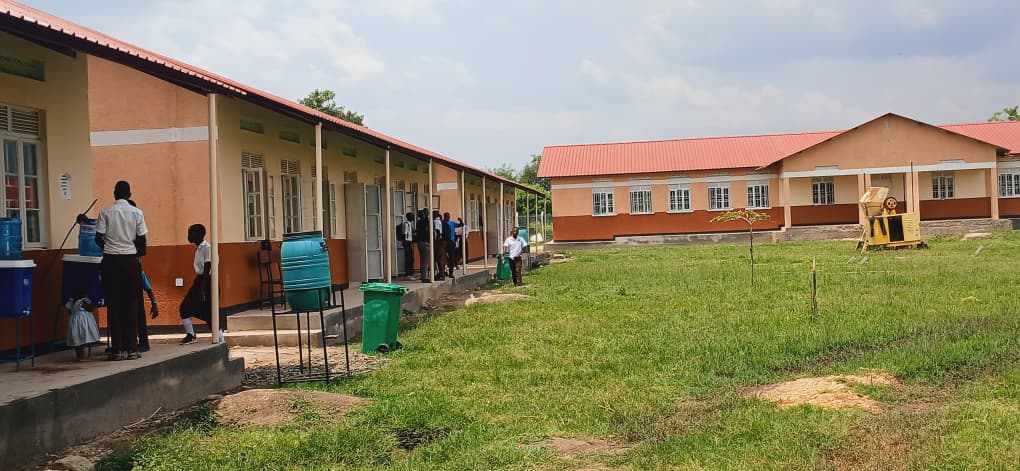
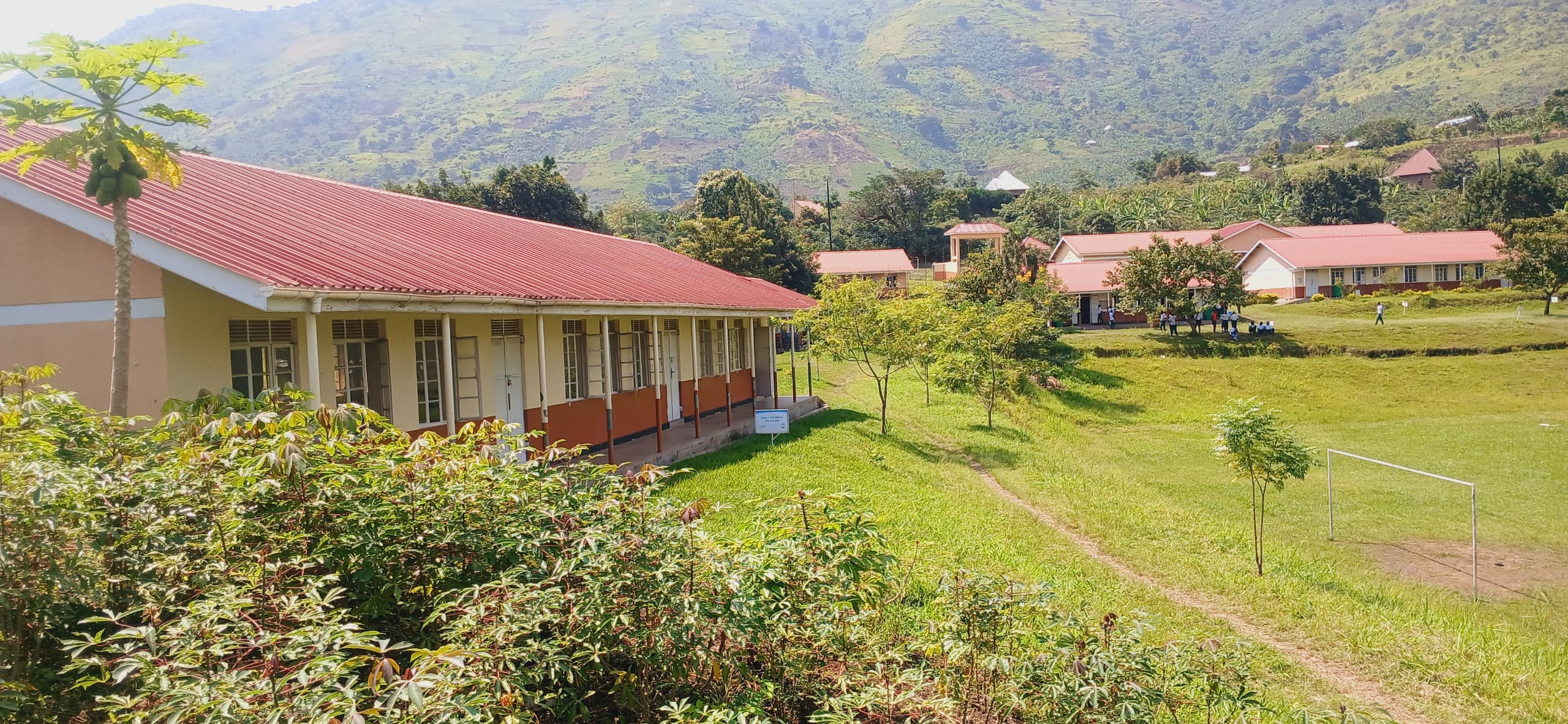
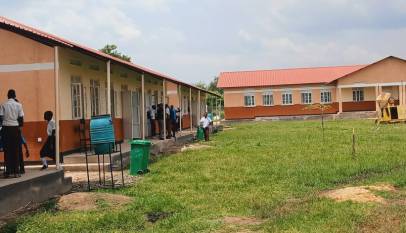
Ntoroko now has seed secondary schools in Butungama, Kibuku, Nombe and Kanara, while Karugutu Seed Secondary School is under construction.
The policy objective was straightforward: reduce the physical distance between learners and secondary education.
In Butungama, that objective is visible.
Communities that once depended on schools far from home now have a secondary school within their locality.
The Member of Parliament for Ntoroko County, Hon. Rugumayo Edison, estimates that some learners who previously travelled about 20 kilometres can now attend school within their community.
District enrolment figures also point to increased demand.
Kibuku Seed Secondary School has grown from about 50 learners before construction to 174, while Butungama has increased from approximately 70 learners to 249, according to District Education Officer Seth Aheebwa.
The figures suggest the schools are being used by communities they were intended to serve.
However, access cannot be measured by the existence of a school alone.
The school is closer but not close enough
At Kibuku Seed Secondary School, Kasaija still walks approximately 12 kilometres to attend class.
The journey is long enough to make him miss lessons at times. His solution is straightforward: he hopes the school can eventually provide boarding facilities so that he can live closer to school. His ambition is to become a secondary school teacher.
At Nombe Seed Secondary School, Shamim covers about 14 kilometres. For her, the distance can mean arriving late or missing school altogether.
Their experiences expose a limitation in the original model.
The construction of a school can reduce the distance between a learner and secondary education without necessarily making the journey manageable.
This is particularly significant in a district where communities are scattered across difficult terrain and some areas are affected by flooding.
The District Education Office has consequently proposed a possible policy adjustment: providing hostels in selected seed schools where day schooling leaves learners travelling excessive distances.
“Seed schools are supposed to be day schools,” Aheebwa notes, but some locations may require hostels to make the investment work as intended.
Did the programme improve transition?
One of the central questions surrounding the seed-school investment is whether bringing schools closer has improved the movement of children from primary to secondary education.
During this investigation, initial information obtained from the district suggested that between 30 and 40 per cent of pupils who qualified for Senior One in 2025 did not report.
But subsequent figures provided by the District Education Officer tell a different story.
Of the 1,429 pupils who qualified for Senior One in 2025, 1,340 reported to secondary school.
That leaves 89 pupils who did not report,approximately 6.2 per cent of those who qualified.
The reported transition rate was therefore about 94 per cent.
The figures provide a more favourable picture than the initial 30 to 40 per cent estimate, but they also show that access to a school does not automatically guarantee continued participation.
The district now faces the more difficult question of retention.
Local authorities, school management committees and development partners are involved in identifying learners who fail to enrol or subsequently drop out.
The cost of making a school functional
At Kanara Seed Secondary School, the district reports a staffing complement of 12, including the head teacher.
Some teachers previously deployed to the school have since been transferred without replacements, leaving the district seeking additional staffing from the Ministry of Education and Sports.
The problem is not unique to seed schools.
Rwebisengo Secondary School, for example, has about 1,021 learners but only eight teachers on the government payroll, plus the head teacher.
The staffing figures raise a broader question about the sustainability of investments in school infrastructure.
A classroom can bring education physically closer, but without enough teachers, the public investment risks producing access to a school without sufficient capacity to deliver education.
Rugumayo attributes some of Ntoroko’s staffing difficulties to the district’s remoteness and living conditions, which can make it difficult to retain teachers.
When schools become flood shelters
Ntoroko’s geography presents another challenge that school construction alone cannot solve.
Communities around River Semliki and Lake Albert are vulnerable to flooding.
In some cases, schools located on relatively raised ground become temporary shelters for families displaced by floods.
That creates a difficult contradiction: infrastructure intended to keep children in class can also become emergency shelter when disasters displace their families.
The district has also reported damage to some primary school infrastructure as a result of flooding and says additional government support is needed to replace affected facilities.
The problem therefore extends beyond whether a school exists. It is also about whether the infrastructure can remain operational when the communities it serves face recurrent emergencies.
What keeps children out?
Distance is only one part of the access problem.
District education officials identify teenage pregnancy, early marriage, poverty and child-headed households among the factors affecting retention.
In Kanara, some learners leave school to engage in fishing as they try to earn money and support their families. In other communities, long distances can increase the vulnerability of girls to early marriage.
At Nombe, community members have been mobilising resources to construct hostels for girls who live far from school.
What has Sh5.2 billion delivered?
The seed school programme has clearly changed the physical education landscape in Ntoroko. Four new seed schools have been established and a fifth is under construction.
Enrolment at Kibuku has risen from about 50 learners to 174, while Butungama has grown from approximately 70 to 249.
And district figures show that 1,340 of 1,429 pupils who qualified for Senior One in 2025 reported to secondary school.
But the same evidence points to unfinished business.
Some learners are still walking 12 to 14 kilometres to school. Some schools do not have enough teachers.
Flooding continues to disrupt communities and education infrastructure.
Some learners leave school because of poverty, early marriage, teenage pregnancy or the need to earn an income. And schools designed primarily as day institutions are being asked to serve communities where distance makes day schooling difficult.
The district says the Ministry of Education and Sports has invited local governments to submit proposals outlining their outstanding needs.
Hon.Rugumayo identifies additional teachers, staff accommodation and dormitories particularly for girls as priorities.
The distance to secondary education has been reduced for many communities, and enrolment figures indicate that the schools are being used.
But the evidence also shows that bringing a school closer is only one part of making secondary education accessible.

Cabinet Approves Loan for Mbarara Regional Cancer Centre
Cabinet has approved plans to borrow up to €31.98 million, equivalent to about 139 billion…




















What Has Government’s Seed School Programme Delivered in Ntoroko?
For decades, children in some of Uganda's hard-to-reach communities have faced a simple but significant barrier to secondary education: there was no secondary school close to home.