Parliament Warns of Legal Consequences Over Kampala Flooding
Home Trending News Current Affairs Parliament Warns of Legal Consequences Over Kampala Flooding

Parliament Warns of Legal Consequences Over Kampala Flooding

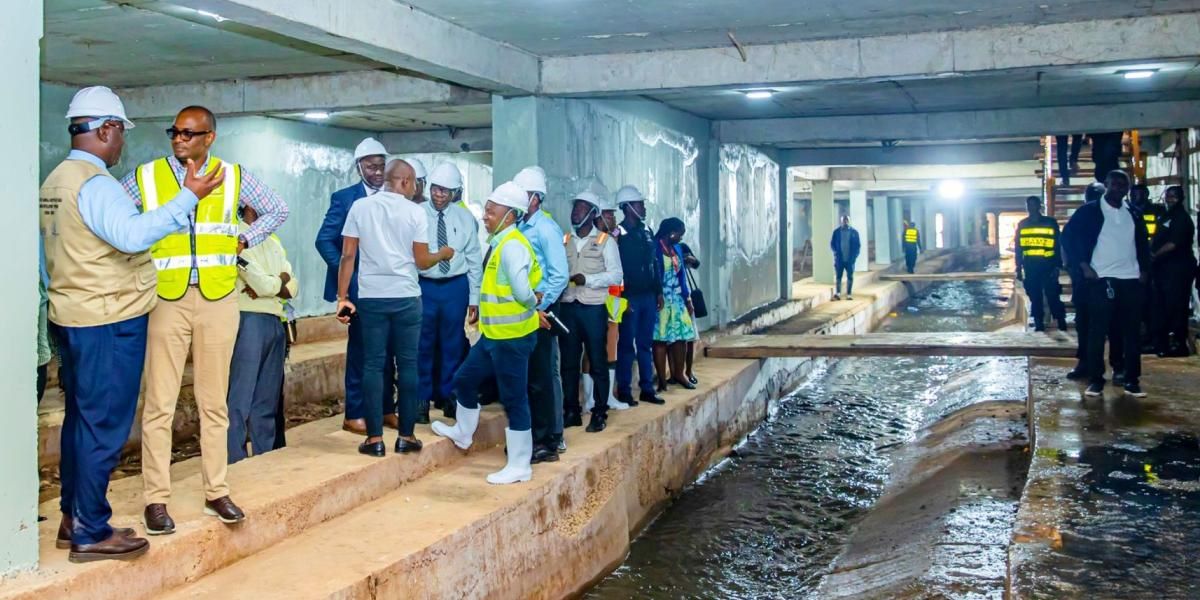
As fears mount over another wave of flooding in Kampala, Parliament has demanded answers from the Kampala Capital City Authority (KCCA) over the approval of the Nakivubo redevelopment project, with lawmakers warning that accountability, not taxpayers, should come first. During a committee meeting on July 15, 2026, lawmakers challenged KCCA officials over the relationship between the redevelopment around the Nakivubo drainage corridor and the worsening flooding that has repeatedly affected Kampala’s central business district. 

The committee also questioned why the Government is expected to spend approximately Shs20 billion compensating businesses affected by floods when, legislators argued, questions remain over decisions that allowed developments associated with the project to proceed. The hearing comes as meteorological forecasts point to the return of seasonal rains in August, raising fears of renewed flooding across low-lying areas of Kampala.

Bokora County MP Emmanuel Iluko argued that public funds should not repeatedly be used to compensate businesses if flooding results from avoidable planning failures or unlawful developments. He questioned whether individuals or entities responsible for developments that may have worsened flooding should instead bear financial responsibility. “This country is losing substantial amounts of money compensating businesses affected by floods. If an individual’s development contributed to the problem, should the burden fall on taxpayers or on those responsible?” Iluko asked.

Responding to legislators, KCCA Deputy Executive Director Benon Kigenyi rejected suggestions that the Authority approved the project under political pressure. He said KCCA initially raised technical and regulatory concerns regarding the redevelopment proposals but later granted approval only after the developer addressed the issues identified during the review process. “We raised questions; those questions went through the appropriate process, they were answered satisfactorily, and only then was the approval formalised.” Kigenyi also clarified that compensation for flood-affected traders is being coordinated by the Office of the Prime Minister rather than KCCA.

However, several legislators remained unconvinced by KCCA’s explanation. Soroti City East Division MP Moses Okia Attan questioned whether the redevelopment complied with Uganda’s planning and building laws from the outset. The legislator challenged KCCA to explain whether all statutory approvals required under the Building Control Act, 2013, including architectural and engineering approvals, had been obtained before construction progressed. “Our concern is preventing unnecessary expenditure of taxpayers’ money where failures may have resulted from actions or omissions by duty bearers,” Okia said.

Committee Chairperson Mwine Mpaka warned that if flooding recurs after the onset of the rainy season, Parliament could reopen investigations into the redevelopment project. He cautioned that officials found to have acted outside the law could face serious recommendations, including possible prosecution where criminal or administrative liability is established through due process. Mpaka stressed that presidential directives should not be interpreted as overriding statutory requirements. 

Referring to Article 99(5) of the Constitution of Uganda, which provides that the President shall exercise executive authority in accordance with the Constitution and the laws of Uganda, Mpaka argued that executive directives must operate within existing legal frameworks and cannot replace statutory approval processes. The committee also pressed KCCA to propose engineering solutions capable of reducing flood risks rather than merely explaining the approval process. 

“If flooding occurs again after the project has been approved, Parliament will expect practical remedies, not explanations,” Mpaka said. Beyond the Nakivubo project, KCCA warned lawmakers that Kampala’s ageing drainage infrastructure requires substantial investment if the city is to withstand increasingly frequent extreme rainfall. Kigenyi revealed that implementation of the Kampala Drainage Master Plan will require approximately Shs768.1 billion over the period 2026/27 to 2030/31. The proposed investment would finance expansion and rehabilitation of drainage channels, strengthen maintenance systems, improve catchment management and increase the city’s resilience to flooding.

“Kampala’s drainage system remains operational but is under increasing pressure.  “Sustained investment in drainage infrastructure, improved maintenance and implementation of the Drainage Master Plan are essential to improving Kampala’s long-term resilience,” Kigenyi said. Flooding has become one of Kampala’s most persistent urban challenges, particularly during heavy rainfall. Urban planners attribute the problem to a combination of factors, including rapid urbanisation, encroachment on wetlands and drainage reserves, inadequate drainage infrastructure, poor solid waste management, blocked stormwater channels and increasingly intense rainfall associated with climate change.

The Nakivubo Channel, one of Kampala’s principal drainage systems, carries stormwater from large sections of the city into the Inner Murchison Bay of Lake Victoria. The Constitution of Uganda guarantees every person the right to a clean and healthy environment under Article 39. The Building Control Act, 2013 establishes standards for building approvals, construction safety and regulatory oversight.

The National Environment Act, 2019 prohibits activities that degrade wetlands and environmentally sensitive ecosystems without the necessary approvals and safeguards. The Kampala Capital City Act, 2010 mandates KCCA to plan, develop and manage the capital city, including maintaining public infrastructure, drainage systems and environmental sustainability.

Check Also

Museveni Commissions Tinned Beef Factory

The commissioning of the NEC Tinned Beef and Beans Factory in Gomba District has prompted …