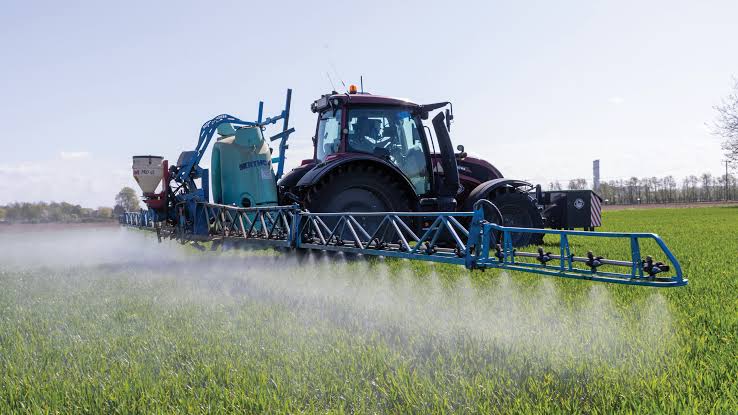
Farmers Still Can’t Access Low Carbon Machinery
A Makerere University study has found that farmers’ uptake of low-carbon energy products remains low despite their potential to boost agricultural productivity and transform the sector.
Releasing findings of a study in which researchers at the university sought to analyze, among others, uptake of low-carbon energy sources such as solar-powered machinery among medium and smallholder farmers in different districts, they found many to be unaware of available opportunities to acquire machines.
Speaking to URN in an interview shortly after sharing the study results with officials in the Energy and Agriculture Ministries, Prof Edward Bbaale, the Principal Investigator, said farmers were clueless about where to find the machines, the right machines, but even those who knew where to find them raised affordability issues.
This study was conducted a year after the Ministry of Energy, in it’s newly launched Uganda’s Energy Policy 2023, pushed for financial support for households and enterprises to access clean energy. Among the projects they launched and are still running is the ‘Electricity Access Scale-up Project’ where they work with energy service providers to offer subsidies to end users, including a 60 percent subsidy on solar powered agriculture machinery.
However, the researchers say that while farmers recognize that low-carbon agricultural technologies such as solar water pumps, solar dryers, and cooling equipment can help reduce emissions while improving productivity, post-harvest handling, processing, and rural incomes, they reported that despite the subsidy, the price is too high and the conditions for access are a deterrent.
One of the farmers who identified himself only as Ssentamu from Kassanda district at the dissemination meeting testified that farmers are asked to pay money for inspection before accessing the subsidy and that there’s another two hundred thousand shillings registration fee supposed to be paid via mobile money before any physical interaction happens with the supplier. Agreeing with the study findings, he said this is a major deterrent.
Now, the researchers recommend that this money should be incorporated into the total equipment cost to avoid the possibility of too many fees scaring away willing users. Bbaale, who doubles as the principal of the university’s College of Business and Management Sciences, says that, for farmers, with the unpredictable climate, value addition is indispensable, and indeed, in the research they expressed interest.
But, according to Dr Aisha Nanyiti, a lecturer in the department of policy who was a Co-researcher on the study, the desire expressed at the baseline after farmers were given knowledge about the opportunities didn’t translate into acquiring the machinery when they were doing final assessments at the end of the study in October 2025.
Baseline studies were conducted in October 2024, and researchers mainly involved maize, rice, coffee, and bean farmers, where they found very few farmers used irrigation and even fewer had post -harvest agricultural machinery. They found farmers especially access maize shellers by hiring petrol or diesel operators from village neighborhoods, often facing delays, high prices, and oil spills in shelled maize.
Apart from the cost, which for some of the machinery went as high as 5 million shillings after subsidy, Makerere scientists call for service providers to move closer to the people, as all eight of the subsidy-offering firms surveyed were capital city-based agricultural technology firms.
US Delivers Ebola Antibody Treatment to Uganda
Farmers Still Can’t Access Low Carbon Machinery
NUP Backs Independent Candidate in Adjumani
US Delivers Ebola Antibody Treatment to Uganda
Farmers Still Can’t Access Low Carbon Machinery
NUP Backs Independent Candidate in Adjumani
US Delivers Ebola Antibody Treatment to Uganda
Uganda has received an antibody treatment from the United States that could help prevent E…
Now On Air – 88.2 Sanyu Fm
Get Hooked Right Here
DON'T MISS!!!
US Delivers Ebola Antibody Treatment to Uganda
Uganda has received an antibody treatment from the United States that could help prevent Ebola patients from developing severe disease and dying, strengthening