Moses Nsubuga set off from Galamu Landing Site in Buvuma District in April 2007, heading to Kenya with two friends and a boatload of timber.
It was around 9 p.m. when strong winds hit. A wave swept over the engine and the boat stalled. As water filled the vessel, the three men tried to save it, but the boat eventually threw them into Lake Victoria.
Nsubuga could not swim.
He says they had life jackets, but they were of poor quality and could not keep him afloat when he was thrown into the water.
“We had life jackets, but I want to assure you that the life jackets in Uganda are substandard. You can put on a life jacket and it cannot sustain even a ten-kilogram child. We are calling upon government to make sure that we have proper life jackets that can sustain people and that are affordable.”
Nsubuga grabbed onto pieces of timber as the waves carried him through the darkness. With no phone network and no rescue in sight, he screamed for help.
“I screamed, but no one could come to my rescue. The waves would come, I would bend my head and breathe in, and then the waves would hit me and pass,” he said
The waves eventually carried Nsubuga to an island along the Uganda-Kenya border, where he reached land at about 4 a.m., exhausted and injured.
One of the two friends he had set off with was later found dead. The other has never been found.
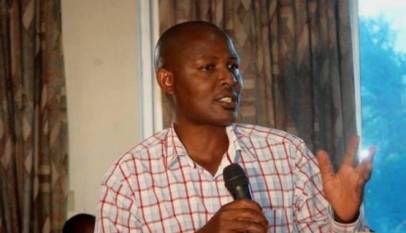
Nsubuga shared his experience during an Anti-Drowning Media Café organised by the Health Journalists Network in Uganda, HEJNU, in Kampala, where Swim Safe Uganda launched The 3,000 Campaign, aimed at raising awareness and reducing drowning deaths.
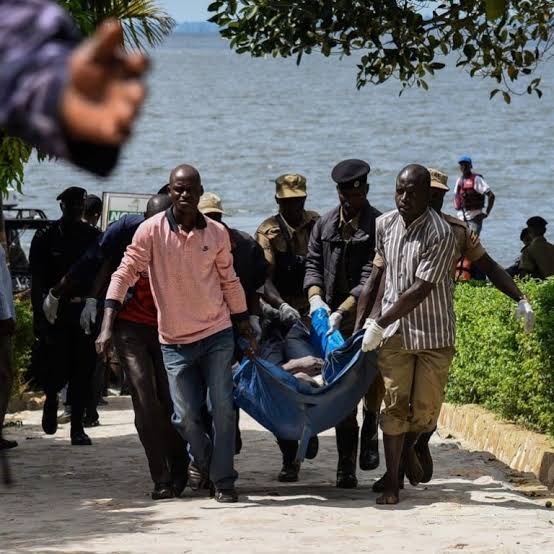
His experience is a glimpse into the danger faced by thousands of Ugandans who live and work on the country’s lakes, rivers and other water bodies.
Moses Kalanzi, Executive Director of Swim Safe Uganda, says communities must be equipped to respond to drowning emergencies.
“We have been moving from island to island, training communities in swimming, rescue and pre-hospital care. We have trained 1,900 and something people together with the Marine Police and the Fire Department because we believe that the community itself must be able to respond when someone is drowning,” said Kalanzi
For Otto Musinge of Makerere University School of Public Health, the problem is deeply connected to livelihoods.
“We realised that most of the people who drown are actually living around the water bodies. They are fishermen, they are transporting people, they are doing different activities on the water. Their office is a lake,” said Musinge
He says the consequences extend beyond the person who dies.
“Imagine a man who goes with three children, they all drown, and he comes back alone. After the burial, that man has to go back to the same place because that is where he gets his livelihood. So drowning is not just about losing somebody; it affects the whole family,” said Musinge
Senior Superintendent of Police Bashir Siliba, National Coordinator of the National Drowning Prevention Programme, says the response requires several government agencies and partners.
“We are taking a multi-sectoral approach because drowning is not a responsibility of one institution. We have different ministries, departments and agencies coming together, and we are also working with civil society organisations and development partners to see that we reduce the number of people who are losing their lives through drowning,”said Siliba
Marine Police Safety Officer Senior Superintendent Manisul Isabirye says some of the danger is preventable.
“We have always encouraged all water users never to go on water without life jackets. But what normally happens is people take the trouble to procure them, but when it comes to using them, there is an element of negligence. Instead of putting them on, they sit on them or lie on them,” said Isabirye
He also points to unsafe vessels and overcrowding.
“We find boats that are not seaworthy, yet they have been licensed by the Ministry of Works and Transport. Some operators take shortcuts, and we also have a problem of overloading. People think they are used to the water and nothing will happen, but an accident can happen at any time,” he added
When an accident happens, emergency care can determine whether a person survives.
Aliga Cliff Usher, an emergency and critical care specialist speaking for the Uganda National Emergency Resuscitation Council, says immediate action is critical.
“The most important thing during drowning is that you must breathe. If you don’t breathe, you will not survive. So the airway, the mouth and the nose, must be open so that the person can breathe,” he said
He says communities therefore need trained first responders.
“A first responder can be anybody who is at the scene. It can be a student, it can be a boat rider, it can be somebody in the market. We identify people within communities that are prone to drowning or other disasters, train them and make them first responders,” said Usher
Uganda’s National Drowning Prevention Strategy estimates that between 1,400 and 3,000 people die from drowning each year, although the actual burden is likely higher because many deaths are never recorded.
Through The 3,000 Campaign, Swim Safe Uganda wants to turn awareness into action by strengthening community response, beginning with training local responders in Buvuma Islands.
The campaign will culminate in a national fundraising event in Kampala on November 7, 2026.