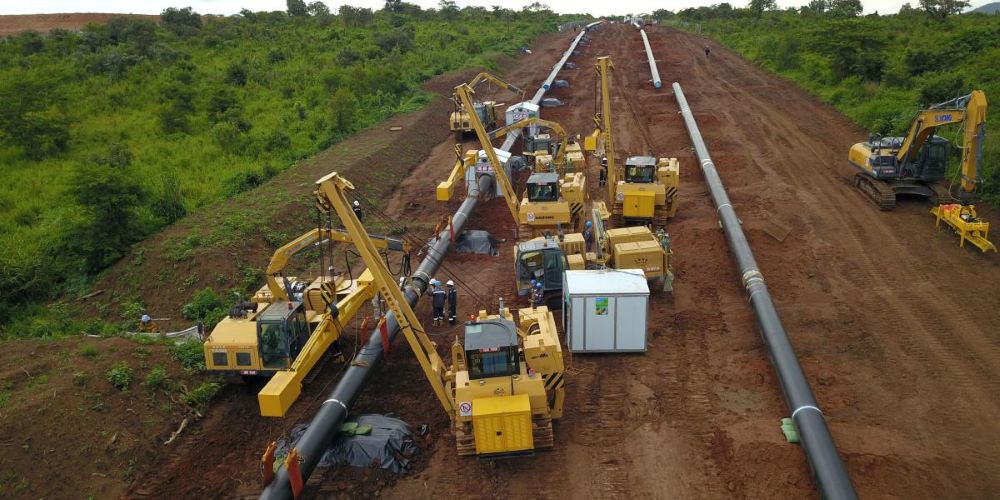
The construction of the 1,443-kilometre East African Crude Oil Pipeline (EACOP) has reached 91 per cent completion, bringing Uganda closer to achieving first oil production, which is expected by the end of this year.
The USD 5 billion pipeline is designed to transport crude oil from Uganda’s Albertine Graben to the Chongoleani Peninsula near the Port of Tanga in Tanzania. The project is being implemented through a joint venture between China Petroleum Pipeline Engineering Co. Ltd. and Worley Limited.
The pipeline begins at Nyamasoga Village in Kabaale Parish, Hoima District, Uganda and passes through the districts of Hoima, Kikuube, Kakumiro, Kyankwanzi, Mubende, Gomba, Sembabule, Lwengo, Kyotera, and Rakai before crossing into Tanzania near the Uganda-Tanzania border. It then continues through Bukoba, Kahama, Singida, Kondoa, and terminates at Tanga on the Indian Ocean.
Owned by TotalEnergies E&P Uganda (62 per cent), Uganda National Oil Company (15 per cent), Tanzania Petroleum Development Corporation (15 per cent), and CNOOC Uganda (8 per cent), the pipeline features a 24-inch insulated and electrically heated pipeline, six pump stations, two of them in Uganda, two pressure reduction stations, and a marine export terminal in Tanzania.
EACOP Deputy Managing Director John Bosco Habomugisha said that progress on the works, which was expected to have reached 94 per cent completion by now, was slowed by several unforeseen challenges.
He attributed part of the delay to the conflict in the Middle East, which disrupted the transportation of critical project cargo. According to Habomugisha, some of the project’s cargo had been routed through Dubai but had to be diverted to Oman because of the conflict, resulting in significant delays.
He added that travel disruptions also prevented some international specialists required for critical phases of the project from arriving in Uganda on schedule, a problem which was further compounded by the recent Ebola outbreak in Uganda.
Despite the setbacks, Habomugisha said that all 1,540 kilometres of pipeline material have been fully manufactured, while more than 1,514 kilometres have already been buried underground.
He explained that the pipeline’s pump stations have been designed to operate reliably throughout the expected 25-year production life of Uganda’s crude oil reserves. However, he noted that the infrastructure is capable of operating for more than 50 years while transporting crude oil.
Habomugisha explained that Uganda and Tanzania first negotiated and signed an Inter-Governmental Agreement defining the cross-border pipeline project. This was followed by Host Government Agreements with investors, shareholder agreements, and other commercial negotiations that established the legal and commercial framework for the pipeline.
He described EACOP as more than an engineering project, saying it represents a shared vision for regional integration, economic growth, and energy security in East Africa.
Habomugisha said safety and environmental sustainability remain central to the project’s implementation, with every stage of construction carried out in accordance with strict international standards aimed at protecting both people and the environment.
He added that the company’s objective is not only to deliver first oil but also to create long-term value for future generations across East Africa.
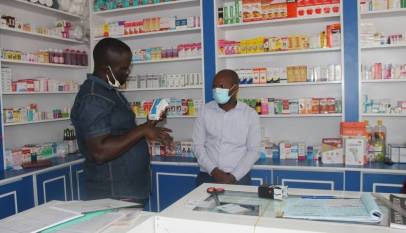
According to Habomugisha, the project has created more than 12,000 jobs for Ugandan and Tanzanian nationals. More than 7,500 contracts have also been awarded to local businesses, enabling engineers, welders, suppliers, and service providers to gain valuable skills and expand their enterprises, contributing to economic growth in both countries.
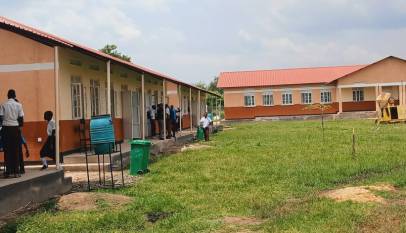
Beyond infrastructure development, he said EACOP has invested in community development through its socio-economic investment programme. More than 100 community projects have been supported under pillars including education and future generations, water and sanitation, community health and safety, sustainable energy, and environmental conservation.
Through its Livelihood Restoration Programme, the project is supporting affected households with vocational training and income-generating tools to help restore and improve livelihoods disrupted by pipeline construction.
To date, 520 replacement houses have been completed and handed over to project-affected families, while more than 2,000 young people living along the pipeline route have received hands-on vocational training and skills development.
The project is also implementing an agricultural improvement and enterprise development initiative that has so far benefited more than 12,200 households. As part of its environmental conservation efforts, EACOP has begun planting more than 5,000 trees to promote sustainable development and environmental restoration.