Uganda’s gaming and lotteries sector is set for a major regulatory overhaul after the government launched a five-year roadmap aimed at strengthening oversight, improving accountability and increasing the industry’s contribution to national revenue.
The Ministry of Finance, Planning and Economic Development on Monday launched the National Lotteries and Gaming Regulatory Board’s (NLGRB) Strategic Plan, Client Charter and Service Delivery Standards for the period 2025/26 to 2029/30, setting out the direction for regulation of the sector over the next five years.
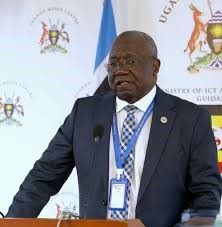
Launching the frameworks, State Minister for Finance (General Duties) Henry Musasizi said the documents demonstrate government’s commitment to creating an environment where legitimate gaming businesses can thrive while protecting citizens and safeguarding public revenue.
He said the gaming sector has become increasingly important to Uganda’s economy through its contribution to government revenue, employment and investment, but requires stronger supervision as technology continues to transform how gaming products and services are delivered.
“The gaming industry continues to play an increasingly important role in Uganda’s economy. Through effective regulation, enhanced compliance, technological innovation and stronger supervision, the sector has expanded its contribution to government revenue, employment and investment,” Musasizi said.
The new strategic plan is anchored on four key priorities: increasing tax and non-tax revenue from the gaming sector, promoting responsible gaming and minimising gambling-related harm, driving operational excellence through technology and innovation, and strengthening institutional coordination and governance.
Musasizi said the roadmap aligns with Uganda Vision 2040, the Fourth National Development Plan and the government’s Tenfold Growth Strategy, particularly in areas of domestic revenue mobilisation, digital transformation and economic growth.
Beyond policy commitments, the regulator says technology will be central to improving compliance and monitoring a rapidly changing industry.
NLGRB Chief Executive Officer Denis Ngabirano said the Board has adopted digital systems as a major tool for regulation, including an automated electronic monitoring system that tracks significant activities within casinos, gaming and betting operations.
He said the system has supported improved revenue assurance, with collections from the sector increasing from Shs323 billion in the 2024/25 financial year to Shs368 billion in the 2025/26 financial year.
However, the regulator continues to face challenges, particularly from illegal gaming activities and the rapid expansion of online platforms.
Ngabirano said the Board has been directed to strengthen collaboration with the Uganda Revenue Authority and other government agencies to tackle illegal gaming operators, particularly those involved in unauthorised slot machine operations.
He said some gaming machines enter the country under misleading declarations, creating enforcement challenges, and called for stronger coordination to protect the public and ensure compliance within the industry.
The regulator is also pushing for reforms to the existing gaming law, which it says has not kept pace with changes in the sector.
According to Ngabirano, when the current law was enacted in 2015, gaming was largely land-based, retail and cash-driven. However, the sector has since shifted significantly, with about 70 to 80 percent of gaming activities now conducted online.
He said updating the legal framework, strengthening penalties for repeat offenders and investing in technology will be critical to ensuring effective oversight of the modern gaming environment.
The Board’s push for stronger institutional systems has also seen it achieve ISO 27001 certification, an internationally recognised information security management standard.
Ngabirano said the certification demonstrates the Board’s commitment to protecting sensitive information collected through its regulatory work and ensuring that data is managed securely.
NLGRB Chairperson Kenneth Kitariko said the Board remains committed to creating a fair, transparent and efficient gaming industry through enhanced regulatory compliance, innovation and collaboration with stakeholders.
As implementation of the new frameworks begins, government officials have cautioned that success will depend on measurable action rather than the launch of documents alone.
Deputy Secretary to the Treasury Patrick Ocailap challenged the Board to focus on execution, saying strategic plans and service standards must translate into improved public value.
“A Strategic Plan without implementation remains a statement of intent. Service Delivery Standards without compliance remain aspirations. A Client Charter without accountability becomes only a public relations document,” Ocailap said.
With tighter regulation, increased digital oversight and stronger enforcement, government hopes the reforms will position Uganda’s gaming sector as a more accountable contributor to economic growth while protecting citizens from the risks associated with irresponsible gambling.