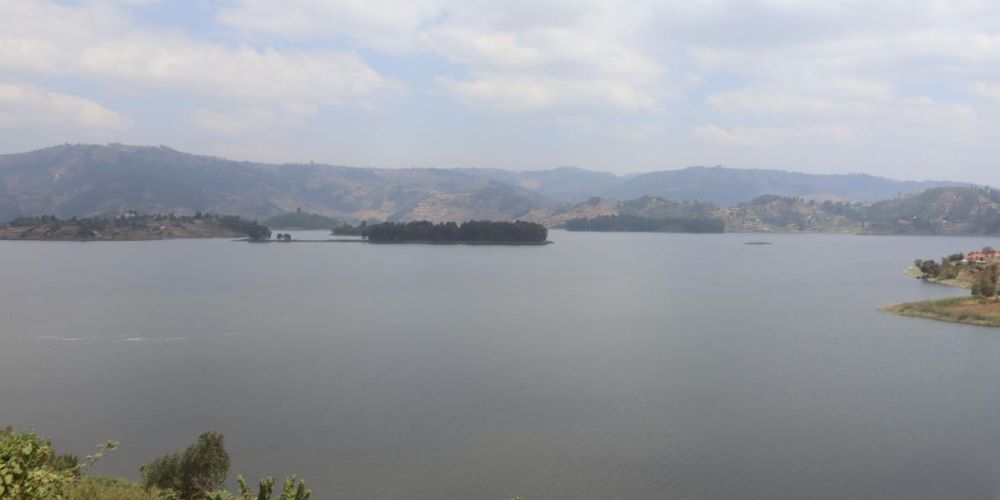
A team of environmental specialists from the Ministry of Water and Environment has embarked on a three-day inspection and water quality assessment of Lake Bunyonyi in Kabale District.
The tram establishes the causes of the persistent discoloration of Lake Bunyonyi and addresses concerns over water quality in the area.
In September 2025, Lake Bunyonyi experienced unusual and prolonged discoloration, accompanied by a strong odor and surface scum.
While such changes normally occur after heavy rainfall and last only a few days, the phenomenon persisted for weeks, forcing many residents to seek alternative water sources.
The Ministry of Water and Environment attributed the problem to pollution and poor catchment management.
It dismissed fears that it was linked to volcanic activity, noting that there was no seismic activity, tremors, or flooding in the area.
Preliminary assessments revealed that dissolved oxygen levels had dropped to a critically low 1.60 mg/L, posing a risk to fish.
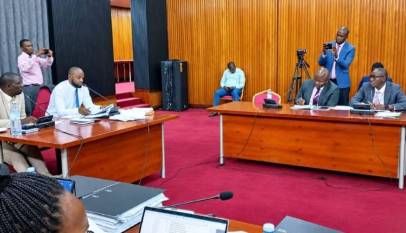
On Monday, a team of specialists led by Lilian Idrakua, commissioner in the Department of Water Quality Management, together with experts from the National Environment Management Authority (NEMA), National Water and Sewerage Corporation (NWSC), the Department of Environmental Support Services, and the Department of Water Services, arrived in Kabale and held a closed-door meeting at the district boardroom to discuss the methodology for conducting the comprehensive inspection and water quality assessment of Lake Bunyonyi and other water bodies in the district.
Speaking on Tuesday, Idrakua says the exercise follows last year’s incident in which the waters of Lake Bunyonyi unexpectedly changed color, causing concern among residents and authorities. She explains that although emergency assessments and preliminary investigations ruled out volcanic activity as a possible cause, findings suggested that the phenomenon was more likely linked to human activities around the lake than geological processes.
Idrakua says a fresh assessment is necessary because earlier investigations were inconclusive. She explains that the current exercise seeks to generate more comprehensive scientific evidence about the lake’s condition, determine its actual depth, and assess whether sedimentation is significantly affecting the ecosystem.
She adds that experts are also conducting a detailed water quality assessment of the lake and evaluating the quality of water supplied by NWSC following complaints from consumers about changes in the color of tap water.
Idrakua also expresses concern over widespread non-compliance with environmental regulations by some developers around the lake. She cites the failure to obtain lakeshore development permits, the lack of annual environmental audits, and construction activities taking place within protected shoreline buffer zones.
According to Idrakua, NEMA’s erosion mapping for the Kigezi region indicates that every hectare of degraded land within the catchment contributes approximately 18 tonnes of soil into the lake annually. She adds that inadequate water protection zones in many parts of the catchment are accelerating environmental degradation.
Kabale District LCV Chairperson Denis Nzeirwe Ndyomugyenyi welcomes the assessment exercise, saying residents have observed changes in the color of both lake water and water supplied to households. He says there is a need to protect the water source used by NWSC, warning that failure to do so could expose residents to unsafe drinking water.
Kabale Chief Administrative Officer Robert Mugabe says the discoloration incident poses a serious threat to public health. He calls for a comprehensive study into the persistent water quality concerns, noting that many residents continue to experience discolored tap water, particularly in the mornings.
Mugabe also urges government agencies to investigate changing weather patterns in the Kigezi sub-region, arguing that environmental changes could be affecting local water resources.
Retired Major Godfrey Katamba, the Kabale Resident District Commissioner, suggests that artisanal gold mining activities in Kahungye, Rubaya, and Butanda near the Rwanda border could be contributing to the deterioration of water quality in the lake. He also raises concerns about poor waste management practices around the lake and calls for improved waste treatment facilities to protect the fragile ecosystem.
Katamba says the inspection team is expected to compile findings and recommendations that will guide future interventions aimed at protecting Lake Bunyonyi, one of Uganda’s most important freshwater resources and tourism attractions.
Lake Bunyonyi, located in southwestern Uganda between Kisoro and Rubanda districts, remains one of the country’s most iconic natural landmarks. With 29 islands and an average depth of 39 meters, the lake supports domestic water supply, fisheries, biodiversity conservation, and tourism activities across the region.