Government’s ambitious infrastructure agenda, long positioned as a cornerstone of economic transformation, is facing a growing credibility test, as Parliament raises alarm over delays in compensating Project Affected Persons (PAPs).
A new report by the Committee on Physical Infrastructure warns that failure to urgently release Shs689 billion could stall strategic projects and leave up to Shs3.7 trillion in external financing unutilised in the 2026/2027 financial year.
The findings, presented by Deputy Chairperson Tony Awany during a plenary sitting chaired by Speaker Anita Among on April 16, 2026, expose a deeper structural challenge: a widening gap between budget approvals and actual cash releases, one that is undermining project implementation, investor confidence, and the country’s broader development ambitions.
At the heart of the crisis are thousands of Ugandans whose land has been earmarked for public infrastructure projects but who remain uncompensated. According to the committee, 7,767 PAPs, representing 41 percent under government-funded projects, are yet to be paid Shs533.23 billion. An additional 6,597 PAPs tied to donor-funded projects await compensation worth 320 billion.
Affected projects include critical national investments such as Bukasa Port, the Standard Gauge Railway (SGR), the Tororo–Gulu Meter Gauge Railway, and the Gulu Logistics Hub, each central to Uganda’s regional trade ambitions under frameworks such as the East African Community (EAC) integration agenda and the African Continental Free Trade Area (AfCFTA).
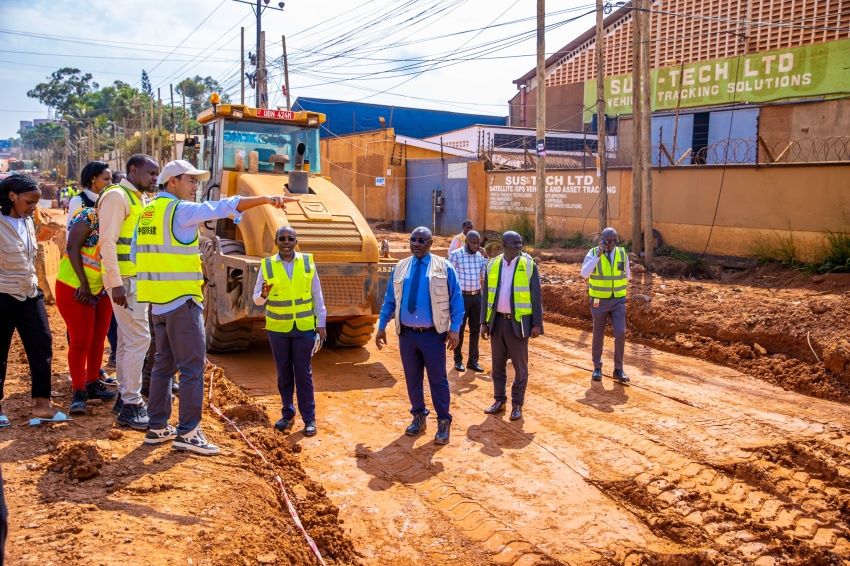
Without compensation, contractors cannot access project sites, effectively halting progress. “This also makes it hard for government to use funds from development partners, even when the money is available,” Awany noted, underscoring the paradox of idle financing amid pressing infrastructure deficits.
The Ministry of Works and Transport closed the 2024/2025 financial year with arrears totaling Shs1.489 trillion. While Shs541 billion has since been paid through supplementary funding, a significant balance of approximately Shs948 billion remains outstanding.
More concerning is Parliament’s revelation that despite approving Shs218.456 billion to clear arrears in the 2025/2026 financial year, no funds had been released by mid-year. This disconnect between legislative approval and executive disbursement has triggered project suspensions, contractual disputes, and additional costs in the form of interest penalties.
“Such inefficiencies raise questions about adherence to Uganda’s Public Finance Management Act, 2015, which mandates timely release of funds and prudent fiscal management,” Leader of the Opposition Joel Ssenyonyi decried.
“They also challenge commitments outlined in the National Development Plan IV (NDP IV), which prioritises infrastructure as a driver of industrialisation and export competitiveness,” Ssenyonyi added.
The Committee has recommended that the 689.513 billion Shillings required for PAP compensation be released in the first quarter of the 2026/2027 financial year, alongside a clear, time-bound payment plan and monitoring mechanisms to ensure funds reach beneficiaries.
In addition, MPs are pushing for arrears funding to be restored to at least Shs900 billion annually, backed by a structured three-year repayment plan. The call reflects growing concern that persistent arrears are distorting the construction sector, weakening contractor liquidity, and inflating project costs.
Speaker Anita Among amplified these concerns, questioning the effectiveness of current spending levels.“Even after giving the sector much money (8 trillion) we do not see roads worked on,” she said, referring the matter to the Budget Committee and calling for a joint debate involving the Ministers of Works and Finance.
The potential loss, or delayed utilisation, of Shs3.7 trillion in external financing adds an international dimension to the issue. Development partners typically impose strict disbursement conditions tied to project readiness, including land acquisition and compensation.
Failure to meet these conditions can lead to delayed disbursements, project cancellations, or reallocation of funds to other countries. According to the World Bank’s procurement and safeguards frameworks, unresolved resettlement issues are among the leading causes of project delays in developing economies.
The debate in Parliament has also reignited discussions on the economic viability of infrastructure investments. Kiira Municipality MP Ibrahim Ssemunju proposed that future financing decisions be guided by return on investment (ROI), suggesting a shift toward prioritising projects with clear economic payoffs.
This aligns with global best practices in public investment management, where cost-benefit analysis and economic rate of return are used to guide project selection. The International Monetary Fund (IMF) has consistently advised developing countries to strengthen project appraisal systems to maximise the impact of limited fiscal resources.
Benjamin Kamukama, MP for Ruhama East, pointed to delays within the Ministry of Finance as a key bottleneck, highlighting the need for better coordination between planning and execution agencies.
While the immediate focus is on compensation, the issue reflects deeper systemic challenges in Uganda’s infrastructure ecosystem. These include: weak alignment between budget approvals and cash flow planning, inadequate project preparation and land acquisition processes, accumulation of domestic arrears due to over-commitment and limited monitoring and evaluation mechanisms.
Speaker Among also raised concerns about the functionality of regional mechanical workshops intended to maintain road equipment, citing uneven implementation of a Presidential directive to equip districts. This points to broader governance issues that extend beyond financing.
Ultimately, the compensation delays represent a litmus test for Uganda’s governance systems. As the country seeks to position itself as a regional logistics hub, ability to deliver infrastructure projects on time, within budget will be critical.