Elderly Grant Expansion at Risk Over Shortfall
Parliament has asked the government to increase funding to the social protection programme targeting older persons, popularly known as the Social Assistance Grants for Empowerment (SAGE).
It warns that thousands of elderly citizens risk exclusion unless urgent budget gaps are addressed.
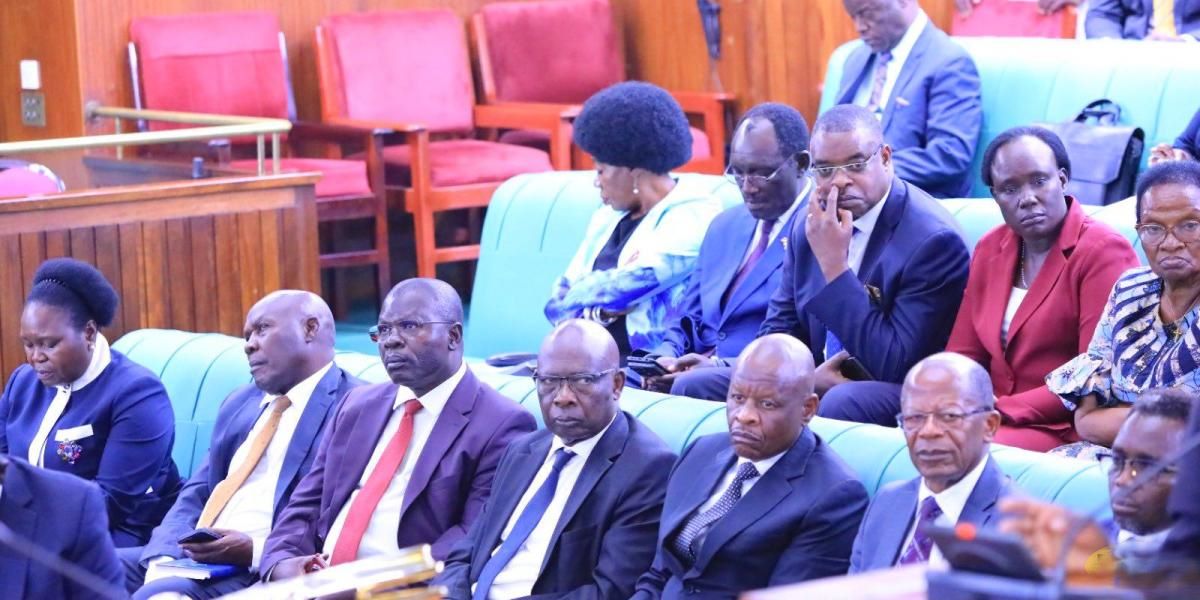
Parliamentary Committee on Gender, Labour and Social Development recommended that an additional 1.47 billion shillings should be availed to support the expansion of the Social Assistance Grant for Empowerment (SAGE) programme.
The call was part of a recommendation tabled during the April 16, 2026, plenary sitting in Parliament.
The funding is required to operationalise a Cabinet directive lowering the eligibility age for beneficiaries from 80 to 65 years.
The proposal, if fully implemented, would mark one of the most ambitious expansions of Uganda’s social protection system in recent years, potentially tripling the number of beneficiaries and significantly increasing fiscal pressure on the national budget.
The Committee Chairperson, Agnes Kunihira, underscored the scale of the financial gap and the urgency of government intervention.
“Cabinet directed the lowering of the age for access to SAGE from 80 to 65 years. While this will expand beneficiaries to over 1.04 million elderly persons, the total funding required is 373.36 billion shillings. However, only 121.22 billion shilings have been provided in the FY2026/27 budget, leaving a substantial gap,” she said.
Specifically, the Ministry of Gender, Labour and Social Development had requested 192.69 billion shillings for SAGE, but Parliament approved only 121.22 billion shillings, creating a shortfall of 71.47 billion shillings.
Parliament urged the Ministry of Finance to align with the Cabinet’s directive by allocating over 252 billion shillings needed to support the expanded age threshold.
The SAGE programme, implemented under Uganda’s broader Social Protection Policy Framework, provides direct income support to vulnerable elderly citizens. It is widely regarded as a cornerstone of Uganda’s efforts to address poverty, inequality, and demographic vulnerability.
Uganda’s population remains predominantly young, but the absolute number of elderly citizens is rising steadily.
According to the Uganda Bureau of Statistics (UBOS), persons aged 60 and above constitute about 4–5 percent of the population, a figure projected to grow as life expectancy improves.
Currently, only individuals aged 80 and above qualify for SAGE under the Senior Citizens Grant (SCG).
Critics have long argued that this threshold is too high, effectively excluding a large segment of vulnerable elderly persons who face income insecurity well before reaching that age.
Lowering the eligibility age to 65 aligns Uganda with international social protection benchmarks, including recommendations under the International Labour Organization (ILO) Social Protection Floors Recommendation, 2012 (No. 202), which encourages universal or near-universal coverage for older persons.
Government Chief Whip Hamson Obua acknowledged the policy shift, noting that the government is committed to expanding access despite fiscal constraints.
“The move to lower the qualifying age is in response to concerns that the current threshold is too restrictive. Our priority is to ensure more elderly citizens benefit, even as we continue to assess the most sustainable financing options,” he said.
Members of Parliament also raised concerns about structural barriers limiting access to SAGE benefits, particularly the requirement for elderly beneficiaries to physically collect payments from sub-county headquarters.
Kalungu West MP Joseph Ssewungu described the system as burdensome and, in some cases, counterproductive.
“Some of these elderly people are too frail to travel long distances. In many cases, they spend nearly half of their grant on transport. This undermines the very objective of the programme,” he argued.
Ssewungu proposed adopting mobile money payment systems, similar to models implemented in Kenya, where beneficiaries receive funds directly on their phones.
Speaker Anita Among acknowledged the concern, tasking the committee to explore more efficient and inclusive delivery mechanisms.
“We must plan how best our elders can access this money with ease. The Committee should guide the government on practical solutions,” she said.
According to the Ministry, over 297,000 elderly citizens currently benefit from SAGE, alongside hundreds of thousands of youth, women, and persons with disabilities supported through various livelihood programmes.
Magistrate Orders Medical Access To Rwenzori Attack Suspects
30 Children Get Free Corrective Surgery for King Oyo’s 34th Birthday
Government Eyes Geothermal Energy to Power Industrial Growth
Telecom Giants Urge Lower Withdrawal Taxes to Boost Financial Inclusion
Uganda Raises Concerns over Sloppy Execution of World Bank Projects
Elderly Grant Expansion at Risk Over Shortfall
Parliament Flags Mounting Economic Costs of Unpaid Project-Affected Persons
Government's ambitious infrastructure agenda, long positioned as a cornerstone of economic…
Now On Air – 88.2 Sanyu Fm
Get Hooked Right Here
DON'T MISS!!!
Magistrate Orders Medical Access To Rwenzori Attack Suspects
The Kasese Chief Magistrate’s Court has directed prison authorities to grant medical access to suspects of the November 2025 attacks on military installations in the Rwenzori region.