Experts have expressed mixed reactions to the just-read 2026/2027 national budget.
Some hailed the proposals and allocations in Henry Musasizi’s budget, while other expressing disappointment.
On the other hand, the PS and Secretary to the Treasury, Ramathan Ggoobi, is optimistic that it will deliver the needed results if budget discipline is adhered to.
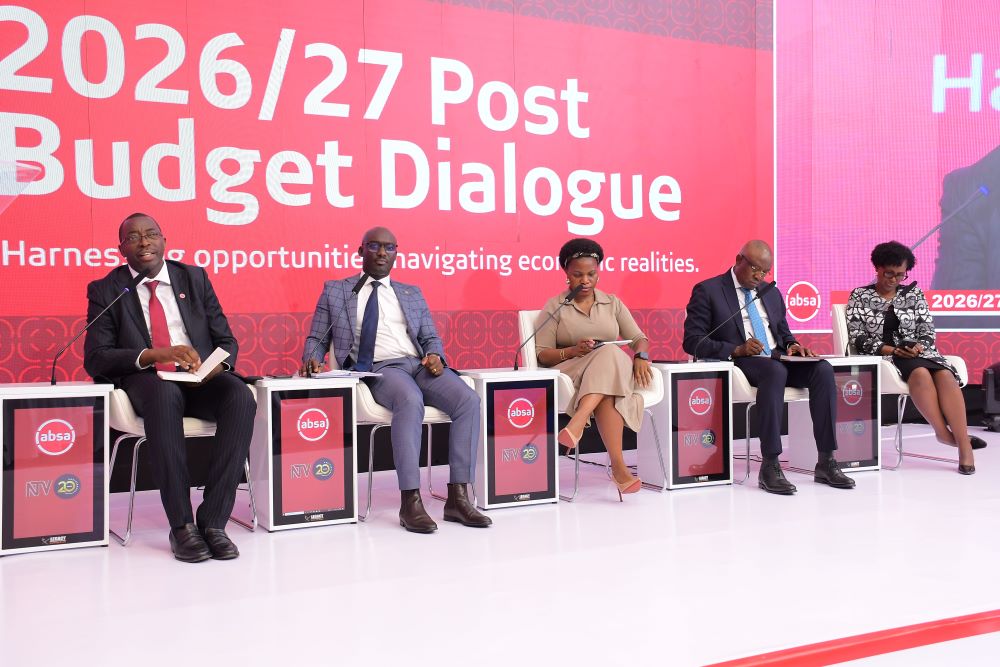
Speaking at a Budget Analysis event in Kampala, Ramathan Ggoobi, Permanent Secretary and Secretary to the Treasury at the Ministry of Finance, assured that the country is undergoing reforms in the public sector spending.
“Government is going to enforce a discipline charter,” Ggoobi said, giving the examples of the measures like the scaling down of procurement committees, and the removal of non-technical personnel from procurement processes, a move aimed at cutting bureaucracy, speeding up decision-making, and ensuring technical expertise drives public spending.
He said that Uganda’s transformation would be long but steady. “We are going to improve on execution discipline,” he added, vowing on a leaner, faster, more accountable government machinery, which would ensure that budget allocations actually translate into delivered projects and services for Ugandans.
The budget under the theme: Full Monetisation of Uganda’s Economy through Commercial Agriculture, Industrialisation, Expanding and Broadening Services, Digital Transformation and Market Access, is partly aimed at including all Ugandans in the money economy.
Achieving this means focusing more on the private sector through empowering micro, small, and medium enterprises, and investing in sectors that create more dignified employment, among others.
Samuel Sejjaaka, a renowned accountant and academic the country’s plans, however good, are usually fail at the execution stage, calling for reforms in public service pay as an approach to fighting corruption.
Sejjaaka also called for more investment in social services, especially education and health, to ensure the country has a human capital base that is capable of driving the Tenfold Growth strategy.
In the new budget, the government has allocated about 13.5 trillion shillings towards the Human Capital Development (HCD) program, representing one of the largest single-sector investments in 2026/2027.
This funding targets nationwide enhancements in health, education, social protection, water, and sanitation to boost workforce productivity and demographic dividends.
Sejjaaka says that unless there is adequate planning for human capital development, there is not just a threat to growth, but to safety and security too, which is vital for the success of the fourth National Development Plan.
The private sector has also pointed out positives and negatives in the budget, welcoming the raising of the thresholds of Pay-As-You Earn to exclude more low-income earners and increase their spending power, as well as that of VAT eligibility by companies.
Sarah Kagingo, the Vice Chairperson of the Private Sector Foundation Uganda, adds that they are excited about the increase in the allocation to tourism, as well as tax exemptions on investments in the sector, and the restriction in public expenditure, especially on events.
Damali Ssali, Country Manager GAIN (Global Alliance for Improved Nutrition), wondered how the government’s strategic investment areas dubbed ATMS, which were identified as the drivers of the tenfold growth strategy and the NDP4, have been allocated just 6 percent of the budget.
The irony, according to her, is that almost 70 percent of the budget is going to non-productive sectors and debt servicing, with just about half left to the real productive areas.
She reasons that if these allocations were reduced, and the money saved went into economic areas, it would lead to faster growth.
Ssali also called for the timely settlement of government arrears to the private sector to support business growth and confidence. She also urged action to keep essential household items affordable amid rising costs.
The private sector also called for increased investment in improving the business environment, especially enablers like infrastructure and dispute resolutions to ensure cases are resolved as soon as possible.
John Walugembe, Executive Director of the Federation of Small and Medium-sized Enterprises Uganda (FSME), says that while the budget’s current priorities are aligned to support SMEs, the 10.2 percent growth projection is a little ambitious.
He also downplayed the ability of some government agencies, like Uganda Airlines and Uganda Electricity Distribution Company Ltd, to play their roles in economic transformation.
Michael Segawa, the Executive Director at Absa Uganda, urged the government to exhibit budget discipline during the implementation of the proposals.
“The government is looking at reducing domestic borrowing from 11.4 percent to 9 percent, to ease pressure on domestic credit. The success of the budget is measured by its allocation and implementation,” he said.