MPs Raise Safety, Environmental Concerns Over KCCA’s Buyala Landfill
Home Trending News Current Affairs MPs Raise Safety, Environmental Concerns Over KCCA’s Buyala Landfill

MPs Raise Safety, Environmental Concerns Over KCCA’s Buyala Landfill

Members of Parliament have raised concerns over environmental safety, waste management and the welfare of garbage handlers at Kampala Capital City Authority’s (KCCA) Buyala landfill, warning that continued dumping could overwhelm the site and expose surrounding communities to health risks.

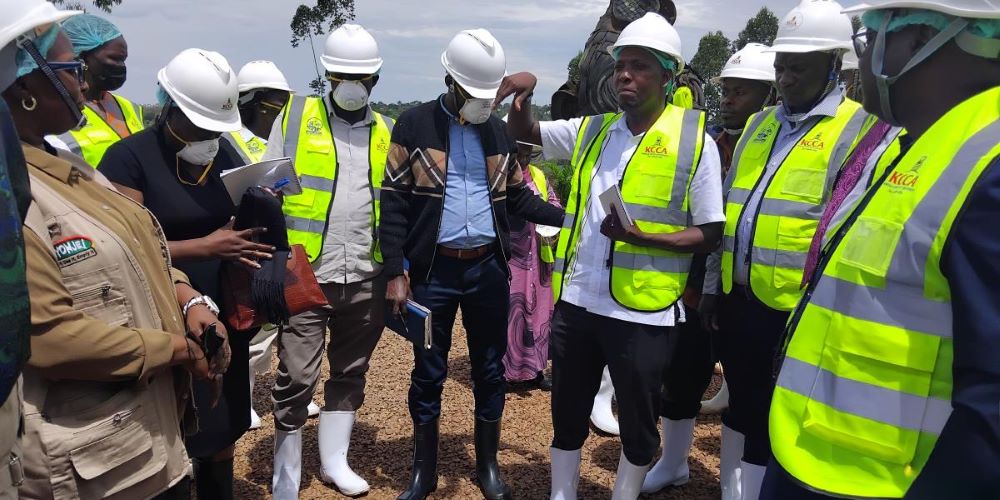
The concerns emerged on Friday during an inspection by Parliament’s Committee on Commissions, Statutory Authorities and State Enterprises (COSASE), chaired by Kyadondo East MP Muwada Nkunyingi, as legislators examined KCCA’s waste management operations and issues raised in the Auditor General’s report for the 2024/2025 financial year.

Moroto District Woman MP Stella Atyang questioned KCCA’s continued reliance on dumping waste and covering it with soil, warning that the practice would eventually create an enormous waste mound and exhaust the available space.

She also faulted the limited separation of waste at source, arguing that organic materials such as banana fibres and vegetable waste from markets could be converted into manure instead of occupying valuable landfill space.

KCCA Executive Director Sharifah Buzeki said the authority had intensified public sensitisation on waste sorting and introduced affordable sorting bags costing Shs1,000, alongside buckets for households that could afford them. Private waste collection companies operating under KCCA permits had also been required to sensitise communities and transport sorted waste.

Buzeki said KCCA was in advanced stages of procuring companies to introduce waste-to-value technologies, including facilities for producing fertilisers, generating energy and recovering recyclable materials.

KCCA Director of Public Health and Environment Sarah Zalwango told the committee that the landfill receives an average of 180 trucks carrying approximately 1,200 tonnes of mixed municipal waste daily. The volume can rise to between 2,300 and 2,500 tonnes during national cleaning activities.

About 70 per cent of the waste comes from Kampala, with the remainder originating from neighbouring areas, including Wakiso, Kasangati, Kira and Gayaza.

Zalwango said KCCA had installed an operational weighbridge to establish the quantity and origin of incoming waste and regulate trucks entering the facility.

She added that the authority had installed a geomembrane lining to prevent contaminated liquid from seeping into the ground, as well as pipes to channel leachate into six clay-lined ponds for treatment.

Leachate is the contaminated liquid produced when water passes through decomposing waste.

Zalwango said samples were tested in collaboration with Makerere University laboratories and the Ministry of Health before the treated liquid was released into the environment.

KCCA has also installed air-quality monitoring equipment in neighbouring communities.

Deputy Executive Director Benon Moses Kigenyi said the authority intended to harvest methane generated by decomposing waste to reduce emissions and explore opportunities in carbon trading.

However, Nkunyingi said the committee would require independent evidence that the site was technically suitable, environmentally safe and economically sustainable before reaching conclusions on its continued operation.

The legislators also questioned the safety of people working at the landfill, particularly informal waste pickers who appeared to lack adequate protective equipment.

Elgon North MP Gerald Nangoli questioned why visiting MPs had been required to wear protective gear while some people handling waste daily were not similarly protected.

“If we were told that safety is very important and asked to put on gumboots and other protective equipment, what about our people there? They are not protected. Are they different from us?” Nangoli asked.

He warned that inadequate protection could expose waste handlers to illness and increase their medical expenses.

Committee member Robert Ssekiteleko also questioned the land allocated for dumping and expressed concern about residents establishing homes near the facility, potentially exposing communities to environmental hazards and future land-use disputes.  

Buzeki said KCCA had acquired 230 acres for the wider project, although current dumping activities occupy approximately 10 acres. She acknowledged that landfill cells eventually fill up, arguing that acquiring more land alone would not provide a lasting solution.

“Even if we get 1,000 acres, they will get full,” she said, reiterating the authority’s commitment to integrated waste management.

KCCA plans to establish a waste-sorting facility during the current financial year, comprising a receiving bay, conveyor belts and designated areas for separating recyclable materials. It also intends to develop a composting facility capable of processing at least 500 tonnes of waste.

The authority is working with Makerere University’s College of Engineering, Design, Art and Technology on a master plan incorporating technical studies on drainage, access routes and the site’s physical characteristics. Procurement is also underway for private operators expected to establish material recovery facilities capable of turning waste into products such as tiles and briquettes.

KCCA officials said the existing facility supports more than 450 waste pickers who earn money from collecting and selling recyclable materials. Approximately 204 tonnes of recyclables had been recovered from the site, although the presentation did not specify the period covered.

The inspection comes amid heightened scrutiny of landfill safety following the August 2024 Kiteezi landfill collapse, which killed residents and exposed weaknesses in Kampala’s waste management infrastructure.

Nkunyingi said the committee would examine the technical evidence, environmental safeguards and implications of any directive requiring KCCA to stop dumping at Buyala, including the public resources already invested in the project.

The committee is expected to seek further explanations from KCCA and other relevant parties before making recommendations on the landfill’s suitability, safety and long-term sustainability.  

Check Also

Masaka Police Reopen Old Murder Files After Arrest of Suspected Serial Killer

Police in Greater Masaka have reopened files on a series of murders dating back to 2012 fo…