WHO Urges Vigilance After Kenya Confirms Second Ebola Case
Home Trending News Health WHO Urges Vigilance After Kenya Confirms Second Ebola Case

WHO Urges Vigilance After Kenya Confirms Second Ebola Case

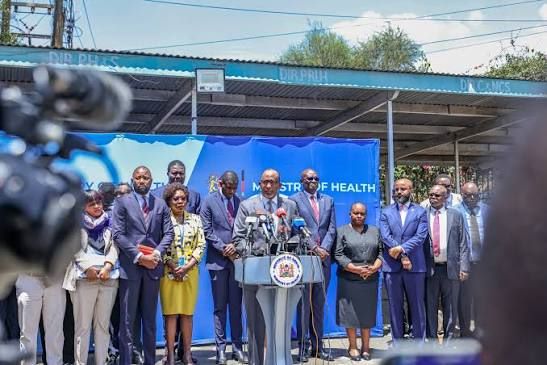
The World Health Organisation (WHO) has called for Vigilance in Kenya after a second person tested positive for the Bundibugyo strain of Ebola.

The second patient, a 39-year-old man, is a relative of Kenya’s first Ebola patient, who died in hospital on October 5. He had been placed in quarantine as a contact of the first case, a national who had been living in the Democratic Republic of the Congo (DRC), where a deadly Ebola outbreak continues to spread in the eastern part of the country. The Contact developed symptoms on October 13 before testing positive.

WHO Representative in Kenya, Dr Neema Rusibamayila Kimambo, said that the UN agency was supporting the government in surveillance, contact tracing, infection prevention and treatment. She commended Kenyan health authorities for conducting extensive contact tracing to identify people who may have been exposed to the virus.

More than 40 contacts have been identified, including airline passengers and crew, aircraft cleaners, airport workers, baggage handlers, immigration officials, health workers and family members.

Most of the contacts are in quarantine, while a few classified as low-risk are self-quarantining under medical monitoring. Authorities are also trying to locate six passengers who have been difficult to reach because they provided foreign telephone numbers.

WHO and the Kenyan government had stepped up preparedness measures even before the first case was confirmed, following the declaration of the Ebola outbreak in the DRC in May. Uganda also faced the disease, with the outbreak officially declared over in late August.

Dr Kimambo said response teams were working across several areas, including surveillance and contact tracing. WHO has also deployed a senior incident manager who participated in Uganda’s Ebola response, alongside other experts.

“We are building on the work that we started during the preparedness phase, so case management and IPC (infection prevention and control) are critical at this time in the quarantine centres,” she said.

WHO has provided Kenya with supplies worth about $70,000, including infection prevention and control materials and laboratory equipment, since the first case was identified. The agency has also trained more than 4,000 health workers, including personnel responsible for screening travellers at points of entry.

Although WHO says there is no immediate need to impose travel restrictions or close national borders, Dr Kimambo emphasised the importance of screening travellers to identify those who may pose a health risk. Dr Kimambo said preventing Ebola requires public awareness of how the disease spreads. The virus is transmitted through direct contact with the bodily fluids of an infected person.

She urged the public to practise regular handwashing, use hand sanitiser and avoid shaking hands as precautionary measures. She also cautioned that Ebola symptoms, including fever, vomiting and diarrhoea, can resemble those of malaria and other illnesses, making it important for anyone who develops symptoms to seek medical attention promptly.

However, she called for calm, noting that there was no evidence of community transmission at the time of her remarks.

Check Also

Mulago Conducts 25 Hip Replacement Surgeries

Twenty-five people living with sickle cell disease have undergone hip replacement surgery …