By Ritah Ainembabazi
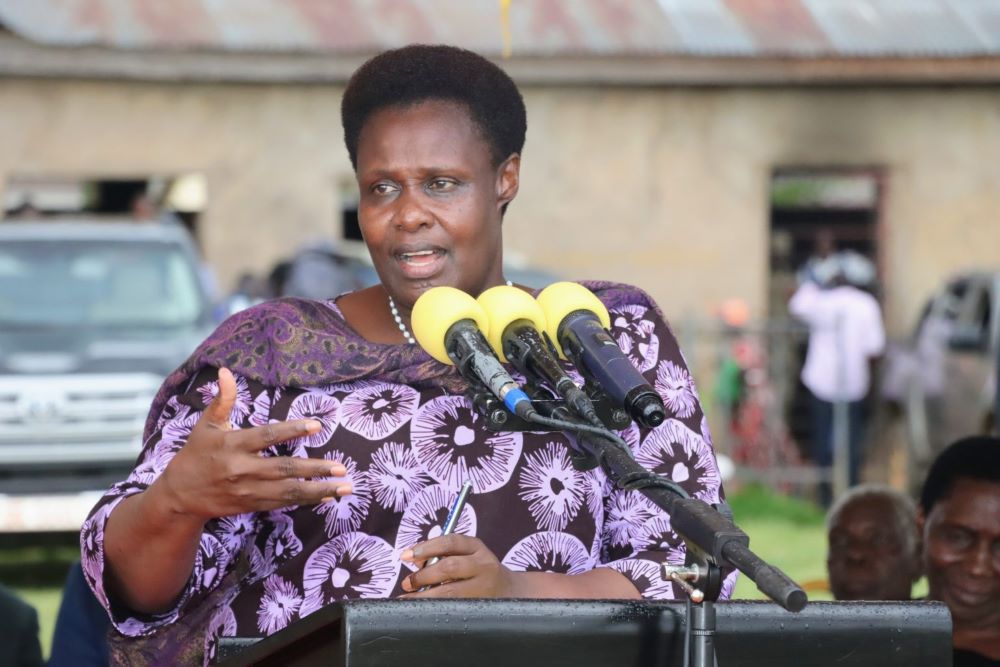
Vice President Jessica Alupo has called for a shift towards preventive healthcare, urging the government to strengthen community health structures and equip frontline workers to reduce Uganda’s disease burden.
Alupo said the country should focus more on preventing illnesses at household and community levels rather than relying heavily on hospitals to treat patients after they fall sick.
“The strongest health system is not one that treats the most patients, but one that prevents people from falling sick in the first place,” Alupo said.
She was speaking on Wednesday, at the opening of the fourth Health Promotion and Disease Prevention Conference at Speke Resort Munyonyo.
Alupo said poor health affects productivity, employment and wealth creation, noting that prevention should be central to Uganda’s healthcare strategy. She called for greater support for Village Health Teams, including basic equipment such as gumboots and torches, to enable them to reach households and respond to emergencies.
She also urged the public to embrace healthy diets, physical activity, immunisation, proper sanitation and routine screening, particularly as non-communicable diseases such as cancer, diabetes and hypertension become an increasing concern.
Health Minister Dr Chris Baryomunsi said Uganda could reduce its disease burden by investing more in prevention and encouraging healthier lifestyles.
“Up to 75 per cent of diseases affecting Ugandans can be prevented,” Baryomunsi said.
He highlighted improvements in the country’s health indicators, including an increase in life expectancy to 68 years and a decline in maternal mortality to 189 deaths per 100,000 live births.
However, Baryomunsi warned that non-communicable diseases were adding to the burden of infectious diseases such as malaria, HIV/AIDS and tuberculosis.
He called on government institutions, cultural leaders and development partners to support health promotion and address social practices that undermine public health.
The Kyabazinga of Busoga, William Gabula Nadiope IV, called for greater involvement of cultural institutions in health promotion, particularly in addressing teenage pregnancies and keeping girls in school.
“The good news is that most kingdoms have neutral and influential structures that the government should take advantage of,” the Kyabazinga said.
He highlighted the role of cultural leaders, clan chiefs and village committees in mobilising communities and addressing challenges affecting young people. He urged cultural institutions to work with government and other stakeholders to protect girls from teenage pregnancy and school dropout, while promoting healthier communities.
Meanwhile, Herbert Nabaasa, the Commissioner in charge of Environmental Health, warned that inadequate investment in water, sanitation and hygiene was contributing to preventable illnesses and substantial economic losses.
Nabaasa said a study on the cost of inadequate water, sanitation and hygiene estimated that Uganda could lose approximately 27 billion US dollars between 2026 and 2035 if the challenges were not adequately addressed.
“Uganda could lose approximately 27 billion US dollars over ten years, from 2026 to 2035,” Nabaasa said.
He called for increased funding for sanitation and hygiene, improved waste management and stronger coordination among government agencies. He also emphasised the need to improve sanitation infrastructure and ensure that communities have access to safe water and proper hygiene facilities.
A representative of the United States also highlighted cooperation with Uganda to strengthen community health services through the training of community health workers.
“The United States remains a committed partner as Uganda takes the lead,” the representative said.
The representative said the programme had expanded from a pilot initiative in 2022 to 33 districts, with more than 4,000 community health workers trained or undergoing training. The United States plans to support the training of more than 14,000 workers over three years.
The three-day conference, running from October 14 to 16, brings together government officials, health workers, researchers, cultural leaders and development partners to discuss ways of strengthening disease prevention, community engagement and primary healthcare.