Uganda and UN World Food Programme Sign Historic Agreement to Establish Global Fleet Special Plates

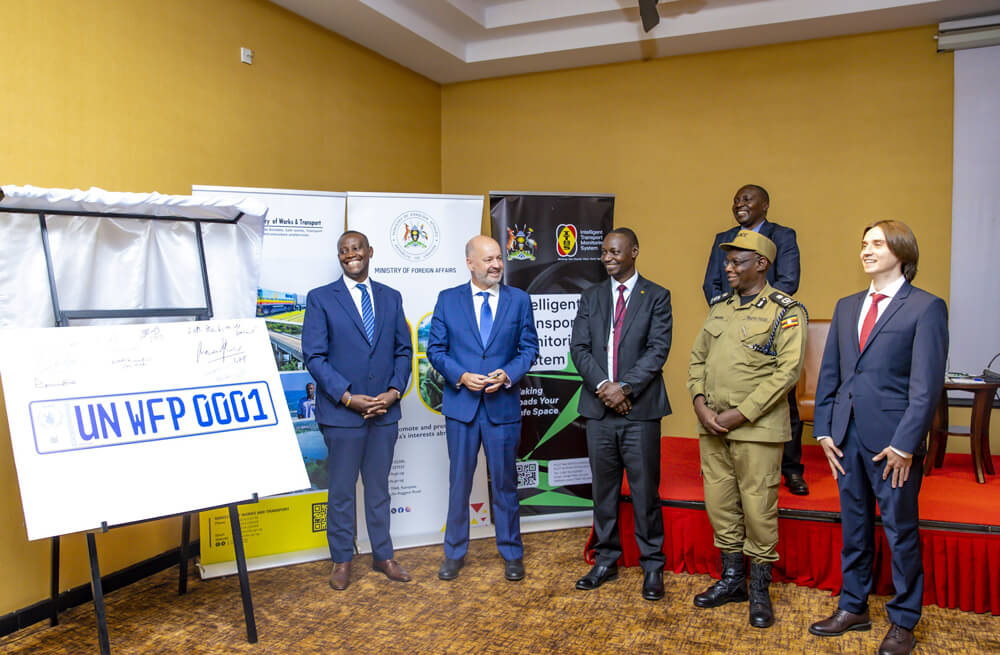
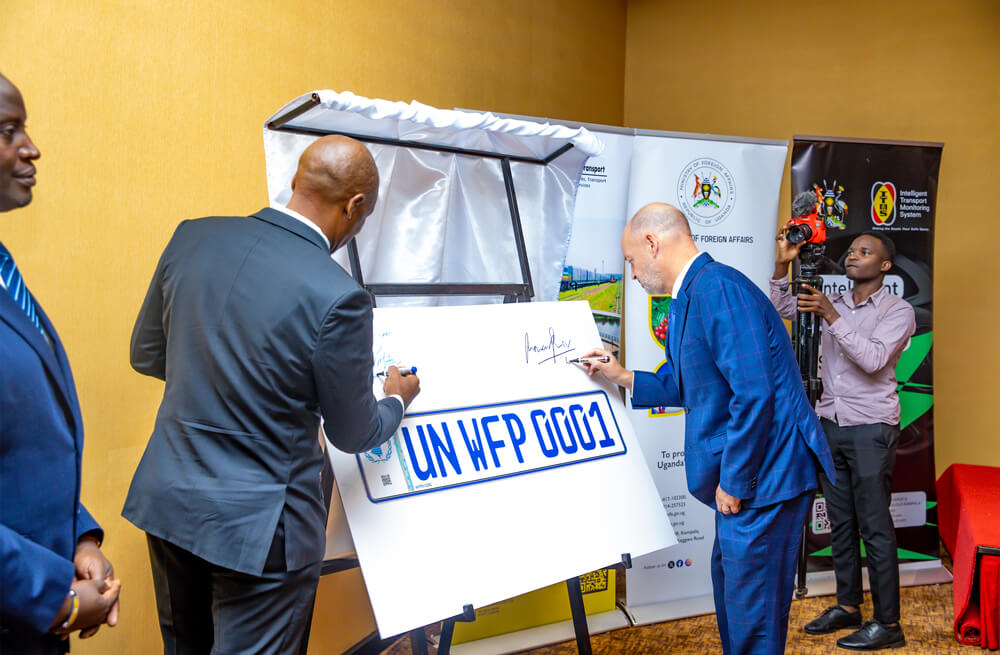
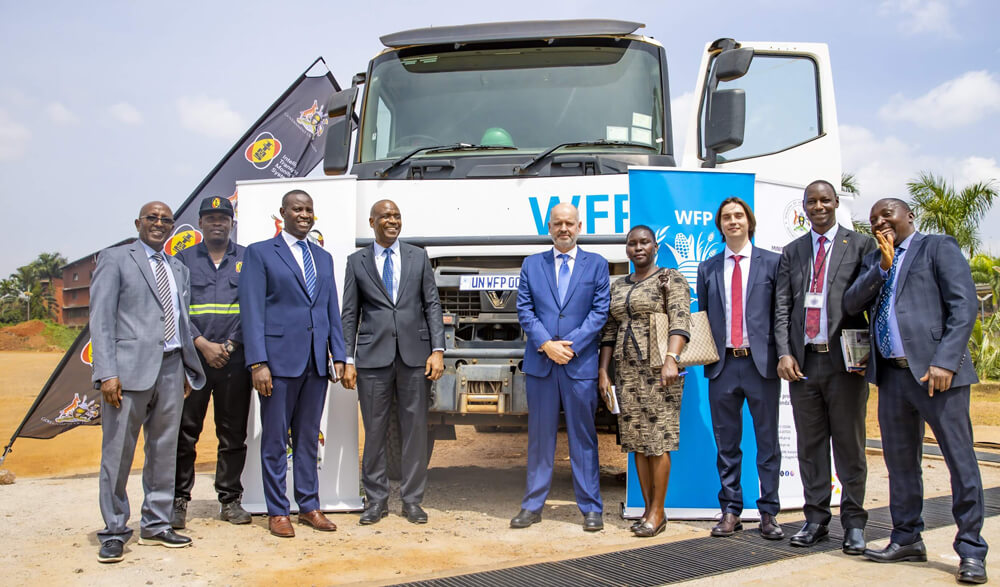
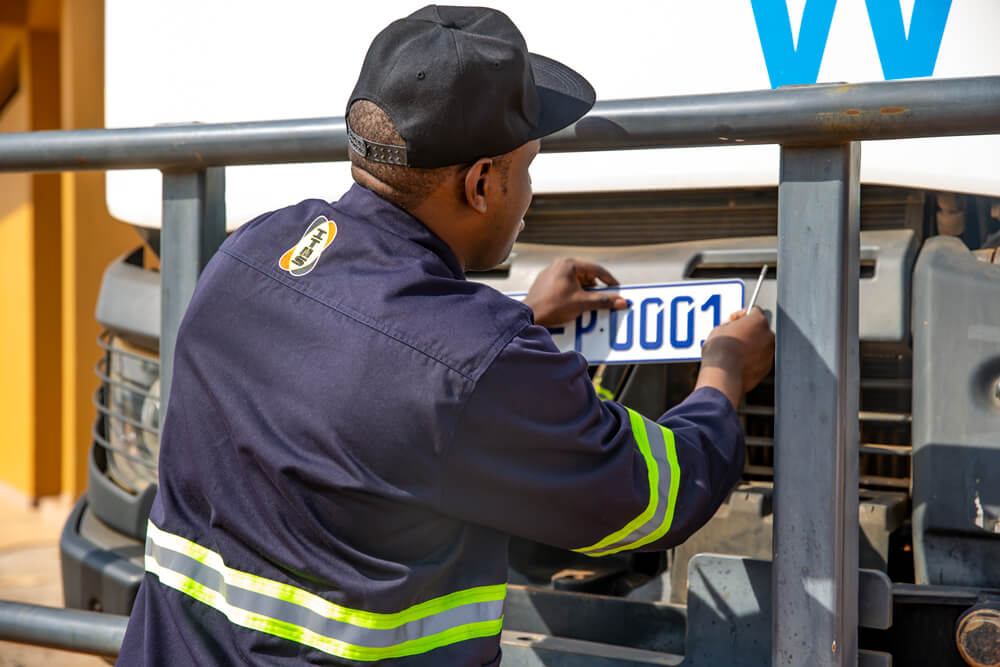
The Government of Uganda and the United Nations World Food Programme (WFP) have officially launched special registration plates for humanitarian vehicles and signed the Agreement on the establishment of the Emergency Fleet Hub in Kampala.
The new number plates were introduced during a handover ceremony attended by representatives of the Ministry of Works and Transport, the Office of the President, the Ministry of Foreign Affairs, and Intelligent Transport Monitoring System (ITMS) Project.
Honourable Jeje Odongo, Minister of Foreign Affairs, emphasized Uganda’s leadership role: “Uganda has always stood at the forefront of humanitarian action, hosting Africa’s largest refugee population while maintaining our commitment to regional solidarity. By hosting the WFP Global Fleet Hub, we are extending our humanitarian leadership beyond our borders. This agreement demonstrates that when we invest in logistics infrastructure and remove bureaucratic barriers, we save lives not just in Uganda, but across the entire continent.”
The Uganda-manufactured special number plates represent only one component of a comprehensive system that integrates advanced hardware and software solutions. Today’s ceremony marks a historical milestone in a new phase of vehicle registration, introducing enhanced digitalization and strengthened security features.
Honourable Gen. Edward Katumba Wamala, Minister of Works and Transport, highlighted the strategic logistics advantage: “Uganda’s geographic position at the heart of East Africa, combined with our robust transport infrastructure and progressive trade facilitation policies, makes Kampala the natural choice for this continental logistics hub. The distinctive UN/WFP plates represent more than administrative efficiency they symbolise our collective commitment to ensuring that emergency supplies reach those in need without delay.”
The agreement operationalizes three core objectives:
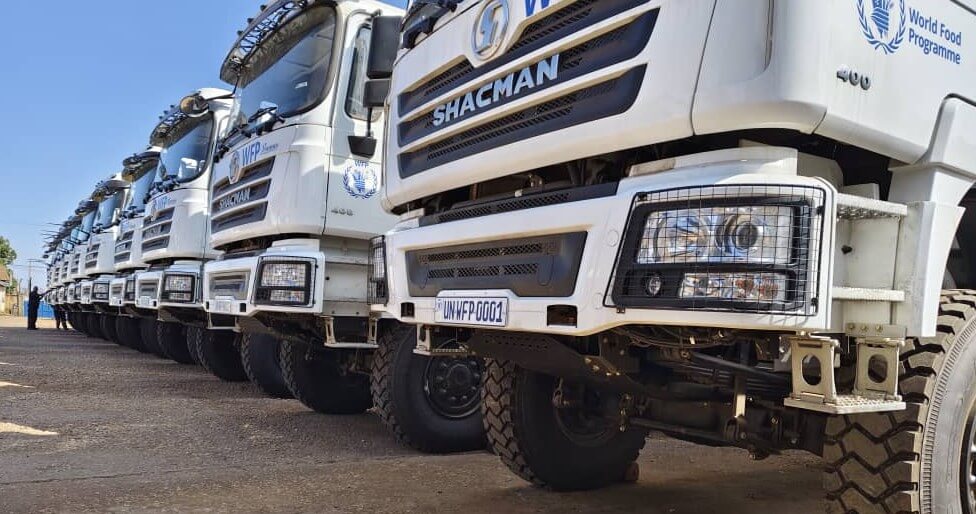
- Distinctive UN/WFP Plates: Vehicles will carry special plates issued by WFP, eliminating lengthy deregistration/re-registration processes at borders and ensuring unhindered movement across Africa.
- Waived Regulatory Barriers: The agreement removes bureaucratic obstacles that slow cross-border humanitarian flows, ensuring that red tape does not stand between humanitarian need and response.
- Regional Integration Protocols: Leveraging existing frameworks to reduce costs and transit times while complementing commercial transporters to strengthen the entire regional logistics ecosystem.
Marcus Prior, WFP Country Director for Uganda, described the transformative impact: “The Global Fleet Hub will serve as a rapid deployment centre for humanitarian emergencies across Africa. When conflicts displace populations in the Great Lakes region, Kampala will be the launch point for a coordinated response. The distinctive plates delivered during today’s ceremony represent more than administrative tools—they are instruments of life-saving action. Together, we will ensure that when a crisis strikes anywhere in Africa, help will arrive faster, reach further, and save more lives.”
Damir Makhmutov, ITMS Project Manager, special number plates provider, commented the smart solutions advantage: “We are very proud of the government’s strategy and determination in developing the transport sector, and it is a great honor for us to be part of this transformation. We believe that such initiatives will accelerate the development of the state, society, and the country as a whole. It is encouraging to see Uganda taking a leading position in this development trajectory and becoming a key player in international programs across the continent”.
In 2024, WFP Uganda delivered 173,745 metric tons of food assistance to 545 locations nationwide, reaching over 2 million people. The organisation transported 10,000 metric tons of partner relief supplies and facilitated 33,000 metric tons of deliveries to five neighbouring countries—Burundi, the Democratic Republic of Congo, Kenya, South Sudan, and Ethiopia. With the new Global Fleet Hub, this regional reach will expand exponentially.
The United Nations World Food Programme is the world’s largest humanitarian organisation, saving lives in emergencies and using food assistance to build a pathway to peace, stability and prosperity for people recovering from conflict, disasters and the impact of climate change.


Kitara Petitions Court to Nullify Norbert Mao’s Election Over Alleged Irregularities
The election of Laroo-Pece Division Member of Parliament Norbert Mao is being challenged i…



















Nandutu Pleads for Mercy Ahead of Sentencing in Iron Sheets Scandal
Former Minister of State for Karamoja Affairs, Agnes Nandutu, has pleaded with the Anti-Corruption Court for a non-custodial sentence, citing failing health and her responsibilities as a single mother.