Plea Bargain Agreements Binding on Judges, Court of Appeal Rules
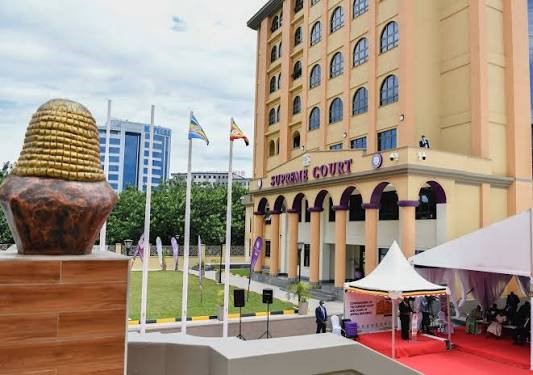
The Court of Appeal has ruled that plea bargain agreements between accused persons and the office of the director of public prosecutions are binding on judges and cannot be varied.
Three judges: Geoffrey Kiryabwire, John Mike Musisi and Esta Nambayo unanimously rulled that if a judge is not satisfied with the agreement, the only recourse is to reject it in its entirety and order for a full trial.
“Rule 15(2) of the Judicature (Plea Bargaining) Rules, 2016 prohibits a court from imposing a sentence more severe than the maximum sentence recommended in the plea bargain agreement,” they ruled. Where court considers the agreed sentence inappropriate or lead to a miscarriage of justice, Rule 13 empowers it to reject the agreement, record reasons for the rejection, inform the parties, and refer the matter for trial. Rules do not permit a court to accept a plea bargain agreement and thereafter impose a sentence exceeding that agreed upon by the parties,” the judges ruled.
The ruling was in response to an appeal filed by Ssendagire Akim who was indicted for murdering a one Tausi Kiconco in December, 2014 at Kungu village, Kira town Council in Wakiso District. In the pre bargain with prosecution, Ssendagire pleaded guilty to the murder and agreed to serve a 12-year imprisonment sentence. However, when he appeared before judge Justice Elizabeth Nahamya, he was convicted and sentenced to 25 years’ imprisonment contrary to the plea bargain agreement.
In his appeal, Ssendagire argued that the judge erred in law and fact when she departed from the plea bargain agreement and sentenced him to 24 years and 9 months’ imprisonment instead of 12 years’ imprisonment which occasioned a miscarriage of Justice.
ln response, Margaret Nakigudde, an Assistant DPP conceded that indeed the trial court had departed from the agreed sentence. She noted that the established legal position is that a trial judge cannot enhance a sentence beyond that agreed upon in a plea bargain agreement.
In their ruling, the judges reinstated the 12-year imprisonment thus: “The trial Judge did not reject the plea bargain agreement in accordance with Rule 13. Having accepted the agreement, the court was bound by the sentencing limits stipulated therein. The sentence of twenty- five years’ imprisonment imposed upon the Appellant, instead of the agreed twelve (12) years, was therefore contrary to the Plea Bargaining Rules and consequently illegal. We would allow the appeal on sentence and set aside the sentence of twenty-five (25) years’imprisonment imposed by the trial Judge. We find the agreed sentence of twelve (12) years’ imprisonment to be lawful and appropriate in the circumstances.”
Having been sentenced in 2025, it means Ssendagire has already served out his entire 12 years, if his remission of a third of the sentence is put into consideration.
Plea Bargain Agreements Binding on Judges, Court of Appeal Rules
King Oyo Dies at 34, Kingdom Announces
Plea Bargain Agreements Binding on Judges, Court of Appeal Rules
King Oyo Dies at 34, Kingdom Announces
US Delivers Ebola Antibody Treatment to Uganda
Parliament Rejects Kiira University Name, Backs Retention of Busoga University
Parliament has pushed back against a proposal to name the planned public university in Bus…
Now On Air – 88.2 Sanyu Fm
Get Hooked Right Here
DON'T MISS!!!
Plea Bargain Agreements Binding on Judges, Court of Appeal Rules
Parliament has pushed back against a proposal to name the planned public university in Busoga sub-region Kiira University, with Speaker Jacob Markson Oboth-Oboth urging the Government to retain the name Busoga University and undertake wider consultations before making a final decision.