The Constitutional Court has nullified parts of the Human Rights (Enforcement) Act that allowed courts to automatically acquit accused persons when their rights are violated, ruling that the provision was unconstitutional because it denied victims the right to have criminal cases fully heard.
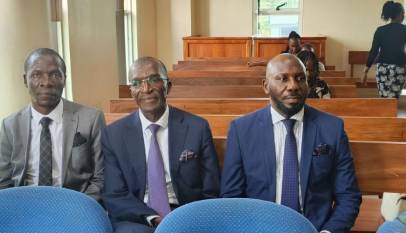
The landmark decision was delivered in Constitutional Petition No. 17 of 2024, filed by three lawyers—Faruku Muhamed, John Musinguzi, and Ibrahim Bunyasin—against the Attorney General, and consolidated with Constitutional Reference No. 2 of 2024 arising from corruption-related proceedings involving former Namutumba County MP Paul Akamba, whose charges were later withdrawn by the State.
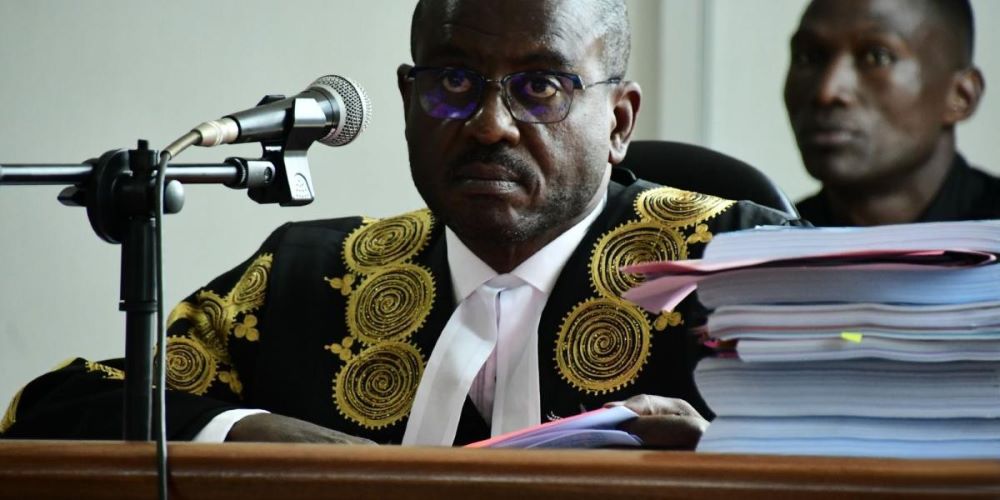
A panel of five Constitutional Court judges, led by Justice Oscar Kihika and comprising Lady Justice Margret Tibulya, Justice Moses Kazibwe Kawumi (newly appointed Deputy Chief Justice), Dr. Asa Mugenyi, and Justice Musa Ssekaana, ruled that Section 11(2)(a), (b), and (c) of the Act violates the Constitution. The court held that the provision permitted acquittals without a full trial on substantive criminal charges, thereby undermining constitutional standards of justice.
It further found that victims of crime are entitled to a fair hearing and that the law unfairly deprived them of the opportunity to have their complaints fully heard and determined. The consolidated case stemmed from a constitutional challenge arguing that the Act allowed accused persons to escape liability whenever courts found that their non-derogable rights—such as freedom from torture and the right to a fair hearing—had been violated during investigations or prosecution.
The petitioners argued that this created a legal gap in which criminal cases could be terminated before evidence was fully examined in court. The matter was later joined with proceedings initiated by Paul Akamba, who had sought to halt his prosecution on grounds that he was allegedly abducted from court premises after being granted bail, detained incommunicado for seven days, and subjected to torture before being re-arrested on corruption-related charges.
During the hearing, the Attorney General challenged Sections 7, 8, and 11(2) of the Act, arguing that automatic acquittals based on rights violations introduced a legal anomaly that favoured accused persons while disregarding victims and complainants. Government lawyers maintained that while courts must remedy violations of suspects’ rights, such remedies should be discretionary and not automatically terminate criminal proceedings.
However, 22 intervenors led by lawyer Abubaker Sekanjako defended the law, arguing it was designed to deter torture, illegal detention, and other abuses by state actors. They cited earlier jurisprudence, including the 2007 Dr Kizza Besigye case, where courts halted prosecutions due to grave and systemic rights violations. Professor Christopher Mbazira, appearing as amicus curiae, urged the court to consider Uganda’s history of human rights abuses and the need for strong remedies where non-derogable rights are violated.
In its judgment, the court rejected the argument that the right to a fair hearing applies only to accused persons, holding that Article 28(1) of the Constitution protects “a person,” including victims whose interests are affected by criminal proceedings. The judges noted that victims play a central role in the justice system as complainants, witnesses, and beneficiaries of compensation or restitution orders.
They further observed that criminal proceedings increasingly involve the determination of victims’ rights, including compensation claims under various laws. According to the court, Section 11(2) unlawfully denied victims the opportunity to be heard by automatically terminating criminal trials once a rights violation was established.The judges held that this contravened Articles 20, 21, 28, and 44 of the Constitution by upsetting the balance between the rights of accused persons and those of victims. They emphasized that while allegations of torture and other violations must be addressed, such violations do not automatically extinguish criminal responsibility.
Instead, courts may exclude illegally obtained evidence, award compensation, or provide other remedies while allowing trials to proceed. The court ruled that acquittals can only arise after a full trial in which evidence has been evaluated. It further distinguished the decision from the Dr Besigye precedent, stating that the earlier case involved exceptional circumstances of systemic violations that made a fair trial impossible.In its final orders, the court declared Section 11(2)(a), (b), and (c) unconstitutional to the extent that it allows acquittals without hearing and determining substantive criminal charges. It also affirmed that victims’ right to a fair hearing is constitutionally protected and must be safeguarded in criminal proceedings. Each party was ordered to bear its own costs.The ruling has since drawn criticism from some Uganda Law Society members, who argue that it weakens protections against torture and may embolden abuse by state actors.