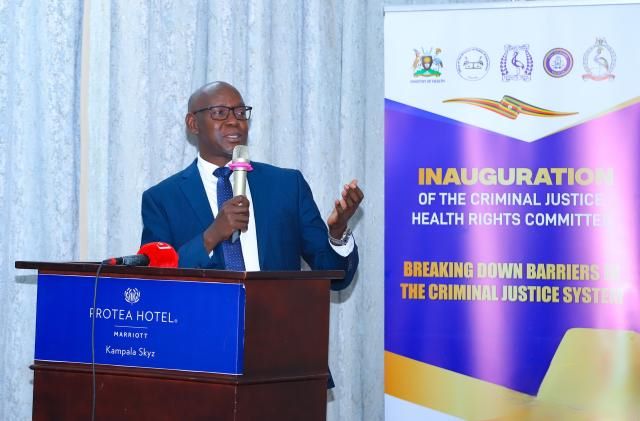
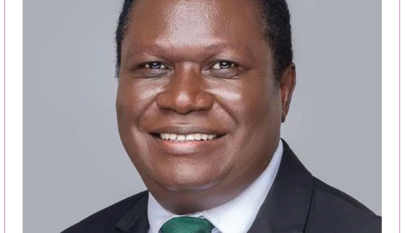
The Chief Justice, Dr Flavian Zeija, has urged leaders of institutions involved in criminal justice administration to prioritise health and human rights in their operations, warning that infectious diseases can significantly disrupt the delivery of justice.
Speaking at the inauguration of the Criminal Justice Health Rights Committee in Kampala, Zeija said the justice system operates as a continuous chain that can easily be weakened when health challenges affecting suspects, witnesses, or justice sector actors are ignored.
Dr Zeija pointed to the persistent threat posed by infectious diseases such as HIV/AIDS, tuberculosis, and malaria, especially in congested environments like police cells and prisons. According to the Chief Justice, such conditions not only endanger the lives of inmates but can also delay or derail judicial processes when affected individuals are unable to participate in proceedings.
He recalled the COVID-19 pandemic, noting how fears of rapid outbreaks in prisons forced justice institutions to rethink their approach to case management. Measures such as plea bargaining were adopted to decongest detention facilities amid concerns about the devastating consequences of a potential outbreak.
Zeija emphasised the need for preventive health measures, including regular screening of suspects and improved coordination among institutions such as the Uganda Police Force and the Uganda Prisons Service. He added that the initiative, supported by the Global Fund, is not only about financing but also about safeguarding human dignity within the justice system.
The Chief Justice called for practical interventions such as routine health checks, improved sanitation, and innovative approaches to controlling infections in overcrowded facilities, noting that conventional measures such as mosquito nets are often impractical in prison settings.
The newly inaugurated Criminal Justice Health Rights Committee is expected to provide oversight and strategic direction in addressing health and human rights barriers within the justice system. The committee brings together key actors from the judiciary, prosecution, police, and prisons to strengthen coordination and accountability.
Its members include the heads of the key justice institutions: the Inspector General of Police (IGP), the Director of Public Prosecutions (DPP), the Commissioner General of Prisons, and the Chief Justice.
The Director of Public Prosecutions, Lino Anguzu, described the committee as a major milestone in aligning justice sector efforts with public health priorities. He added that the committee will also promote accountability, ownership, and technical guidance among institutions, while ensuring that resources are used effectively.
The Permanent Secretary in the Office of the DPP, Agnes Kainza Nzogi, said the initiative builds on years of collaboration between government agencies and the Global Fund, under agreements dating back to 2017. She explained that the latest framework, signed in 2024 and updated in 2025, focuses on breaking down barriers that limit access to health services for vulnerable populations.
Meanwhile, Dr Shaban Mugerwa, the Equity Plan Coordinator at the Uganda AIDS Commission (UAC), revealed that some populations, particularly those in closed settings such as prisons, face disproportionately higher risks of infection and limited access to healthcare services. Mugerwa added that stigma, discrimination, and structural barriers continue to hinder access to healthcare, warning that a one-size-fits-all approach to service delivery is ineffective.
He also pointed to legal and social challenges that affect access to services, noting that certain laws and enforcement practices can create fear and discourage vulnerable groups from seeking care. He said ongoing efforts focus on sensitisation, dialogue, and stronger coordination across institutions to ensure health services remain accessible to all.
From the Ministry of Health, Dr Stavia Turyahabwe, the Commissioner for Communicable Disease Prevention and Control, revealed that recent surveys indicate significantly higher rates of tuberculosis in prisons compared to the general population, largely due to congestion and poor ventilation.
She called for early screening at police entry points, continuity of treatment for inmates, and preventive measures such as indoor residual spraying to control malaria. Turyahabwe also warned that interruptions in HIV treatment during arrest and detention can lead to drug resistance and increased transmission, creating risks not only within detention facilities but also for the broader community.