

Chief Justice Dr. Flavian Zeija Launches Judiciary Reform Plan

Chief Justice Dr. Flavian Zeija Launches Judiciary Reform Plan, Sets Accountability Benchmarks
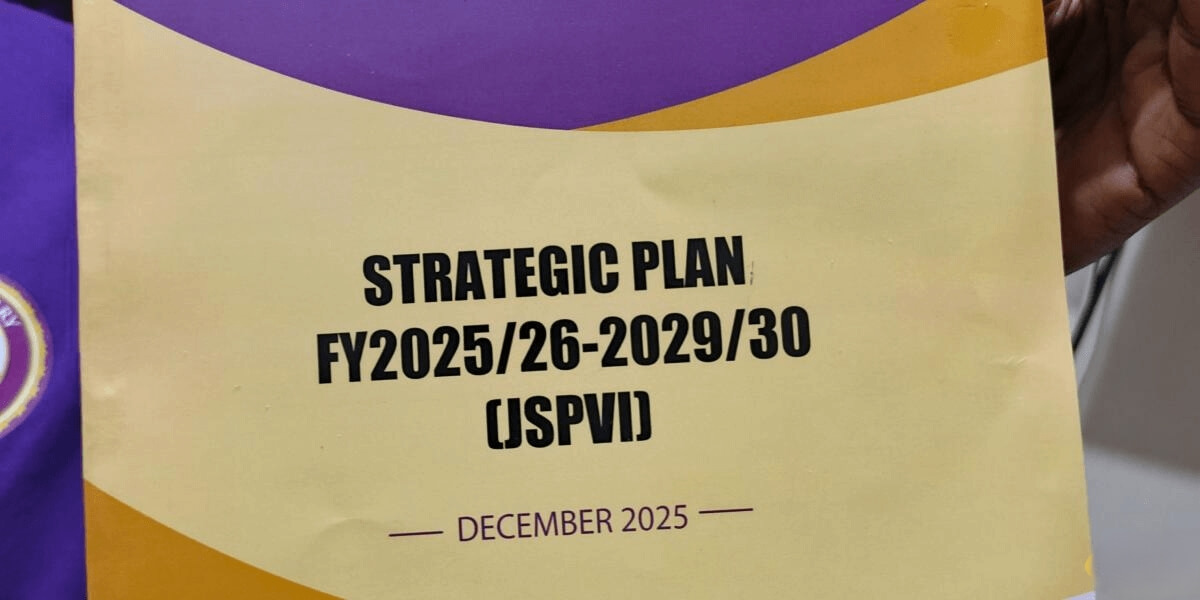
Chief Justice Dr. Flavian Zeija has unveiled three major Judiciary reform instruments aimed at strengthening accountability, improving service delivery, and reducing case backlog, setting the tone for his tenure just hours after presiding over his first session of the presidential election petition. Dr Zeija, on Wednesday evening, launched the Judiciary Client Charter, the Judicial Service Delivery Standards, and the Judiciary Strategic Plan Six (2025/2026–2029/2030), describing the documents as a contract between the Judiciary and the public it serves.
Speaking at the launch, the Chief Justice said the Judiciary Client Charter clearly spells out service timelines, including how long court users should wait for services and the expected duration for concluding cases. “The public we serve are our bosses,” Dr Zeija said, noting that the charter is intended to manage expectations while holding judicial officers accountable for timely justice delivery.
Dr Zeija also launched the Judicial Service Delivery Standards, which outline the quality and consistency of services the Judiciary commits to providing across all courts.
He further launched the Judiciary Strategic Plan Six for the period 2025/2026 to 2029/2030, explaining that it replaces an expired plan and is aligned with the National Development Plan, Vision 2040, the Sustainable Development Goals, and other national policy frameworks. Dr. Zeija said the strategic plan assesses the Judiciary’s past performance, sets future priorities, outlines financing requirements, identifies risks, and provides a monitoring and evaluation framework. He confirmed that the plan was approved by the relevant oversight committee last week.
The Chief Justice explained that the documents were launched at a wellness venue to promote focused decision-making, adding that the Judiciary intends to print and distribute enough copies to ensure wide public access. The launch took place in the Judiciary compound immediately after the routine Wednesday evening wellness exercises for judicial officers.
Speaking at the same venue, Judiciary Permanent Secretary Dr Pius Bigirimana congratulated Dr Zeija on formally assuming office and presiding over his first session of the presidential election petition earlier in the day.
According to the Judiciary Strategic Plan Six, the plan will be financed through statutory funding and support from development partners, while safeguarding judicial independence. The plan is estimated to cost UGX 3.723 trillion over five years. Of this, UGX 1.270 trillion is allocated to improving case management processes to reduce backlog and delays, UGX 976 billion to enhancing equitable access to justice services, and UGX 1.477 trillion to strengthening policy, legal, and institutional capacity.
However, Medium Term Expenditure Framework projections provide UGX 2.586 trillion, leaving a financing gap of UGX 1.137 trillion. The plan highlights achievements registered under the previous strategy, including an increase in the case disposal rate from 45 percent in the 2019/2020 financial year to 57.61 percent in 2024/2025, reducing case backlog from 48 percent to 24.2 percent.
Court coverage increased from 51 percent to 78.4 percent nationwide, while the number of judicial officers rose from 378 to 705. The Judiciary also completed the construction of the Supreme Court and Court of Appeal buildings and rolled out the Electronic Court Case Management Information System (ECCMIS) to 31 courts. Gender and equity mainstreaming improved through the implementation of the gender policy, the establishment of child-friendly court facilities, the appointment of members to the Human Capital Development, Gender and Equity Mainstreaming Committee, and the conduct of juvenile and gender-based violence special sessions.
Public trust in the Judiciary increased from 64 percent to 71 percent in 2024. Despite these gains, the plan acknowledges persistent challenges. By the end of the 2024/2025 financial year, courts had a pending caseload of 190,793 cases, including 46,181 backlog cases. Only 37 percent of approved staff positions are filled, affecting timely adjudication. About 40 percent of operational courts are housed in rented premises that lack proper court halls, holding cells, archives, and ICT infrastructure, compromising operational effectiveness.
The plan also flags interference with judicial independence, citing instances where courts failed to enforce orders due to resistance from some stakeholders, including Resident District Commissioners, members of the armed forces, and politicians.







Kitara Petitions Court to Nullify Norbert Mao’s Election Over Alleged Irregularities
The election of Laroo-Pece Division Member of Parliament Norbert Mao is being challenged i…




















Government Orders Fresh PDM SACCO Elections
The Government has ordered fresh elections for all Parish Development Model Savings and Credit Cooperative Organizations as part of a comprehensive clean-up of the programme.