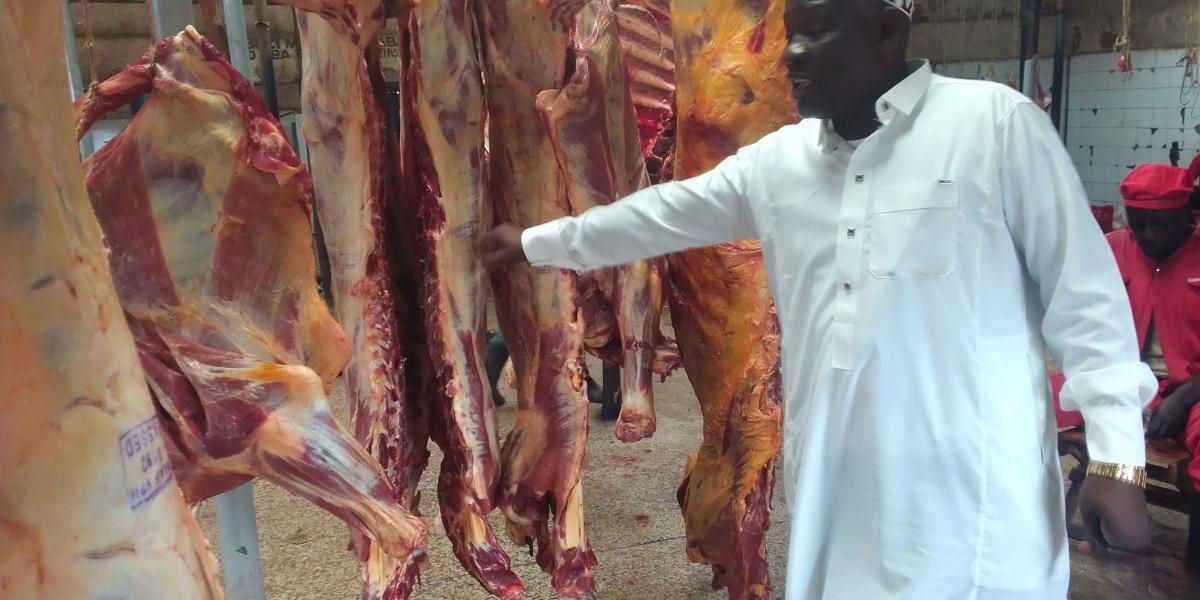
Rising meat prices are forcing many Ugandans to cut back on beef consumption as the cost of a kilogram climbs from about Shs16,000 to between Shs20,000 and Shs22,000 in several parts of the country. Currently, beef is sold wholesale at abattoirs for between Shs15,000 and Shs17,000 per kilogram, depending on quality, while retailers sell it at between Shs20,000 and Shs22,000 per kilogram. The rising prices are already affecting businesses and households.
The sharp increase has pushed many low-income households to seek cheaper alternatives such as chicken and other food options as they struggle to cope with the rising cost of living. Industry players attribute the increase to a combination of animal disease outbreaks, prolonged dry spells in cattle-rearing areas, rising transport costs, and growing demand from regional markets.
Speaking to media, Kalerwe Abattoir Chairperson Sulaiman Ssekanyo said disease outbreaks and the resulting quarantines in several districts within Uganda’s cattle corridor have significantly reduced the supply of cattle to markets and abattoirs. Earlier this year, districts including Ntungamo, Abim, Amudat, Amuria, Bukedea, Sembabule, Bukwo, Bulambuli, Gomba, and Isingiro were affected by outbreaks of Foot-and-Mouth Disease (FMD). In response, the Ministry of Agriculture, Animal Industry, and Fisheries suspended the sale and movement of cattle and cattle products in the affected districts to contain the spread of the disease.
Ssekanyo said the restrictions, though necessary to control the disease, have reduced the number of animals reaching markets, contributing to higher meat prices. He also cited prolonged dry spells in cattle corridor districts, saying they have negatively affected livestock production. According to him, many cattle are reared under free-range systems and become malnourished during periods of drought due to inadequate pasture and water.
“The prolonged drought reduces the number of animals supplied to the market, which in turn pushes up meat prices across the country,” he said. Lozio Kafuluma, a cattle trader, blamed part of the increase on middlemen who purchase cattle directly from farmers and resell them to livestock traders at much higher prices. Kafuluma told media that cattle prices in villages currently range between Shs1.5 million and Shs5 million per animal, considerably higher than they were five years ago. He said the higher cost of purchasing cattle is eventually passed on to consumers through increased meat prices.
Kafuluma also noted that traders from the Democratic Republic of Congo (DRC) have intensified competition in the local cattle market by purchasing large numbers of cattle from different parts of Uganda and transporting them through the Bwera cattle market into the DRC. According to him, the traders buy cattle at competitive prices in Uganda and sell them in the DRC using dollar-denominated transactions, making it difficult for local traders to compete and contributing to higher livestock prices in Uganda.
However, he expressed optimism that the closure of the Uganda-DRC border following the Ebola outbreak in the neighbouring country could ease demand and eventually lower meat prices. He further cited rising fuel costs as another factor driving up meat prices. “For example, we used to spend Shs400,000 on fuel when travelling to Gomba and other areas to purchase cattle, but fuel costs have increased by about Shs100,000, which also impacts meat prices,” Kafuluma said.
Juliet Nassuuna, who operates a restaurant in Kawempe Corner Zone, said she previously bought five kilograms of beef daily at between Shs13,000 and Shs14,000 per kilogram but can now afford only two kilograms at Shs20,000 per kilogram. As a result, she has reduced the portions of beef served to customers, a move that has attracted complaints from some patrons.
Sarah Nansereko, a housewife in Kagoma, said the increasing cost of beef has made it difficult to provide meat for her family. “My husband offers me Shs20,000 for food daily. When I want my family to eat meat, especially on weekends, I buy cow head meat at Shs10,000 per kilogram because it is cheaper than beef,” Nansereko said. Kafuluma warned that continued increases in meat prices could further reduce meat consumption among low-income households.