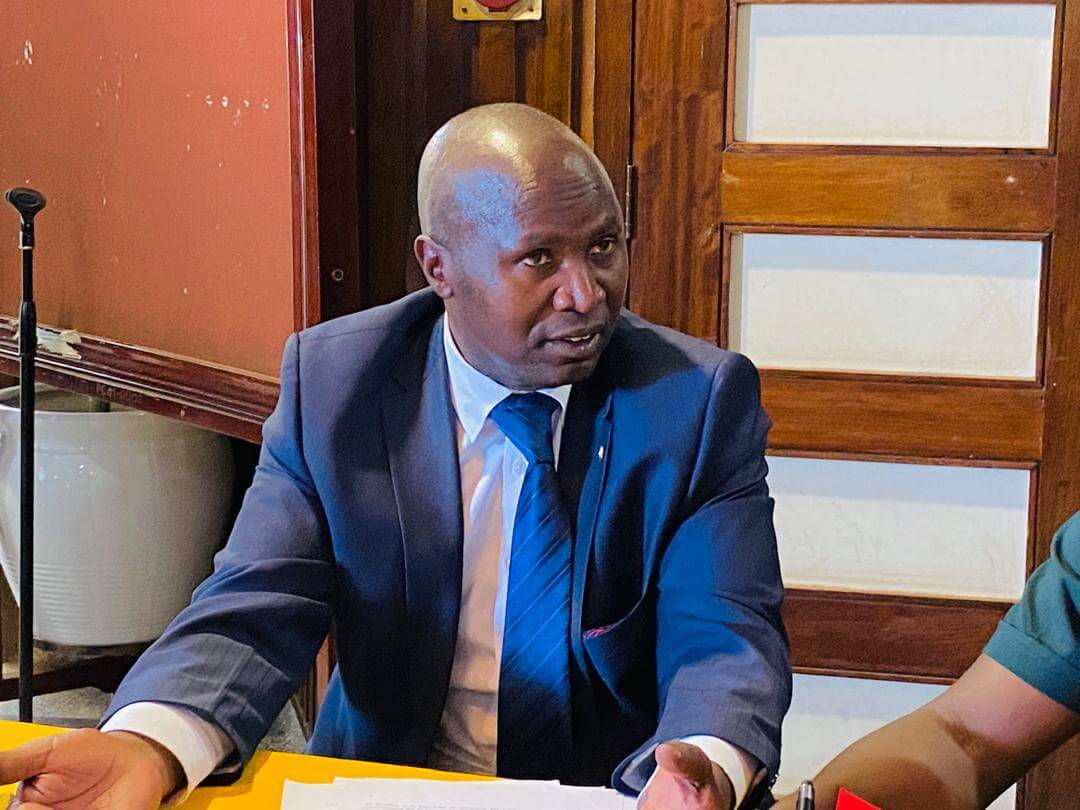
Lawyers representing Theodore Ssekikubo, the Lwemiyaga County Member of Parliament, have formally protested the transfer of his election petition appeal against the Electoral Commission (EC) from the Masaka High Court to Kampala, arguing that the move was made without explanation and raises concerns about procedural fairness.
The objection was raised at the commencement of proceedings before the High Court of Uganda sitting in Kampala. Ssekikubo’s legal team told the court that the appeal and accompanying application had originally been filed in Masaka, where Lwemiyaga County is geographically located, but they were surprised to find the matter transferred to Kampala without any explanation, yet both courts have equal jurisdiction.
The defence asked the court to guide them on the reasons behind the transfer and to address a formal letter of protest they had written, warning that unexplained administrative decisions in election-related matters undermine confidence in the administration of electoral justice.
Despite the objection, the High Court in Kampala on Monday commenced hearing Ssekikubo’s appeal challenging the EC’s decision to clear retired Brigadier General Emmanuel Rwashande to contest in the 2026 parliamentary elections for Lwemiyaga County. At the heart of the dispute is the legality of Rwashande’s nomination.
Ssekikubo argues that the EC unlawfully upheld his rival’s candidacy despite what he describes as invalid and irregular academic qualifications that fall short of the minimum legal threshold for Members of Parliament.
Under the Parliamentary Elections Act, a parliamentary candidate must possess at least a Uganda Advanced Certificate of Education (UACE) or its equivalent, verified by the National Council for Higher Education (NCHE). But, according to court filings, the documents relied upon by Rwashande, including a military platoon commanders’ course certificate, do not amount to an A-Level equivalent.
Ssekikubo contends that the credentials were “irregularly commissioned, forged, fraudulent and unlawful,” and should not have been accepted at nomination. He further accuses the EC of misapplying the law and abdicating its statutory duty to thoroughly verify academic qualifications before clearing candidates to contest.
The Electoral Commission, however, maintains that it acted within its constitutional and statutory mandate. It argues that it has the authority to determine questions of eligibility arising from nominations, as stipulated in both the Constitution and the Electoral Commission Act.
The Commission dismissed Ssekikubo’s initial complaint on December 9, 2025, stating that Rwashande’s academic documents had been adequately verified and met the required standard.
Ssekikubo’s legal team has urged the court to apply principles from recent judicial precedent, notably the Mathias Walukagga case, whose candidacy was nullified by the High Court and the EC after he presented an expired Mature Age Entry certificate at nomination.
In that ruling, Justice Simon Peter Kinobe held that “an expired certificate presented at the time of nomination cannot lead to a valid nomination,” emphasising that academic qualifications must be valid and current at the time of nomination. Ssekikubo’s lawyers argue that the same legal standard should apply in Rwashande’s case to ensure consistency, fairness, and equal treatment of candidates.
The High Court’s Assistant Registrar in the Civil Division, Esther Nakadama, is expected to rule on January 5, 2026, on whether Ssekikubo has established a prima facie case. That ruling will determine whether the petition proceeds to a full hearing and could potentially bar Rwashande from the race.
Speaking separately to journalists shortly after the session, Ssekikubo accused the EC, under the leadership of chairperson Simon Byabakama Mugenyi, of deliberately frustrating the rule of law and attempting to benefit from delays of its own making.
The legal battle follows a bitter fallout from the National Resistance Movement (NRM) parliamentary primaries held in July 2025, in which Rwashande defeated Ssekikubo amid allegations of widespread irregularities.
Ssekikubo later opted to contest as an independent candidate. Rwashande, a retired army officer, has since framed his candidacy as a direct challenge to Ssekikubo’s long tenure in Parliament. In a July 2025 television interview, he declared, “I only need one term. My mission is to remove Hon. Theodore Ssekikubo from Parliament.”
Legal analysts say the High Court’s eventual decision could set an important precedent on how equivalency qualifications, particularly military and professional certificates, are assessed, with far-reaching implications for candidate vetting, electoral transparency, and public confidence in the 2026 polls.