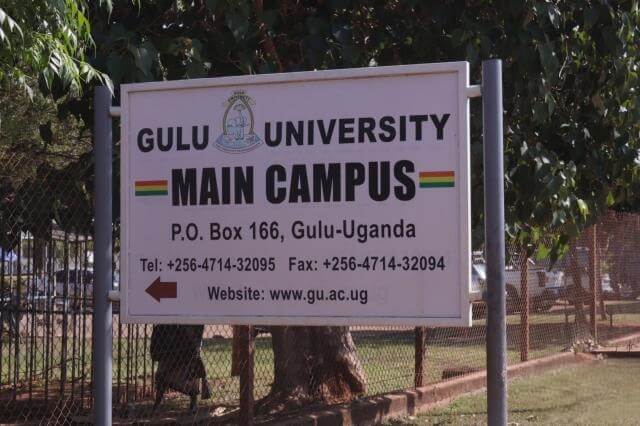
The Auditor General has flagged Gulu University and Busitema University as public Universities that consistently exhibited inefficiencies.
This assessment is contained in a report, covering the three-year period ending December 31, 2025.
The Auditor General attributed the shortcomings not to internal management weaknesses, poor supervision systems, and suboptimal utilisation of available resources.
According to the audit, delayed completion of graduate programmes remains one of the key factors undermining operational efficiency across public universities. The Auditor General observed prolonged completion periods for master’s programmes, largely caused by ineffective supervision, delayed marking, and inadequate dissertation support.
As a result, a total of 1,019 graduate students from Makerere University, Kyambogo University, Mbarara University of Science and Technology (MUST), and Gulu University exceeded the standard two-year post graduate study duration. The report notes that these delays increased the cost per graduate and negatively affected the overall number of graduates produced by the institutions.
Low academic staff participation in research activities was also flagged as a major concern. With the exception of Makerere University, publication rates across public universities remained low during the period under review. At Gulu University, only 11 out of 259 academic staff, representing just 4 percent, published research.
Other universities recorded similarly low publication rates: Kabale University had 28 out of 320 staff (9 percent), Kyambogo University 70 out of 418 staff (17 percent), and Lira University had 22 out of 116 staff (19 percent).
Busitema University had 62 out of 286 staff (22 percent) who published their research, Soroti University 35 out of 99 staff (35 percent), Muni University 38 out of 107 staff (36 percent), and Mountains of the Moon University 66 out of 139 staff (47 percent).
“The low participation in research activities across the universities was attributed to inadequate mentoring structures, limited training in proposal development, and weak incentives for junior researchers,” the AG stated in the report.
The audit also faulted public universities for lacking standardized procedures to ensure that research outputs reach key stakeholders such as policymakers, local communities, industry partners, and peer reviewers.
At Gulu University, for example, mobile technology prototypes were reportedly demonstrated only once and never made accessible thereafter. Meanwhile, agricultural innovations at Busitema University were shared without adaptations to suit local farmers’ language or technical literacy.
As a consequence, the report concludes, many innovations remained unutilized or underutilized, leading to low research visibility and negatively affecting universities’ Webometrics performance.
Akol has called for stronger internal management controls, improved supervision of graduate students, better coordination of research activities, and deliberate strategies to promote research dissemination and staff participation across public universities.
The audit further painted weak research management and poor completion of funded research projects, despite significant government investment through the Research and Innovation Fund (RIF). The Auditor General noted that completion rates for funded projects remained “extremely low” across universities.
Among the contributing factors, the report found that research funds were frequently disbursed late, often in the second quarter of the financial year, disrupting planned project timelines. Additionally, 88 percent of researchers across public universities were simultaneously engaged in multiple projects, reducing focus and contributing to a growing backlog of unfinished work.
The audit cites cases at Makerere University, MUST, and Busitema University where some researchers were listed on more than four concurrent projects but delivered no completed outputs within the planned timeframes.
The audit report is part of the value for money assessment conducted by the Auditor General in ten Public Universities across the country in the period of over the three financial years of 2022/23 and 2024/25.
The government according to the report sunk a total of 2.65 trillion in the ten public Universities supplemented by a 32 percent increase in staffing and a 49 percent expansion in infrastructure and significant investments.
Sadly, the report indicated that although universities are spending more money each year, the results they produce are not increasing at the same pace. For instance, according to the report although the average university expenditure rose from 84.3 billion shillings in FY 2022/23 to 90.9 billion shillings in FY 2024/25, research outputs declined sharply from an average of 204.8 to 76.23 over the same period.